
Contact us
- Chongqing Industrial Design Promotion Center
- No. 1, Shangqingsi Road, Yuzhong District, Chongqing, People's Republic of China
- +86-23-60332626
- [email protected]
This year’s CCTV Spring Festival Gala featured a robot-themed skit that vividly depicted future life scenarios, inspiring widespread longing. And the future shown on screen is gradually becoming reality.
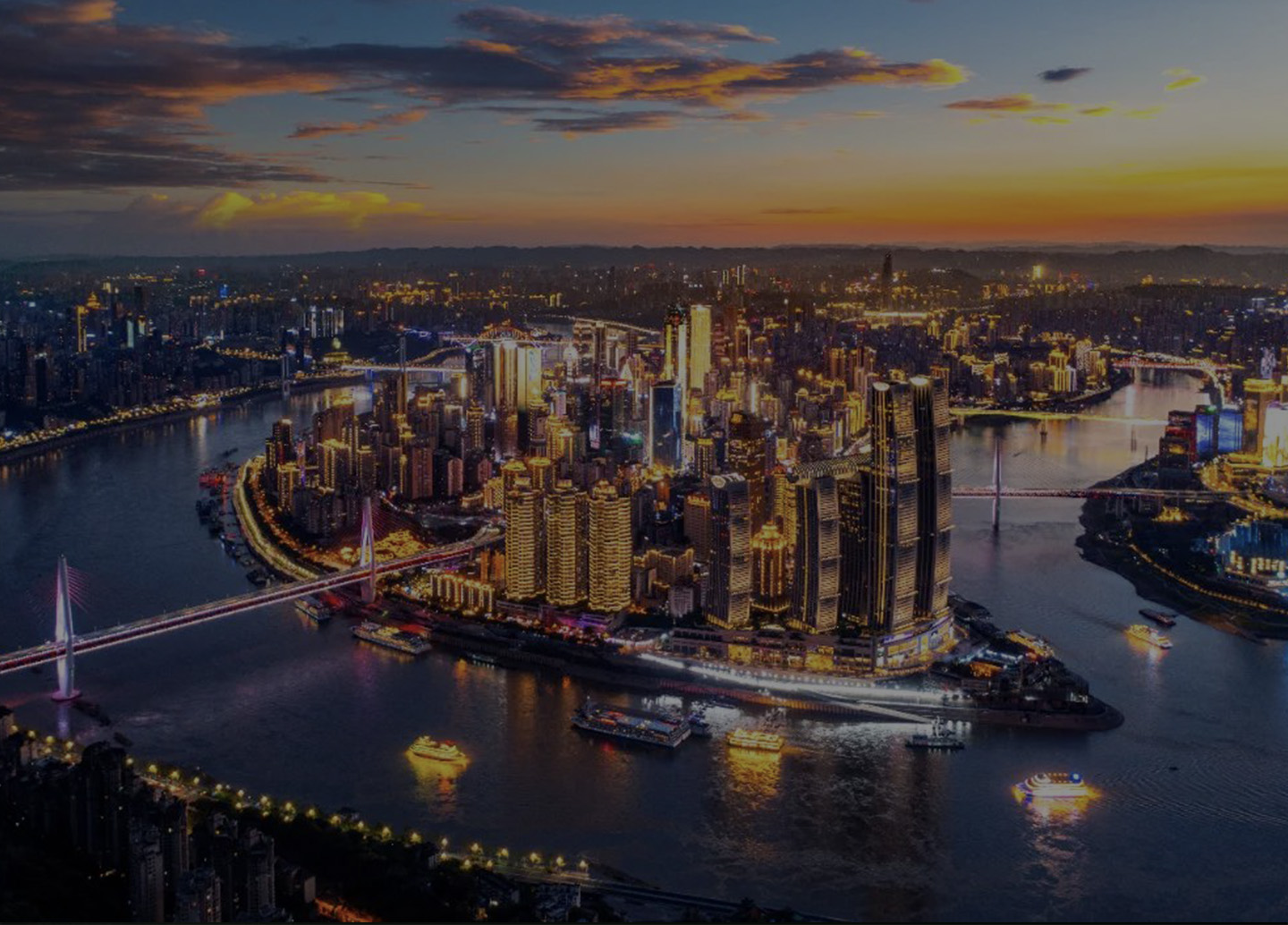
Space information, low-altitude economy, embodied intelligence… In 2024, Chongqing took the lead nationally in laying out future industries and formulating an action plan for their cultivation. A large number of future industry projects have taken root and grown in the mountain city, moving from laboratories into people’s lives.
The “Touching the Future in Chongqing” series takes you into laboratories, industrial parks, and application scenarios, using images and words to help you feel the future.
Industry category: Advanced materials and smart connected new energy vehicles.
Features: Squeezing magnesium alloy into a mold like toothpaste improves performance, reduces weight, and lowers costs.
Application prospects: New energy vehicles, aerospace, consumer electronics, and more.
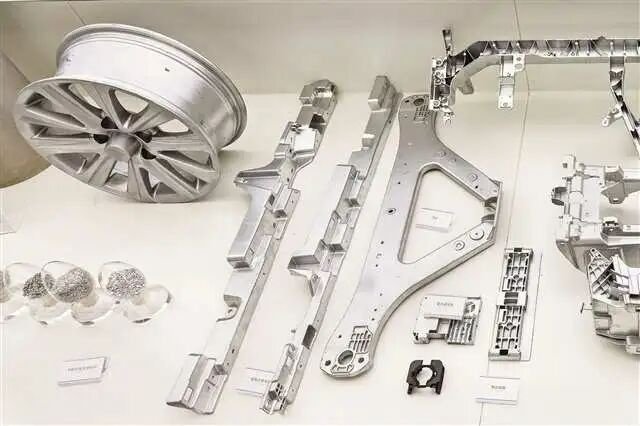
Recently, a reporter walked into the laboratory exhibition hall and was immediately drawn to a large, gleaming wheel hub. Based on visual experience, one would expect it to weigh at least 15 kilograms. But when the reporter tried to lift it, it was surprisingly light.
“Weighing less than 10 kilograms, it is one-third lighter than a standard aluminum alloy wheel hub,” said Jiang Bin, Deputy Director of the National Engineering Research Center for Magnesium Alloys and Dean of the Lightweight Materials and Engineering Research Institute at Mingyue Lake Laboratory. “It was ‘injected’.”
Imagine metal no longer requiring a spark-filled smelting process or forging under tens of thousands of tons of pressure. Instead, like toothpaste, it is precisely squeezed into a mold by a giant “syringe.” This is not science fiction; it is actually happening at the Mingyue Lake Laboratory in Liangjiang New Area. The “injection” Jiang Bin referred to is the “semi-solid injection molding” technology led by the laboratory. This technology allows metal to be formed like squeezed toothpaste while in a “semi-solid, semi-liquid” slurry state.
This “black technology,” which upends traditional metal processing, has already successfully completed batch trial production. Automakers including Seres, FAW, Xiaomi, and Changan are actively seeking collaboration to secure this core asset for future automotive lightweighting.
Magnesium is known as the “21st-century green engineering material” and is a top choice for the global automotive industry’s lightweighting transformation. Its density is only two-thirds that of aluminum and one-quarter that of steel.
For new energy vehicles, every 1 kilogram reduction in wheel hub weight improves energy efficiency equivalent to a 10 kilogram reduction in the entire vehicle. Simply put, reducing the weight of each wheel hub by 5 kilograms can increase the range of a two-ton electric vehicle by about 3%.
“Many people have wanted to use magnesium alloy to make car wheel hubs, but the path to market application has never been fully realized,” Jiang Bin said. In the past, the industry had two options:
First, casting: melting magnesium like porridge and pouring it into a mold. While this method is low-cost and efficient, liquid magnesium is relatively reactive, prone to bubbles and impurities, resulting in insufficient hub strength—like a “crispy cookie”—making it difficult to pass rigorous fatigue tests.
Second, forging: using thousands of tons of pressure to “hammer” a solid metal block into the shape of a wheel hub. This method produces good performance but involves long processes and significant material waste. The market price of a forged magnesium alloy wheel hub can easily reach several thousand yuan, making it unaffordable for ordinary family cars, except for a few top-tier supercars and modified vehicles.
“能不能既有铸造的高效率,又有锻造的高性能?”这正是蒋斌和他的团队努力探索的第三条路,也是未来汽车镁合金轮毂大规模市场化的唯一可行路径。
▲半固态注射成型镁合金轮毂。视频截图
When the project began in 2024, based on his deep understanding of magnesium alloy properties, Jiang Bin proposed a novel idea: “Imagine if the metal were neither ‘liquid’ nor ‘solid,’ but a ‘slurry’ like toothpaste.” Jiang Bin explained that at a precise temperature between 580°C and 610°C, magnesium alloy transforms into a semi-molten slurry state resembling toothpaste. In this state, magnesium alloy can be precisely “injected” into a mold like plastic, with a dense internal structure that ensures hub strength. This innovative idea directly opened the door to the mass production of high-performance magnesium alloy wheel hubs in the future.
要把理论转化成应用,挑战在于:如何控制那只巨大的“金属注射器”。
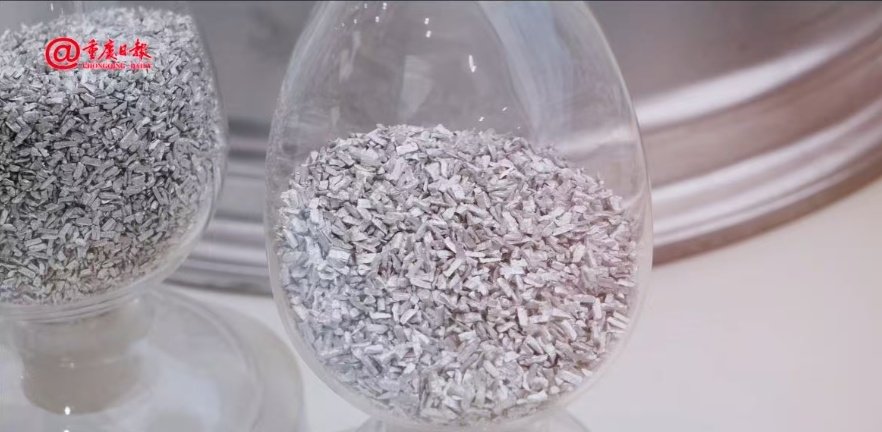
The team selected a 3,600-ton semi-solid magnesium alloy injection molding machine developed by Haitian Metal. The core of this steel behemoth, dubbed the “metal syringe,” is a massive screw. Magnesium alloy pellets are fed into the barrel and heated with precise temperature control.
“The hardest part is temperature control,” recalled an engineer involved in the project. “The temperature can only deviate by ±2°C. If it’s a little higher, the metal turns to liquid and creates turbulence. If it’s a little lower, it becomes a solid block that could break the screw.”
Through hundreds of repeated experiments, the team encountered numerous challenges: improper pressure would cause the hub to have missing sections; poor mold venting would leave pockmarks on the hub’s surface. In the most dangerous incident, the semi-solid slurry underwent extremely fine splashing under pressure, causing the experiment to be halted.
“We not only need to produce qualified wheel hubs but also develop a replicable set of process standards for the entire industry in the future,” Jiang Bin said. Through repeated microscopic simulations and tens of thousands of data adjustments, the Mingyue Lake Laboratory team eventually developed a comprehensive set of “injection parameters.”
One day in early 2025, the first perfect semi-solid magnesium alloy wheel hub slid out of the mold with a crisp sound. Jiang Bin and his colleagues cheered enthusiastically. This crisp sound marked a critical step forward for Chongqing in core technologies for future automotive lightweighting.
But the challenges were not over. Magnesium alloy has an inherent weakness: it is prone to corrosion.
For example, in northern winters, de-icing salt spread on roads comes into direct contact with magnesium alloy wheel hubs, pitting their surfaces. This poses another significant hurdle for the market adoption of magnesium alloy hubs.
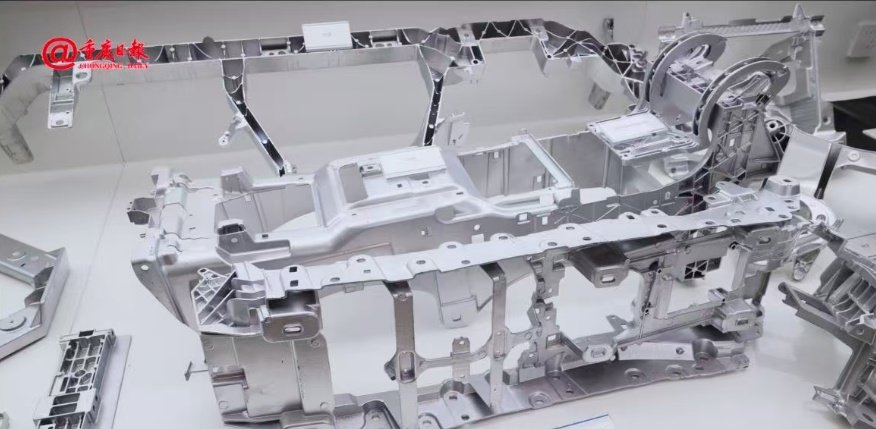
▲ Semi-solid injection molded magnesium alloy wheel hub. Video screenshot
To address this, the Mingyue Lake Laboratory developed another unique technology: low-cost surface treatment. In the laboratory’s electrolytic cell, high-voltage pulses generate tiny arcs. Combined with a low-cost corrosion inhibitor, a dense, impermeable oxide layer slowly grows on the surface of the magnesium alloy wheel hub.
“It’s like putting a nano-scale ‘armor’ on the magnesium alloy wheel hub,” Jiang Bin described. Tests have shown that this armor is not only wear-resistant but can also withstand long-term salt spray testing, fully meeting product requirements.
This “armor” has completely solved the corrosion problem for magnesium alloy wheel hubs, truly equipping them for market entry and empowering the future automotive industry.
The “semi-solid injection molded magnesium alloy wheel hub” project took just over half a year from initiation to successful trial production. This development speed is remarkable in the industry.
Why was it so fast? Jiang Bin explained that behind this achievement is a “five-party collaboration” innovation mechanism:
Mingyue Lake Laboratory contributed the core process; Boao Magnesium Aluminum provided pilot testing facilities; Haitian Metal supplied high-end equipment; CITIC Dicastal Jieli offered application data and testing standards; and Borun Mold specialized in developing complex molding dies.
“Traditional technology R&D often involves universities and enterprises working in separate silos, leading to a disconnect between research and the market,” Jiang Bin said. For this magnesium alloy wheel hub project, however, participants were not driven by funding but were “bringing their own provisions” to conduct R&D.
For example, the head of Borun Mold spent hundreds of thousands of yuan of his own money to open a brand-new set of molds, accepting the risk of loss. After successful development, the technology-related benefits associated with the molds would belong to Borun Mold. This market-driven “collaborative R&D” indeed achieved remarkable speed, cutting the expected development timeline by more than half compared with international counterparts.
It is understood that the semi-solid injection molded magnesium alloy wheel hub is more than 30% lighter than an aluminum alloy wheel hub of the same size. Using four on a single vehicle reduces total vehicle weight by 20 to 30 kilograms, directly increasing the range of new energy vehicles by 3% to 5%.
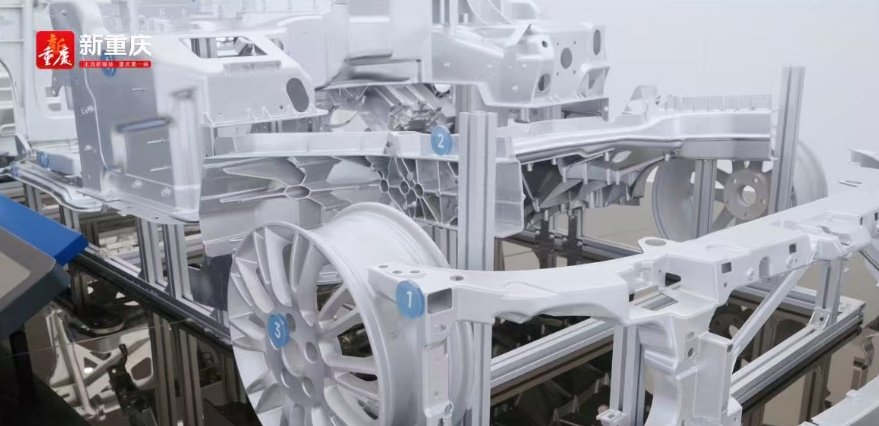
▲ Semi-solid injection molded magnesium alloy wheel hub. Video screenshot
Furthermore, the energy consumption required to manufacture this hub is about 20% lower than traditional smelting, and the production process emits no harmful gases, achieving green manufacturing and aligning with the low-carbon development direction of the future automotive industry. More importantly, the “one-step molding” injection technology eliminates many subsequent processing steps and avoids material waste. After future large-scale mass production, the cost will be comparable to that of mid-to-high-end low-pressure die-cast aluminum alloy wheels.
In the eyes of new energy vehicle manufacturers, this “black technology” is a “killer app” for creating differentiated competitiveness. This lightweight hub has now raced out of the laboratory and onto the production schedules of major automakers.
It is understood that automakers including Seres, FAW, and Xiaomi have already initiated substantive collaboration with the Mingyue Lake Laboratory, conducting targeted development for new vehicle models. Changan and other manufacturers are also actively conducting technical evaluations and discussions.
Source: New Chongqing – Chongqing Daily, Future Industry Office of Chongqing Municipal Commission of Economy and Information Technology
Disclaimer: Unless otherwise stated for original content, articles and images are sourced from the internet and major mainstream media. Copyright belongs to the original authors. Please contact us for removal if infringement is suspected.