
Contact us
- Chongqing Industrial Design Promotion Center
- No. 1, Shangqingsi Road, Yuzhong District, Chongqing, People's Republic of China
- +86-23-60332626
- [email protected]


In Chongqing’s Liangjiang New Area, Fubei Automotive Technology has been deeply engaged in automotive engineering services for 11 years. Its starting point was not styling but CAE crash safety simulation. The founder came from Tongji Tongjie and returned to Chongqing with a set of rigorous and pragmatic engineering habits. The company started from CAE, moved into interior and exterior engineering design around 2014, entered body design around 2018, and gradually filled out styling, chassis, vehicle layout, and electrical and electronic engineering, forming today’s complete chain covering vehicle engineering and performance development. This path determines Fubei’s attitude toward AI: it does not stand upstream of design talking about “creative liberation,” but stands in the middle of engineering, exploring whether AI can replace the large amount of repetitive, error-prone engineering work done by engineers.
In the interview, Gu Yongming, founder and chairman of Fubei Automotive, used a strong word to describe AI’s position in automotive industrial design: “revolution”. But he immediately drew the boundary very clearly: what AI revolutionizes is the old models and old capabilities that cannot keep up with the pace of industrial upgrading, not the engineers themselves. Within the next decade, AI cannot completely replace human engineers. In a promotional context, this sentence could easily be read as conservative. But if one enters Fubei’s CAE workflow, one finds that it is actually a precise technical judgment.
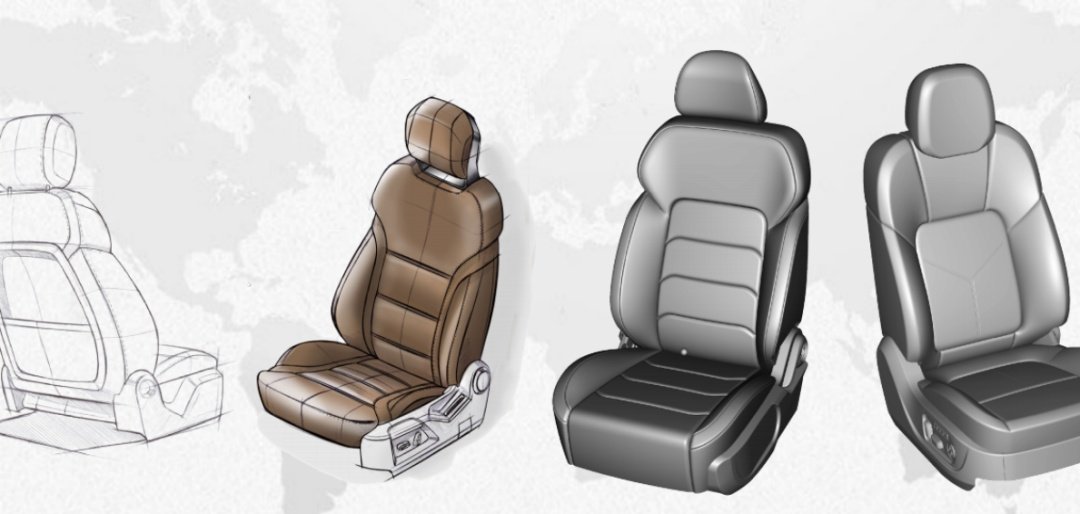
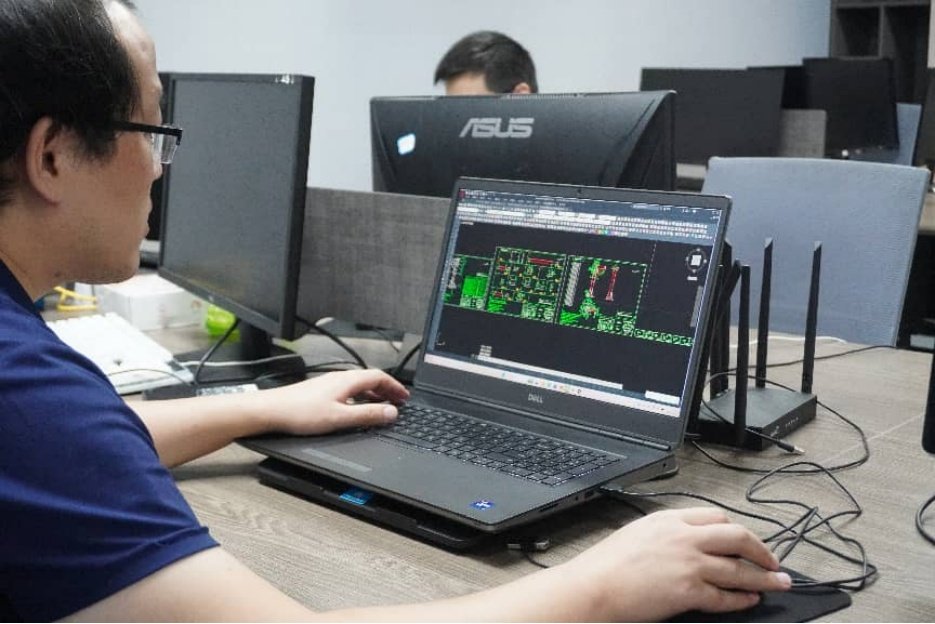
Traditional CAE simulation workflow is almost all “translation work” in its first half: after 3D modeling data is imported, engineers must convert it into an FEA model, manually establish connection relationships, spot welds, and motion trajectories, verify them item by item, and then set boundary conditions. Take the Lear B11 seat FEA analysis undertaken by Fubei: engineers must “cut” the seat’s 3D model into countless tiny meshes in the computer, and then assemble the connection relationships of hundreds of parts on the seat piece by piece. It is like using millions of Lego bricks to assemble an extremely precise seat in a computer. The tolerance for error here is extremely low; even if only one connection point is set incorrectly, all subsequent crash load calculations will be built on a wrong premise, the whole thing will be wasted, and it can only be started over. This work does not require creativity, but it requires extreme patience and vigilance for detail.
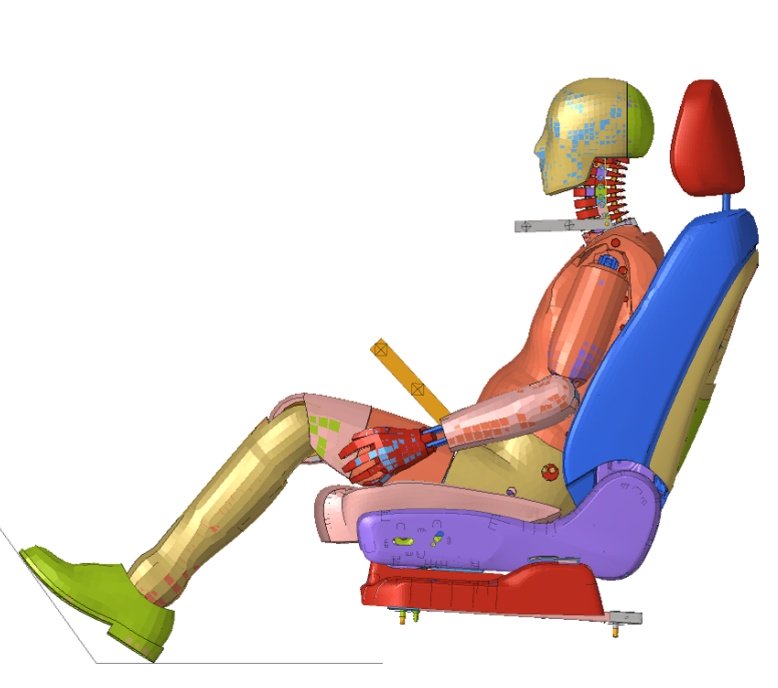
Lear B11 seat model description
The AI-assisted process Fubei is advancing changes precisely this stage: once 3D data is imported, AI automatically generates meshes, establishes connections, and outputs preliminary optimization directions. A patent application related to CFD drag simulation that Fubei filed in 2025 introduces a deep learning optimization module—using historical simulation results to train models, so that iteration of the drag coefficient no longer relies entirely on repeated manual trial calculations.
This is not simply an “efficiency story”, but AI’s reshaping of the “division of design labor”: after AI pulls engineers out of the repetitive labor of meshes and connection relationships, engineers’ time is reallocated to verification, judgment, and assessment of process feasibility. The boundary of the division of labor becomes clear—AI is responsible for “doing”, humans are responsible for “judging”, and the density of judgment is actually amplified.
The implementation of industrial AI has never been about the model’s paper capabilities, but about whether it can be integrated into real project workflows. Fubei’s answer is to bring AI from abstract code into real automotive engineering scenarios.
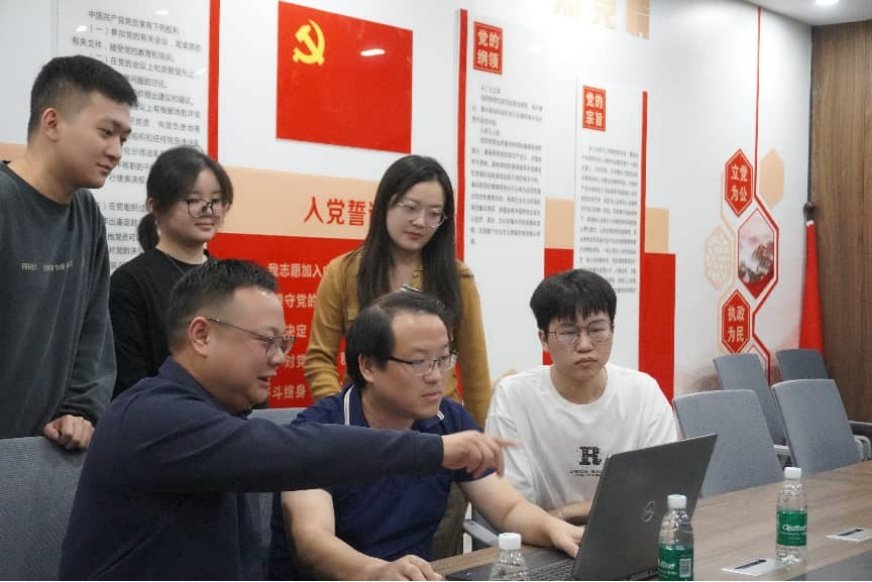
Fubei has not blindly followed the general large-model route, but has instead pursued vertical implementation based on its own automotive engineering business scenarios. In technical cooperation with Shenzhen Dipu Technology, it continuously ‘feeds’ the company’s accumulated real project cases to AI. For example, in CAE simulation, vehicle layout, and even interior and exterior engineering design, the solutions AI initially generates are often impractical; Fubei’s engineers then, through round after round of manual correction, ‘break down’ the industry’s real requirements for process boundaries, cost constraints, and regulatory red lines and teach them to AI. This kind of practical training based on real project data is the most pragmatic implementation answer of a local engineering service provider.
Industrial software is essentially a deterministic engineering language. AI, by contrast, excels at probabilistic logic. This misalignment at the underlying logic level directly manifests as bottlenecks across the entire chain of industrial AI implementation. Industrial sites impose extremely stringent requirements on error tolerance, and companies find it difficult to hand decision-making power entirely to algorithms; business-side experiential requirements are hard to translate directly into quantitative indicators that algorithms can understand; production R&D relies deeply on physical mechanisms and experiential knowledge, and such knowledge is difficult to learn directly from probabilistic data alone. A general large model can generate a beautiful piece of code or a painting in seconds, but in automotive R&D, a solution with a 1% error tolerance means 100% failure in the physical world.
For this reason, Fubei’s use of AI shows an extremely clear-headed “restraint”. In stages such as CAE simulation, where optimal solutions can be sought through massive data, AI can play a major role, helping engineers automatically generate meshes and find preliminary optimization directions. But as soon as it comes to interior and exterior engineering design, Fubei draws a clear red line: AI is not allowed into core execution stages.
This is not because AI lacks intelligence; rather, this field cannot accommodate “probabilistic plausibility”. Take Fubei’s routine engineering verification as an example: the cross-section of an instrument panel must simultaneously satisfy structural stiffness, material thickness distribution, draft angle, mold process, assembly clearance, and perceived quality. Every variable is rigid, and every millimeter of deviation will be amplified in the physical world—another example is the “SAB side airbag deployment space verification”, which strictly requires that at 16 ms after deployment, a 40 mm deployment space must be maintained between the seat and the interior in the airbag area—such a physical safety red line does not allow any probabilistic “trial and error”. AI can generate a hundred styling proposals that look reasonable, but possibly none of them can pass joint review by mold engineers and crash safety engineers.
Therefore, in the clash between “probabilistic logic” and “engineering red lines”, Fubei’s answer is: the final decision-making power over design can still only rest in the hands of engineers who understand processes and regulations.
Zooming out, Chongqing is pushing “AI + intelligent connected new energy vehicles” to the forefront of manufacturing upgrading. Policy language points to the direction, while companies like Fubei provide micro-level examples playing out on factory floors and screens.
It does not build cars, nor does it make general large models. Its work covers the demanding segments of the full-vehicle engineering chain that OEMs need someone to “chew through” for them: crash safety, structural durability, interior and exterior engineering, body design, and vehicle layout verification. Its work spans same-platform R&D support for conventional passenger-vehicle models, interior and exterior development for multiple passenger-vehicle programs, body engineering for new energy models, and now complete intelligent-system solutions for smart mobility and multi-scenario unmanned transport carriers. Fubei’s business footprint has always kept close to the pulse of China’s automotive industry’s transition toward new energy and intelligence. When AI enters these links, what it changes is not what cars ultimately look like, but the way cars are ‘designed’—from experience-driven manual iteration to data-driven human-machine collaboration. But the endpoint of collaboration is still the moment an engineer presses ‘confirm’ at a key node. That final responsibility for physical laws, process boundaries, and cost constraints always remains a human responsibility.
Design has been given too many romanticized ideas in the AI era. But in Fubei’s office, design is still a matter of constraints. Constraints come from regulations, from processes, from costs, and from the laws of the physical world that refuse to yield. AI makes the exploration of constraints faster, but the constraints themselves have not disappeared. Everything Fubei does is, in Chongqing—a major automotive industry hub—to fulfill design’s promise of ‘certainty’ with human professional judgment—not to let machines replace humans in making judgments, but to enable people to make judgments more accurately, more deeply, and with greater confidence.
Relying on Chongqing’s complete automotive industry ecosystem, more innovative entities like Fubei that specialize in niche segments are emerging. As technology and people empower each other, they not only uphold the physical red lines and process bottom lines, but are also accumulating the solid confidence for Chongqing’s automotive industry to move toward high-quality development.
Source: WeChat Official Account of “Chongqing City of Design”; Chongqing New Design Magazine.
Disclaimer: Except for original content and content specifically noted otherwise, the text and images in this post are sourced from the Internet and major mainstream media. Copyright belongs to the original authors. If you believe any content infringes your rights, please contact us for removal.
Image: The cover image for this article was generated by AI.