
Contact us
- Chongqing Industrial Design Promotion Center
- No. 1, Shangqingsi Road, Yuzhong District, Chongqing, People's Republic of China
- +86-23-60332626
- [email protected]


Editor’s Note: This year‘s Government Work Report calls for shaping new forms of the intelligent economy and deepening the “AI+” initiative. Our Smart Manufacturing in Action column goes to the front lines of industry to track the implementation of new technologies, projects, and scenarios, documenting the trajectory of Chongqing‘s intelligent industries from blueprint to reality.
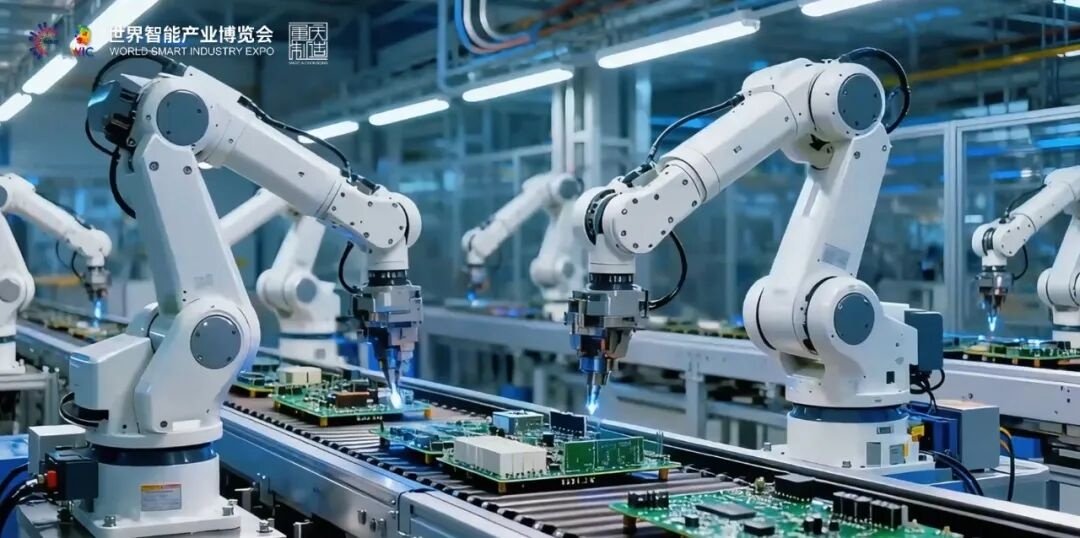
In this episode, we visit Inspur Computer‘s Chongqing Base to see firsthand how digital systems, flexible production lines, and intelligent equipment are significantly improving the efficiency of computer and server manufacturing.
In the exhibition hall of Chongqing Xishan Technology Co., Ltd. (hereinafter referred to as Xishan Technology), two bone saw blades are displayed side by side. One blade oscillates as a whole; the other has only its front serrations oscillating, and is wrapped in an additional protective sheath. This small difference points to a real surgical problem: in joint replacement osteotomy, how can the procedure be more stable and precise while minimizing impact on surrounding tissue?
This year, the “Orthopedic Precision Intelligent Surgical Power System” led by Xishan Technology was selected as one of Chongqing‘s first batch of smart medical equipment physician-engineer integration innovation projects. Tracing back along this saw blade, there is now a concrete entry point for understanding how medical equipment innovation happens.
During joint replacement surgery, doctors use an oscillating saw to complete the osteotomy. But the problem is that when the bone saw is operating, it may jump up and down and have a large left-right swing amplitude.
Clinicians requested that the osteotomy be more stable and precise, while minimizing impact on surrounding tissue.
Xishan Technology therefore optimized the saw blade structure.
Recently, the Smart China Expo reporting team saw the optimized blade at Xishan Technology—the “Static Saw” single-use sterile sheath saw blade. The Static Saw adds a protective sheath, with primarily the front serrations participating in cutting. By limiting the blade’s swing range, it reduces impact on surrounding tissue and makes the osteotomy surface flatter.
A similar “question” also arose with a shaver handpiece.
“The soft tissue can‘t be suctioned out, and it can’t be cut through either.”
A single piece of clinical feedback, in the hands of engineers, had to be further broken down: Is it a channel problem, a front-end structural problem, or a problem with the tooth profile and power matching?
Chen Zhu, Deputy General Manager of Xishan Technology, explained that to find the cause, the R&D team went deep into the clinical front lines, observing how doctors operate and where the problem occurs, then returning to the R&D side to adjust structures and conduct repeated testing. Ultimately, the team optimized the handpiece‘s front-end structure and tooth profile, solving the problem.
Doctors speak clinical language; engineers must translate it into design language and manufacturing language.
But the answer on the drawing must also be truly manufacturable.

CNC machining, component inspection, sterile assembly, finished product testing…
In Xishan Technology’s production area, every medical device must go through multiple processes. Relevant production data is fully traceable throughout, and some key processing and inspection steps require micron-level precision control.
Clinical needs define “what to do,” R&D answers “how to do it,” and manufacturing must answer: Can it be produced stably?
As individual point problems are solved, a new question arises: What doctors need—is it still one independent instrument after another?
Xishan Technology summarizes its product system as “one pair of eyes, two knives.”
The “pair of eyes” is the endoscope system, helping doctors clearly see internal tissues and lesions. Of the “two knives,” one is a surgical power device that performs grinding, drilling, sawing, planing, and shaving operations, while the other uses energy technologies such as ultrasound and plasma to treat tissue.
Positioning itself as a “provider of complete minimally invasive surgical tool solutions,” Xishan Technology focuses on three major product platforms—surgical power devices, endoscope systems, and energy surgical equipment—continuously improving its equipment, consumables, and supporting product systems to form a minimally invasive surgical tool and solution layout covering multiple clinical fields.
The “Orthopedic Precision Intelligent Surgical Power System,” selected for the first batch of physician-engineer integration innovation projects, is no longer considering just one saw blade or one handpiece—it is considering an entire orthopedic surgery.
According to the plan, the system will incorporate 3D imaging for preoperative planning; acquire information during surgery to assist perception and decision-making; and ultimately execute through end tools such as oscillating saws, burrs, and shaver handpieces, with plans to adapt to 56 different handpieces, blades, and consumables.
The “precision” and “intelligence” of medical equipment are extending from individual devices to the entire surgical scenario.
This also places higher demands on physician-engineer collaboration: How can clinical needs enter R&D earlier, and how can R&D outcomes reach clinical practice faster?

Chongqing is working to connect this chain more tightly.
This year, the Municipal Commission of Economy and Information Technology, together with the Municipal Education Commission, the Municipal Science and Technology Bureau, the Municipal Health Commission, and the Municipal Medical Products Administration, identified the first batch of 60 smart medical equipment physician-engineer integration innovation projects, organizing enterprises and medical institutions to collaboratively tackle key problems around clinical needs.
At the other end, Chongqing is simultaneously promoting the application of innovative medical devices. To date, among the first batch of 66 Chongqing innovative medical device promotion and application projects, over 90% have entered hospitals and been implemented.
One end connects clinical needs and technological breakthroughs forward; the other end drives verification and application of innovative products backward. Chongqing is connecting the entire chain—from clinical “question-setting,” to enterprise “answer-solving,” to products entering clinical practice.
A representative from the Municipal Commission of Economy and Information Technology stated that next, Chongqing will strengthen follow-up services and policy support for the first batch of physician-engineer integration innovation projects, accelerate technological breakthroughs and commercialization of scientific achievements, and continue to promote the application of innovative medical devices—so that more needs from the clinical front lines are transformed into products, and more innovative products enter clinical practice and undergo verification.

Source: World Intelligence Expo – Chongqing
Disclaimer: Unless otherwise stated for original content, articles and images are sourced from the internet and major mainstream media. Copyright belongs to the original authors. Please contact us for removal if infringement is suspected.