
Contact us
- Chongqing Industrial Design Promotion Center
- No. 1, Shangqingsi Road, Yuzhong District, Chongqing, People's Republic of China
- +86-23-60332626
- [email protected]

In recent years, AITO automobiles have defined a new paradigm for premium mobility, while Qiteng’s quadruped explosion-proof robot has taken the lead in the specialized intelligent equipment track. Industrial design has become the core enabler for Chongqing’s manufacturing industry to leap to higher value in the industrial chain and achieve iterative upgrades.
As the only world “City of Design” in western China, cutting-edge creative concepts have deeply intersected with Chongqing’s century-old industrial heritage. A large number of “Chongqing Design” masterpieces—distinguished by their aesthetics, quality, strength, and potential—are emerging and gaining acclaim across the Bashu region.
From today onwards, the “Encountering Design·Shaping the Future” series will present a panoramic view of Chongqing’s landmark industrial design projects of 2025. Through words and lenses, the series will immerse you in the mutually reinforcing journey between industrial design and Chongqing manufacturing.
“Wiper blades on the market were mostly ordinary consumables with limited styles, making it difficult to match them with vehicle owners’ needs and vehicle aesthetics. We had always wanted to develop colored wiper blades that combine durability with color design,” said Yuan Manfan, General Manager of Chongqing Fenghai Kunxiang Industrial Co., Ltd.
The Chongqing Light Industry School‘s full-industry-chain teaching factory brought new opportunities for Kunxiang Industrial to solve its development challenges. The school, together with Kunxiang Industrial and Yunma Brand Design Consultants, established the first CMF (Color, Material, Finish) laboratory among secondary vocational schools in the city. Leveraging real business projects for hands-on teaching, students were engaged throughout the entire design process—including brand positioning, innovative design, prototyping, and final delivery. Drawing inspiration from “cosmic star river” aesthetics, the design team selected Vision Blue and Tech Gray as the primary colors, incorporating an F5 refresh symbol to create a distinctive brand identity. With the help of the on-campus pilot production platform, the project completed 127 formula optimizations and 68 process validations, overcoming core technical challenges, refining color design, and iterating new materials. The product defect rate dropped to 0.3%, production efficiency increased by 132%, and the service life is more than three times that of ordinary wiper blades. The hit product—colored wiper blades—was successfully launched.
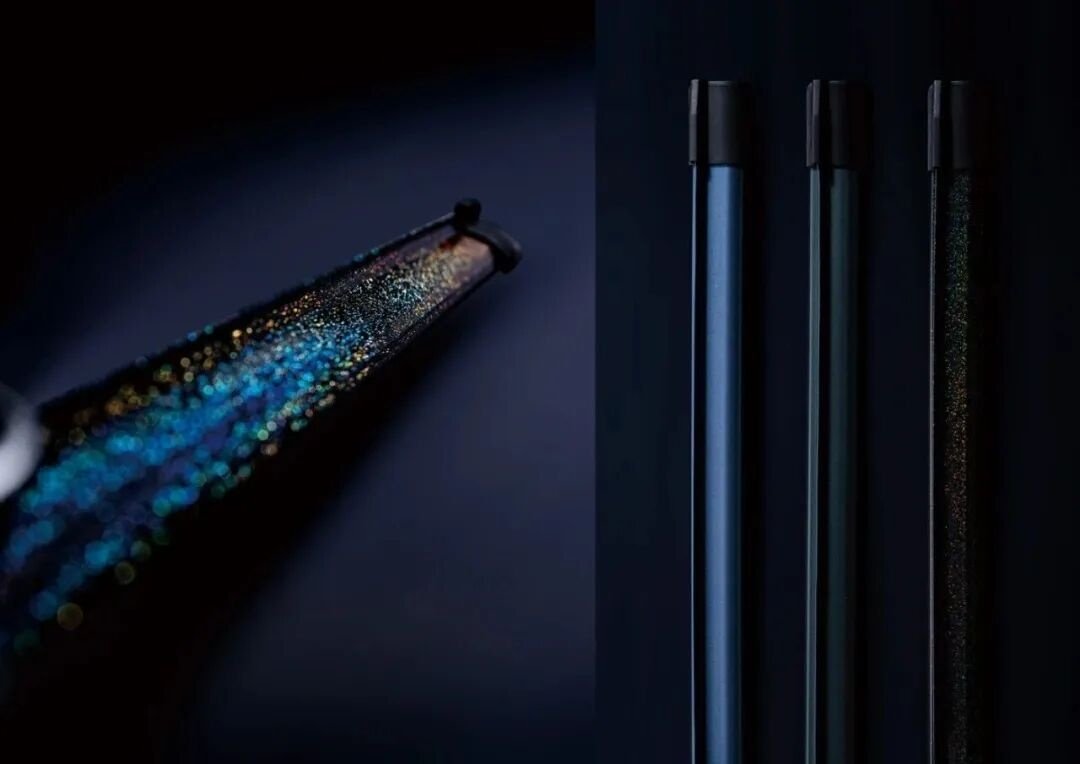
The project trained 120 materials science students, with 38 of them entering Kunxiang Industrial‘s R&D system. The product not only filled a gap in the domestic colored wiper blade market but also won the 2023 International CMF Design Award. It is now an original equipment supplier product for automakers including Li Auto, Geely, and Changan, covering half of China’s provincial auto parts markets through offline channels, and exported to Russia, Southeast Asia, the Middle East, and beyond. Annual output has exceeded 20 million yuan, truly achieving two-way success through school-enterprise collaborative development and joint talent cultivation.
Traditional school-enterprise cooperation has often suffered from shallow collaboration levels, insufficient technological empowerment, mismatched supply and demand, and hampered commercialization. The Chongqing Light Industry School, using the “Refresher” colored wiper blade as a practical vehicle, has created an innovative model of deep integration and mutual empowerment between talent cultivation and design services.
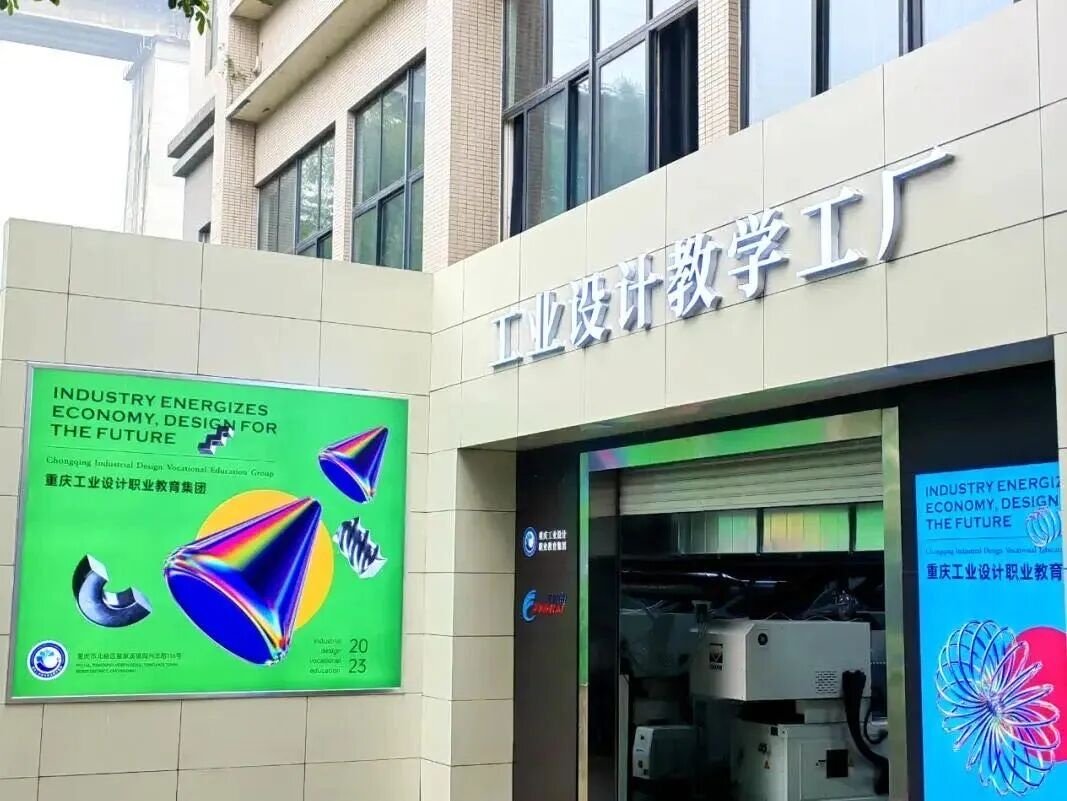
Leveraging its own resource advantages, the Chongqing Light Industry School has built a “Five-in-One” collaborative service system, integrating five major components: professional clusters, vocational education groups, industry academies, design studios, and the CMF laboratory. Each component has a clear division of labor and supports the others: professional clusters provide the foundation for talent supply; vocational education groups bring together industry, enterprise, and educational resources to build supply-demand matching platforms; industry academies establish organizational structures and long-term cooperation mechanisms; design studios respond to market needs by undertaking real-world projects; and the CMF laboratory integrates materials research, process testing, and industry trend analysis into the entire design process, significantly shortening the cycle from concept to product. Guided by the philosophy that “teaching is service, and service is teaching,” the school has evolved from simply supplying talent to offering comprehensive services, broadening the value of vocational design education and continuously supplying design talent with strong practical skills and market adaptability to support Chongqing‘s efforts to build a “Global City of Design.”
Source: Chongqing Manufacturing, “Chongqing Design Meets Smart Manufacturing” Episode 6: Innovative Design Service Model Creates a New Benchmark for Industry-Education Integration