

Contact us
- Chongqing Industrial Design Promotion Center
- No. 1, Shangqingsi Road, Yuzhong District, Chongqing, People's Republic of China
- +86-23-60332626
- [email protected]

This year’s CCTV Spring Festival Gala featured a robot-themed skit that vividly depicted future life scenarios, inspiring widespread longing. And the future shown on screen is gradually becoming reality.
Space information, low-altitude economy, embodied intelligence… In 2024, Chongqing took the lead nationally in laying out future industries and formulating an action plan for their cultivation. A large number of future industry projects have taken root and grown in the mountain city, moving from laboratories into people’s lives.
The “Touching the Future in Chongqing” series takes you into laboratories, industrial parks, and application scenarios, using images and words to help you feel the future.
Industry category: Space information.
Features: China’s first “space-air-ground integrated” communication and navigation solution that deeply integrates BeiDou high-precision positioning, low-orbit satellite communication, and ground 5G networks.
Application scenarios: Widely used in flying cars (eVTOL), logistics drones, and embodied intelligent robots operating in extreme working environments.
Imagine this scenario:
One day in the future, you are riding in a flying car (eVTOL) 300 meters above the ground. A sudden torrential downpour completely obscures your vision, and the 5G signal is disrupted by electromagnetic interference.
On the ground, you could pull over to the side of the road. But what do you do in the air? That calls for an “ultimate brain” that never loses connection. This is precisely one of the biggest technical challenges currently facing flying cars.
A breakthrough has emerged in Chongqing.
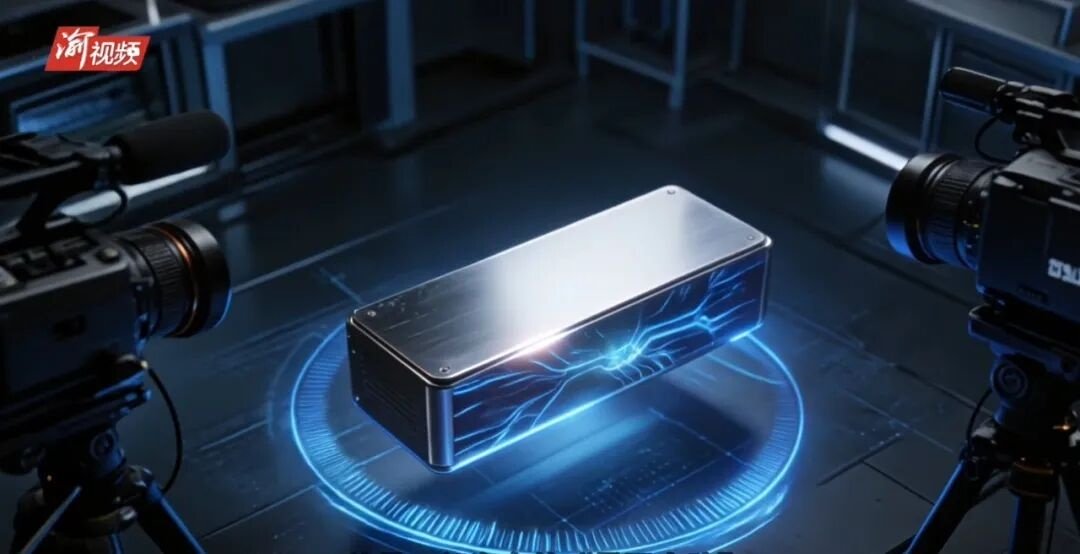
Recently, at the Chongqing laboratory of Beidou Zhilian Technology Co., Ltd. (hereinafter referred to as Beidou Zhilian), a reporter saw a silver “square box.”
“This is the AI Edge Computing Center,” said Wang Ying, General Manager of Beidou Zhilian’s Chongqing branch. In simple terms, it’s the “brain” of a flying car. Using AI technology, it seamlessly integrates satellite networks and 5G networks, enabling the vehicle to know exactly where it is and where it needs to go, no matter how harsh the environment.
This “brain” is also one of China’s first comprehensive solutions to fully integrate positioning and communication. It will make its official public debut at this year’s Beijing Auto Show.
What does this silver “square box” signify?
Liu Ruilei, Head of R&D Planning at Beidou Zhilian, offered an analogy: “If we think of a flying car as a person, the flight control system is its ‘cerebellum,’ responsible for balance and movement. What we have developed is its ‘cerebrum,’ responsible for thinking and communication.”
This “cerebrum” is indispensable because the logic of air traffic is far more complex than that on the ground.
First, there’s the jump in dimensions. Driving on the road is a 2D perspective, but flying in the air is a 3D perspective, requiring precise perception of altitude changes. In three-dimensional space, even a slight positioning error could lead to a collision.
Second, the ground has clear lane markings, traffic lights, and road signs, but there are no physical markers in low-altitude airspace. Flying cars must rely on ultra-high-precision digital maps and real-time sensing to find “invisible flight paths.”
Finally, ground 5G signals are strong and continuous. But as altitude increases, signals from ground base stations rapidly weaken, becoming intermittent. Therefore, flying cars must instantly acquire and analyze massive amounts of data from satellites, ground base stations, and sensors. Without a “brain” powerful enough, a flying car would be like a person with their eyes blindfolded in a storm.
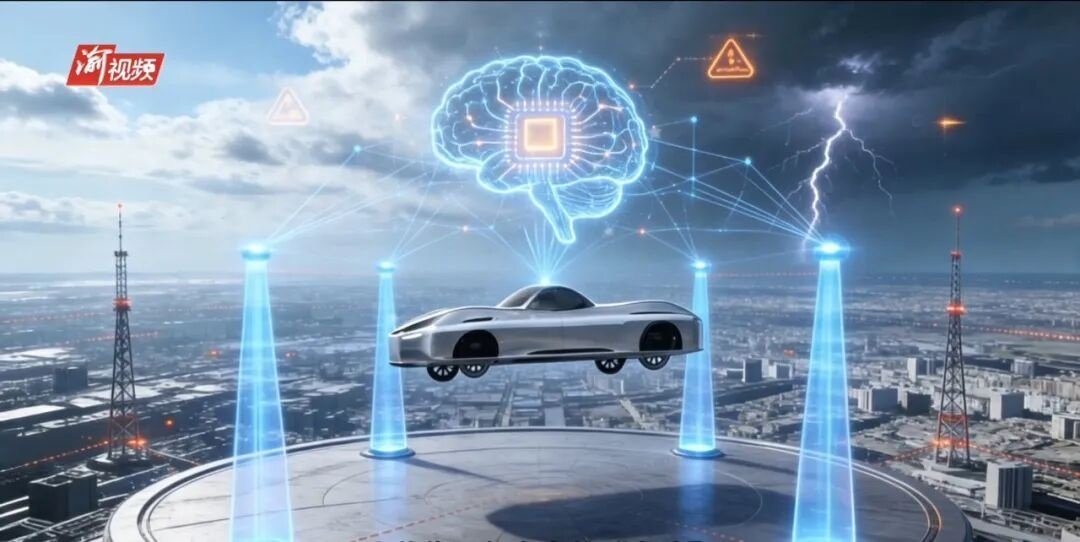
▲ The “brain” of a flying car. Video screenshot
Beidou Zhilian has been deeply involved in the smart vehicle sector for years, giving it strong foundational capabilities for solving positioning and communication challenges in extreme environments. In 2024, Beidou Zhilian initiated R&D on its AI Edge Computing Center, first validating a range of functionalities in smart cars. However, as the project moved into the simulation phase, the R&D team discovered that the challenges presented by the sky were far more severe than anticipated.
Initially, the team tried to directly transplant mature ground-based intelligent solutions to the air. They believed that simply increasing chip computing power and integrating ground signals would suffice.
“But in simulated tests, once extreme weather conditions were introduced, the system frequently crashed due to untimely signal switching,” Liu Ruilei recalled. “Weather variables were too great; our existing experience proved unreliable.”
After repeated discussions, they decided to fundamentally restructure the technical logic: connect all networks—both in the air and on the ground—and let AI make its own decisions.
The team developed a dynamic fusion algorithm. When the AI detects interference with the ground 5G signal, it instantly splits the data stream: half continues attempting to connect via ground networks, while the other half decisively switches to satellite links.
This signal-splitting technology achieves deep, seamless integration between low-orbit satellite networks and ground networks.
To test the limits of this “brain,” the team conducted round-the-clock simulations in the lab:
● When the flying vehicle entered “urban canyons” lined with skyscrapers, satellite signals repeatedly “drifted” due to building obstructions.
● When sudden severe weather struck at 500 meters altitude, strong electromagnetic pulses violently “bombarded” the communication and navigation system.
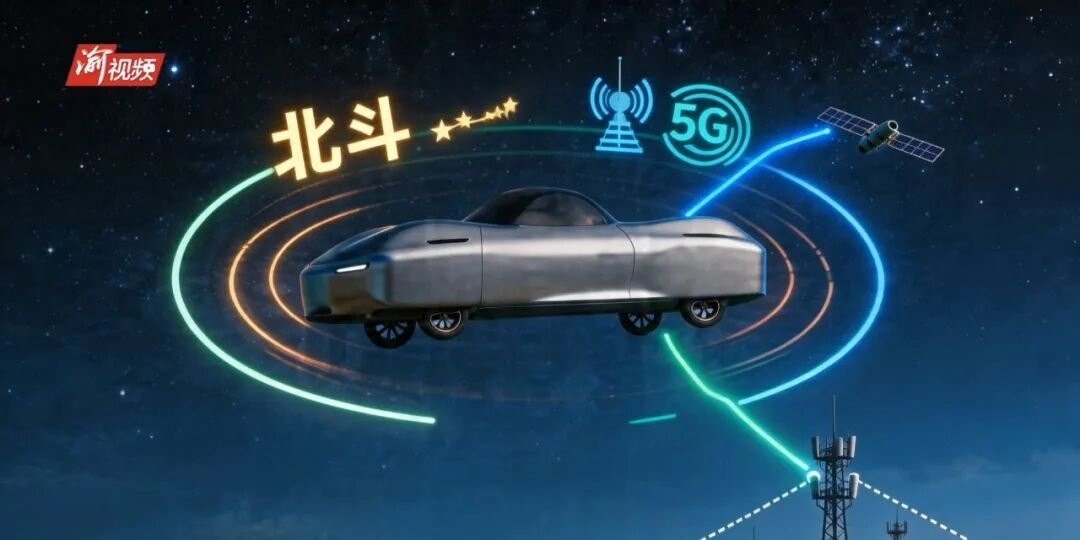
▲ BeiDou high-precision positioning. Video screenshot
The flying vehicle’s “brain” withstood every extreme scenario! The technology—”Beidou high-precision positioning + low-orbit satellite broadband communication + integrated ground network + AI algorithms”—successfully solved physical challenges such as high-isolation antennas. In the future, flying car manufacturers need only install this “brain” to gain complete intelligent capabilities, significantly shortening development cycles.
“The current ‘brain’ prototype is only an interim achievement,” Liu Ruilei said. “Our goal is to upgrade the current edge computing center into a satellite-ground collaborative computing network.” In the future, the main challenges for the flying car’s “brain” to function properly are overcoming signal latency in high-frequency mobile satellite communication and the real-time scheduling of massive amounts of data between satellites and the ground. Beidou Zhilian is actively participating in the formulation of terminal protocols for China’s low-orbit satellite constellation, attempting to achieve cross-temporal sharing of computing power through the synergy of “on-satellite computing” and “on-device computing.”
Industry insiders believe that with the accelerated deployment of China’s low-orbit satellite plans, thousands of satellites will weave a global coverage network in the coming years. For Beidou Zhilian, this means there will be no more blind spots for the “brain’s” signal perception.
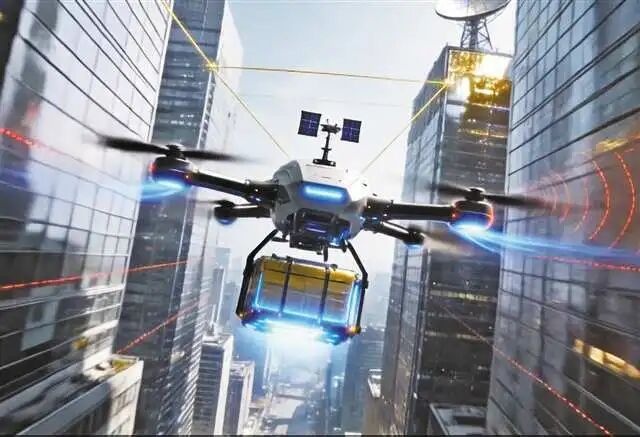
▲ In the future, this “brain” will also be installed in logistics drones and robots operating in extreme environments. Video screenshot
In a corner of the lab, the reporter also saw a prototype embodied intelligent robot named “Xiaobei.”
“In the future, this ‘brain’ will not only be installed in flying cars but also inside robot bodies,” Wang Ying said. This type of embodied intelligent robot, integrating low-orbit satellite technology, will be able to operate in wilderness areas, deep mountains, or post-disaster ruins where there is no ground signal. It could participate in life-saving rescues, accurately navigating into signal blind spots, or serve as a pioneering exploration scout, staying online in real-time anywhere on Earth. Since they do not need ground base station signals, they can “look up at the stars” to receive precise instructions and positioning.
Source: New Chongqing – Chongqing Daily, Future Industry Office of Chongqing Municipal Commission of Economy and Information Technology
Disclaimer: Unless otherwise stated for original content, articles and images are sourced from the internet and major mainstream media. Copyright belongs to the original authors. Please contact us for removal if infringement is suspected.