
Contact us
- Chongqing Industrial Design Promotion Center
- No. 1, Shangqingsi Road, Yuzhong District, Chongqing, People's Republic of China
- +86-23-60332626
- [email protected]

Editor’s Note: Record highs and nine consecutive increases! Over the past year, the total value of China’s goods trade imports and exports grew by 3.8%, reaching 45.47 trillion yuan, a record high, maintaining its position as the world’s largest trader in goods. Among this, Chongqing emerged as a standout performer, with its total annual import and export value exceeding 800 billion yuan, a year-on-year increase of 12%. “Chongqing-Made” products have transformed from laptop computers being the sole standout to a situation where “multiple highlights are blossoming.”
Chongqing Daily is launching the “‘Chongqing-Made’ Goes Global” series of reports, telling the stories of “Chongqing-Made” products traveling across oceans, decoding the advanced code of Chongqing manufacturing’s journey from “going out” to “going steady” and “going far,” and showcasing the robust strength of “Made in China.”
The biopharmaceutical industry is one of Chongqing‘s six trillion-yuan distinctive and advantageous industrial clusters within the “33618” modern manufacturing system. In recent years, a variety of Chongqing-made pharmaceutical products have successfully expanded into Southeast Asia, the United States, and other markets. According to Chongqing Customs data, in 2025, Chongqing‘s pharmaceutical product exports exceeded RMB 1.5 billion, a year-on-year increase of 18.8%.
A compact, tape-measure-shaped inhaler—flick the lever, bring it to your lips, and inhale. A fine powder mist enters the respiratory tract and reaches the lungs directly. This is a dry powder inhaler (DPI), a critical class of medication for treating respiratory diseases. Globally, this category was once monopolized by pharmaceutical giants such as GlaxoSmithKline, AstraZeneca, and Boehringer Ingelheim.
Now, this arena has a “Chongqing contender.”
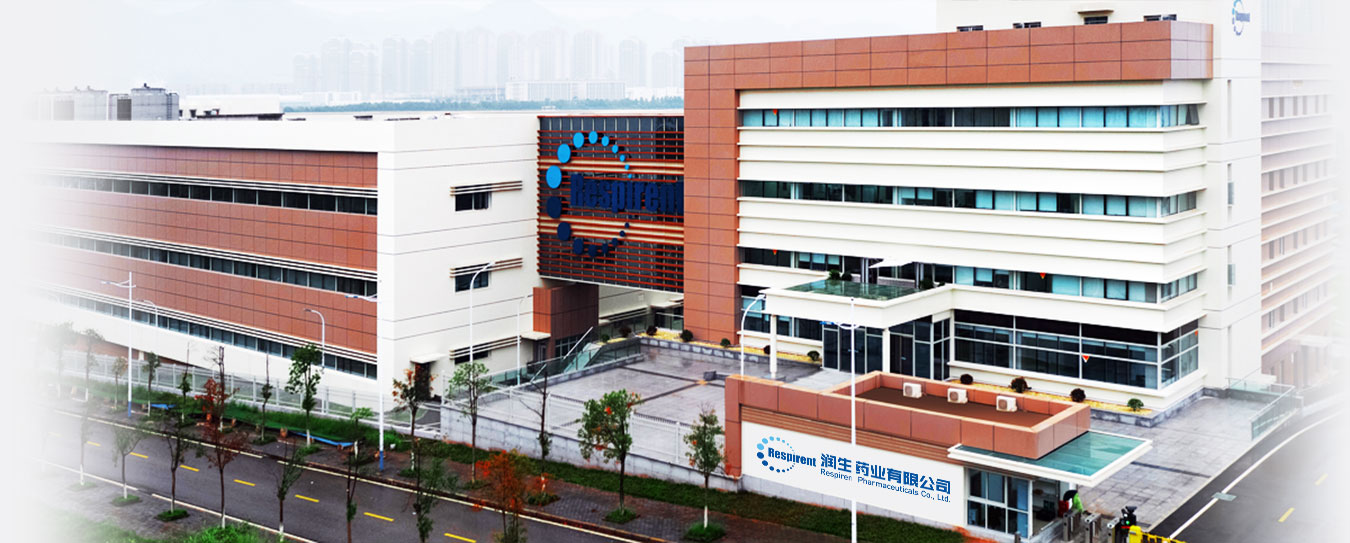
On January 12 this year, the dry powder inhaler “Salmeterol and Fluticasone Propionate Powder for Inhalation,” developed independently by Chongqing-based Runsheng Pharmaceutical Co., Ltd. (hereinafter Runsheng Pharma), received official approval from the U.S. Food and Drug Administration (FDA) for marketing. It is specifically indicated for the regular treatment of reversible obstructive airway diseases, including asthma in adults and children. This is also the first dry powder inhaler product independently developed by a Chinese company to receive FDA approval.
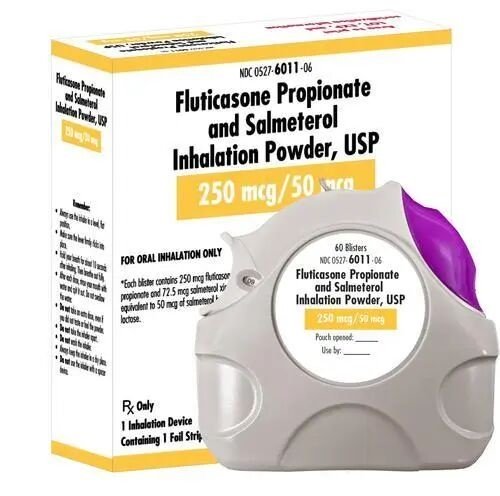
▲ Salmeterol and Fluticasone Propionate Powder for Inhalation. (Photo provided by the company)
The FDA approval process is notoriously long, complex, and stringent—a global-level “ultimate test.” How did Runsheng Pharma pass this test and break into the U.S. market?
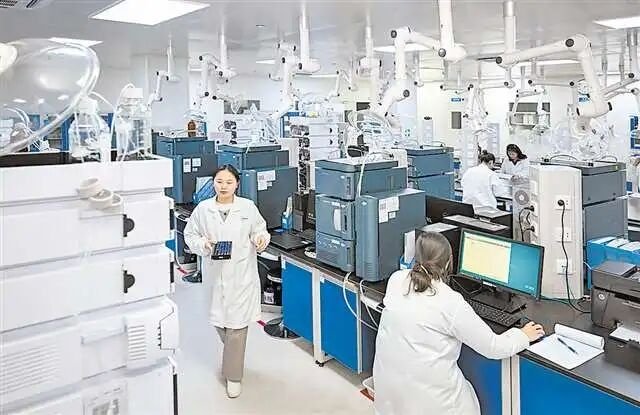
▲ February 11, Runsheng Pharma Co., Ltd., a staff member uses liquid chromatography equipment to test products. Photo by reporter Zhang Jinhui.
First, let‘s start with how Runsheng “enrolled.”
As early as 2014, Runsheng Pharma established itself in Shuitu New City, Liangjiang New Area. It took 12 years and over RMB 1.2 billion in cumulative investment for Runsheng Pharma to launch “Salmeterol and Fluticasone Propionate Powder for Inhalation” and another product sold in China, “Fluticasone Propionate Powder for Inhalation.”
Why did it take so much time and money?
“We wanted to make a truly good medicine for respiratory patients,” said Cao Yuan, General Manager of Runsheng Pharma. Respiratory disease is personal for Cao—several of his family members suffer from asthma, a chronic condition that requires flexible dosage adjustment. A medication that acts quickly, delivers precisely, and is easy to carry can dramatically improve patients‘ quality of life.
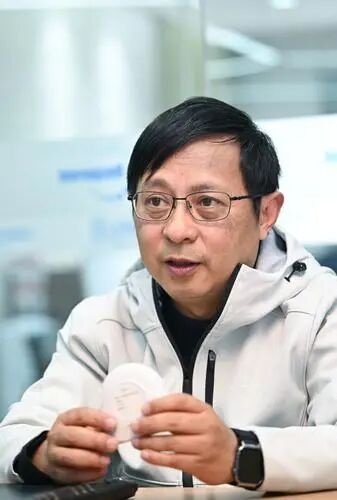
▲ Cao Yuan, General Manager of Runsheng Pharma. Photo by reporter Zhang Jinhui / Visual Chongqing
In 2014, globally marketed orally inhaled drug products mainly fell into three categories: inhalation solutions or suspensions (nebulized), pressurized metered-dose inhalers (pMDIs), and dry powder inhalers (DPIs). Inhalation solutions or suspensions are primarily used for nebulization therapy in hospitals. pMDIs are more familiar—the “press and spray” type—where pressing the valve releases a cool mist carrying medication into the airways. As a more complex inhalation formulation, DPIs offer significantly higher drug delivery efficiency than solutions or suspensions, ensuring better efficacy and safety—but at higher R&D and manufacturing costs.
Cao was well aware of the limitations of each: nebulization is relatively inefficient and restricts patient mobility; pMDIs require 0.8 seconds for the spray to reach the lungs, but the cool sensation often triggers an involuntary airway closure reflex, blocking drug entry; DPIs are efficient and convenient, but expensive. When GSK‘s originator DPI launched in the U.S. in 2001, a single pack cost nearly USD 400—and even after price reductions, still exceeds USD 200 for a one-month supply.
Leveraging years of accumulated expertise, they decided to develop their own DPI.
Unlike other products, DPI development often requires highly automated production platforms—at enormous cost. Cao explained that DPIs have a peculiar “scale-up effect” that is not simply linear. A process that works stably at lab or pilot scale often changes dramatically when transferred to full production scale.
For example, a specific ratio of sugar and water mixed at 60 revolutions per minute in a small container might yield a pharmaceutical blend. But on a production platform, the mixing vessel could be the size of a conference room. Even with the same ratio and mixing speed, the larger space changes the linear velocity of the mixing tools, affecting blend quality.
As a result, Runsheng Pharma‘s financial and R&D investments were heavily focused on production-scale platforms. After years of commitment, Runsheng Pharma built a world-leading fully automated blister-type dry powder inhaler production line. In 2018, the first batch of “Salmeterol and Fluticasone Propionate Powder for Inhalation” samples for clinical research was produced on this line.
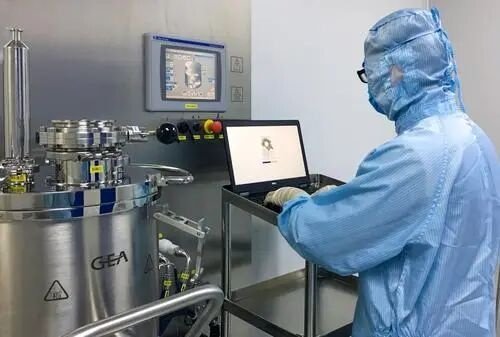
▲ Runsheng Pharma Co., Ltd. in Shuitu New City, Liangjiang New Area, staff performing formulation production in the manufacturing workshop. (Photo provided by the company)
In 2021, Runsheng Pharma submitted its new drug application to the FDA.
Alongside the technical review, the FDA conducts a Pre-Approval Inspection (PAI) at the manufacturing site. Due to the COVID-19 pandemic, the FDA‘s inspectors were repeatedly delayed. Despite active coordination by relevant Chongqing authorities, the FDA inspectors remained unable to travel.
Time is money. Runsheng proposed that the FDA’s Beijing office send inspectors. However, the FDA stated that the Beijing office staff‘s expertise did not match the complexity of this advanced formulation—specialists would need to be dispatched from the U.S.
Runsheng then proposed another approach: using the hundreds of HD cameras installed across its campus, offices, and production workshops, the company recorded the entire R&D and production process and offered to send the videos to the U.S. for an online inspection via video and live connection. The FDA firmly declined this suggestion, insisting on being “able to see with their own eyes” and waiting until two professional inspectors could conduct an on-site visit.
In 2023, two FDA inspectors finally arrived at Runsheng Pharma. Their inspection was microscopic in detail—from handwritten records to all the data underlying the DPI’s development. They examined everything. Even the color of the pens used was scrutinized.
Why check pen colors?
Cao explained that Runsheng specifically uses blue pens for records because blue ink changes color when photocopied, making copies distinguishable from originals. Black ink is much harder to tell apart. This follows the GMP principles of honesty and integrity, prohibiting falsification.
For R&D data, the FDA investigated like detectives—traceability was paramount. They wanted to know which piece of equipment in which workshop generated each piece of data and on which day.
After five full days of on-site inspection, the two inspectors stated that Runsheng Pharma had passed the Pre-Approval Inspection with zero defects. Subsequently, the FDA conducted a remote audit, during which Runsheng‘s team transparently disclosed study designs, execution, and corrective actions for deviations, engaging in thorough and sustained communication with the FDA auditor.
Cao Yuan acknowledged that during product development and manufacturing, Runsheng Pharma self-identified and corrected over 1,900 deviations. It was precisely this extreme commitment to quality and honest approach to problems that earned them the perfect zero-defect result. After the entire rigorous process was completed, in January this year, Runsheng Pharma received FDA approval and its first batch of U.S. orders.
On February 3, reporters saw samples of “Salmeterol and Fluticasone Propionate Powder for Inhalation” at Runsheng Pharma. A thin silver aluminum foil strip contains 60 evenly spaced small blisters—each one a single dose of the inhalation powder, called a “blister.” The strip is coiled inside the device like a tape measure.
“This product is a drug-device combination with high patent barriers and stringent requirements for seamless integration,” Cao explained. To reach the lungs quickly, the particles in a DPI must be between 1 and 5 micrometers—a human hair is 60 to 90 micrometers thick. Encapsulating such fine particles inside aluminum foil is a significant challenge.
Under a microscope, the foil has microscopic “pinholes” that allow small amounts of moisture to pass through, potentially causing slight “dampness” that affects powder particle dispersion. To eliminate this risk, Runsheng‘s foil uses four layers of aluminum laminated together, ensuring the pinholes overlap and block moisture. A polymer layer is added in between for further protection. This “4-in-1” special foil is just the back side. The front side has an additional three-layer composite. In total, seven layers of foil protect the drug particles.
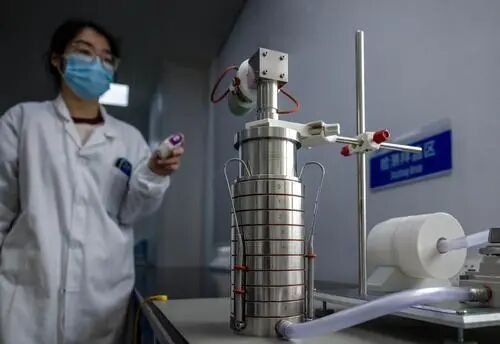
▲ February 11, Runsheng Pharma Co., Ltd. in Shuitu New City, Liangjiang New Area, a staff member uses an Anderson Cascade Impactor to simulate drug inhalation into the lungs, measuring particle distribution at different lung levels. Photo by reporter Zhang Jinhui / Visual Chongqing
This reliable “Chongqing-made” medicine offers significant price advantages in the U.S. market and will also benefit many Chinese patients.
Cao said that “Salmeterol and Fluticasone Propionate Powder for Inhalation” is currently undergoing China’s domestic approval process. Together with “Fluticasone Propionate Powder for Inhalation,” the two products can be used in combination to address varying degrees of asthma. In the future, the product is expected to benefit hundreds of millions of asthma patients.
“We couldn‘t have developed such a complex drug without the support of the Chongqing municipal government,” Cao said. In 2022, the project was designated a Chongqing major project and received funding from both the city and district levels through the science and technology bureau. The Municipal Commission of Economy and Information Technology repeatedly engaged with the company to analyze the characteristics and clinical value of complex formulations and consider future industry support. The Municipal Health Commission and the Medical Products Administration provided dedicated policy guidance. The Municipal Human Resources and Social Security Bureau offered strong talent support. And the Liangjiang New Area life sciences industry chain leaders responded to every request, big or small.
Cao said that the company‘s next step is to focus on developing more complex formulations for respiratory diseases, delivering more outstanding “Chongqing-made” medicines to markets in China, the U.S., Southeast Asia, and Europe.
Source: New Chongqing – Chongqing Daily
Disclaimer: Unless otherwise stated, text and images are sourced from the internet and major media outlets. Copyright belongs to the original authors. Contact us for removal if infringement is suspected.