
Contact us
- Chongqing Industrial Design Promotion Center
- No. 1, Shangqingsi Road, Yuzhong District, Chongqing, People's Republic of China
- +86-23-60332626
- [email protected]
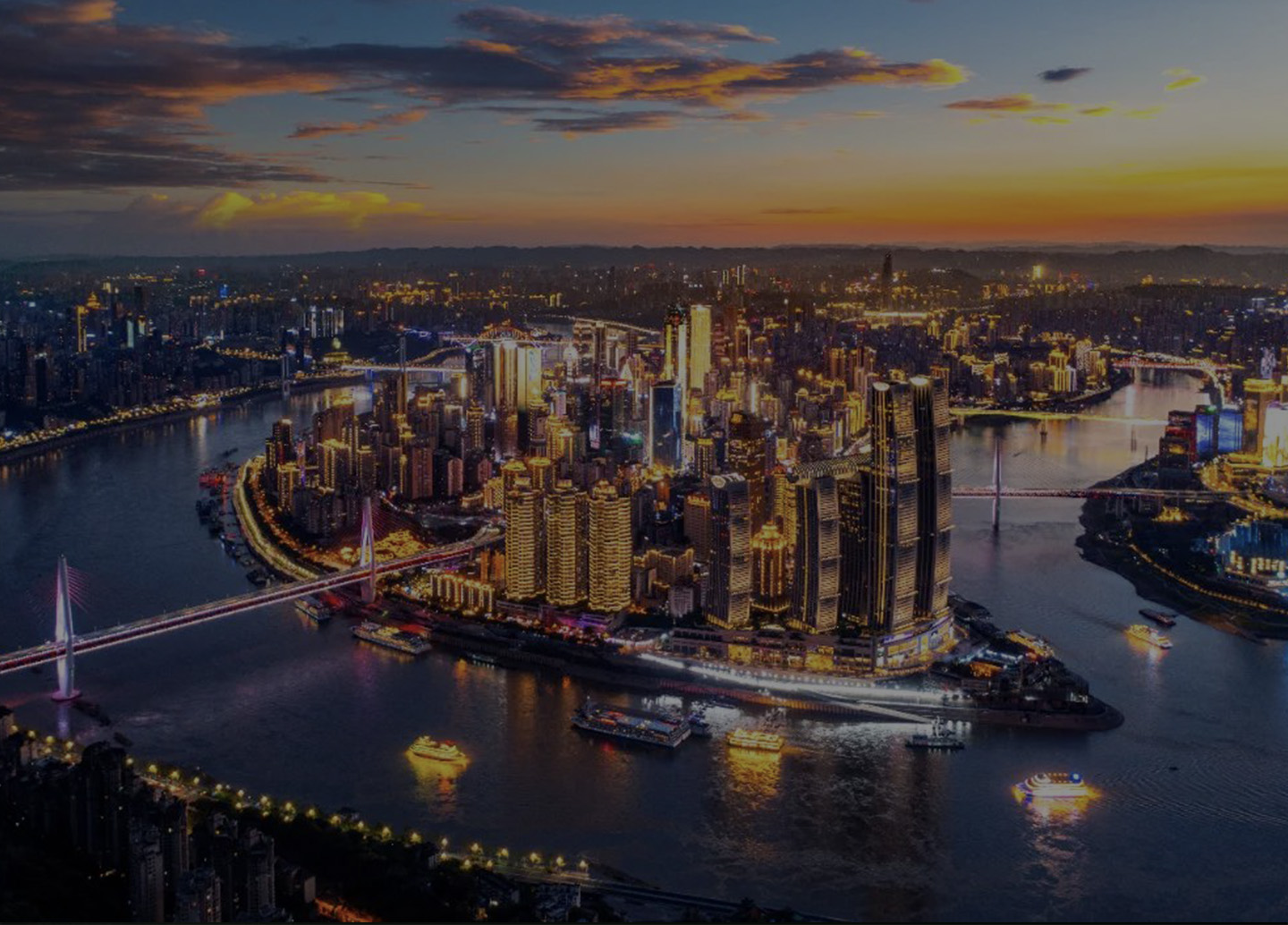
Editor’s Note: Record highs and nine consecutive increases! Over the past year, the total value of China’s goods trade imports and exports grew by 3.8%, reaching 45.47 trillion yuan, a record high, maintaining its position as the world’s largest trader in goods. Among this, Chongqing emerged as a standout performer, with its total annual import and export value exceeding 800 billion yuan, a year-on-year increase of 12%. “Chongqing-Made” products have transformed from laptop computers being the sole standout to a situation where “multiple highlights are blossoming.”
Chongqing Daily is launching the “‘Chongqing-Made’ Goes Global” series of reports, telling the stories of “Chongqing-Made” products traveling across oceans, decoding the advanced code of Chongqing manufacturing’s journey from “going out” to “going steady” and “going far,” and showcasing the robust strength of “Made in China.”
The eyewear industry is an emerging sector in Chongqing that has risen rapidly in recent years.
In the Fengjie Ecological Industrial Park, over 70 eyewear enterprises have gathered, forming full-category production capabilities encompassing frames, lenses, Bluetooth glasses, and contact lenses. In 2024, the park achieved a comprehensive output value of 3.02 billion yuan, accounting for over 5% of the national market share, with products exported to more than 30 countries and regions. In 2025, Chongqing’s eyewear industry exports exceeded 100 million yuan, a year-on-year increase of 44.7%.
At 9 a.m. on January 29th, Pakistani eyewear buyer Rasheed Ahmed arrived at Chongqing Jiangbei International Airport. This was not his first trip to China, but his destination had shifted from Guangzhou to Chongqing. The reason: his Chinese business partner of over twenty years, Qian Linfen, head of Chongqing Aishangmei Glasses Co., Ltd. (hereinafter referred to as “Aishangmei”), had built a brand-new contact lens factory in the heart of the Three Gorges hinterland, surrounded by mountains.
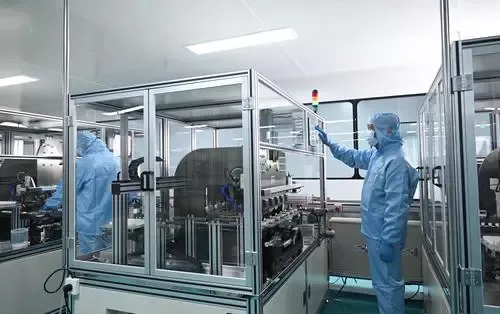
At the same moment, inside the Fengjie Ecological Industrial Park, the Aishangmei workshop was bustling with activity. As the first contact lens manufacturer in the Three Gorges reservoir area, robotic arms on the fully automated production line moved like deft fingers, precisely picking up colorful lenses in shades of peacock blue, coral pink, and amber brown.
These “fashion accessories for the eyes” were about to embark on their journey from the Three Gorges hinterland to the eyes of consumers worldwide. And the export story of “Chongqing-Made” was being seen by the world, one color contact lens at a time.

▲On January 29th, a Pakistani eyewear buyer places an order for Chongqing-made color contact lenses. Photo by reporter Luo Bin / Visual Chongqing
More than twenty years ago in Guangzhou, Rasheed first met Qian Linfen when she was still a newcomer to the eyewear export industry. At that time, Rasheed’s eyewear store, “Diamond Optics,” was just starting out in his hometown, primarily sourcing frame glasses from China.
Over the past decade, as colored contact lenses rapidly gained popularity in the Middle East and South Asian markets, their business scale continued to expand. Rasheed’s annual procurement of contact lenses from Qian Linfen had reached millions of yuan, covering a full range of prescriptions from 25 to 2000 degrees. The vibrantly colored cosmetic lenses, in particular, were often in short supply at his stores.
As business grew, so did the bottlenecks.
The production capacity of the OEM manufacturers that Qian Linfed had long relied on gradually failed to keep pace with her 20% annual order growth. Facing sustained demand from over a dozen countries, including Pakistan, Nepal, Sri Lanka, Kuwait, and Egypt, building an autonomous and controllable production base became an urgent necessity.
However, the escalating land and labor costs in coastal areas, coupled with fierce competition, repeatedly delayed Qian Linfen’s plans to build her own factory. The turning point came in early 2024—when an investment promotion team from Fengjie, Chongqing, traveled thousands of miles to proactively approach her.
By then, Fengjie’s eyewear industry had grown from nothing into an industrial cluster of considerable scale. The Fengjie County Ecological Industrial Park housed over 70 eyewear enterprises, forming a complete industrial chain encompassing R&D, design, manufacturing, exhibition, and sales. In 2024, the park’s output value exceeded 3 billion yuan.
“The industrial chain for traditional frame glasses, including frames and lenses, is relatively mature, but the high-growth segment of contact lenses remains a weak point for us,” admitted a park official. With global demand for contact lenses, especially cosmetic ones, remaining strong, filling this gap in Fengjie would not only complete the eyewear industry puzzle but also capture a rapidly growing new opportunity and enhance the added value of the entire industrial cluster.
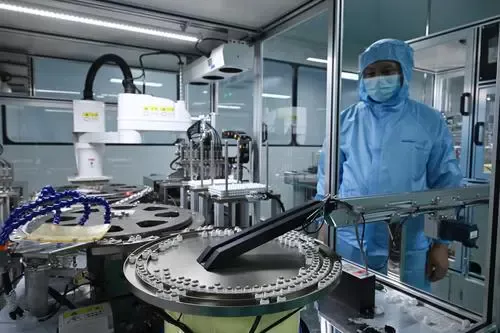
▲On January 29th, inside the production workshop of Chongqing Aishangmei Glasses Co., Ltd. in the Fengjie Ecological Industrial Park, China’s first fully automated digital production line for contact lenses is undergoing final adjustments. Photo by reporter Luo Bin / Visual Chongqing
Guided by this “filling and strengthening the chain” investment strategy, the team approached Qian Linfen. “They were very persistent. They not only introduced policies but also helped us analyze industry trends,” Qian recalled. The investment team systematically explained Fengjie’s existing industrial support, significant cost advantages, and policies including rent reductions, fixed asset investment subsidies, and loan interest discounts.
On February 28, 2025, Qian Linfen visited Fengjie for the first time. The cost advantages were tangible: compared to the eastern coastal areas, Fengjie offered 60%-80% lower land costs for construction, 75% lower factory rent, over 20% lower utility costs, and about 25% lower labor costs. What moved her even more was what an old friend from Guangzhou, who had already invested in building a factory in Fengjie, told her: “When the local government makes a promise, they keep it.”
On January 9, 2026, Aishangmei officially established itself in Fengjie. A modern 18,000-square-meter contact lens factory rose from the ground in the Three Gorges hinterland.
On its very first day of operation, the Aishangmei factory celebrated a major success—workers on the production line were busy packaging the initial order of 100,000 lenses bound for Egypt, the very first international order signed on the opening day.
Among the three digital production lines, two are fully automated. “This is China’s first fully automated digital equipment for contact lens production,” Qian Linfen explained, pointing to a machine operating with precision. From injection molding to shaping and packaging, many critical steps are now automated with robotics. The 20 workers currently at the factory are primarily responsible for equipment monitoring, parameter adjustment, and process programming.
However, a high degree of automation does not mean the production process is simple. A seemingly thin and soft contact lens undergoes over a dozen precise steps from raw material to finished product: color mixing, printing, color fixing, injection molding, demolding, hydration, lens inspection, packaging, and sterilization. The entire process takes several days, and the temperature, humidity, cleanliness, and timing at each stage directly impact the final quality.
“Patterns and colors are our most important competitive advantage,” said Qian Linfen. Different markets have vastly different aesthetic preferences for cosmetic lenses: Middle Eastern buyers favor rich, vibrant colors, while Southeast Asians prefer natural, everyday styles. To cater to this, Aishangmei has assembled a professional color design team that launches 8 to 10 new color patterns each month targeting different regional overseas markets.
Rasheed pointed to a light blue lens online and said, “This ‘Ocean Blue’ shade is particularly popular among young people in Pakistan. It’s clear without being exaggerated, just right for daily wear.”
The true “heart” of the production line lies in the tiny, single-use molds. Each contact lens is shaped by its own dedicated mold. “The precision of the mold directly determines the curvature, optical stability, and wearing comfort of the lens. This is a technological barrier in the industry,” Qian admitted. Currently, high-end molds still need to be imported from South Korea. The journey from South Korean factories, via ports like Weihai, and then through multimodal transport to reach Fengjie takes 10 to 15 days. Logistics efficiency and supply chain resilience are the main challenges at present.
To address this, Qian Linfen is actively promoting technical cooperation with Korean partners, with plans to eventually establish mold R&D and production bases locally in Fengjie, gradually localizing this core technological link.
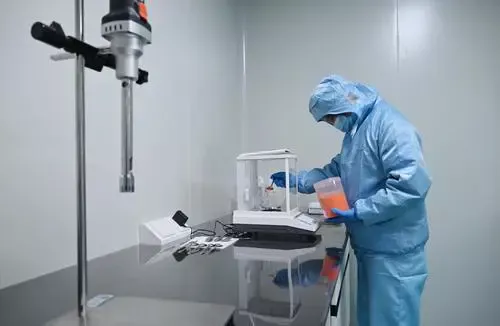
▲ On January 29th, in the R&D room of Chongqing Aishangmei Glasses Co., Ltd. in the Fengjie Ecological Industrial Park, technicians are developing new products. Photo by reporter Luo Bin / Visual Chongqing
The systematic integration of molds, colors, and automated production has opened the door to global markets for Aishangmei. After the tour, Rasheed signed a new contract almost without hesitation. “This time, I’m increasing my purchase volume by 30%. With this factory, I’m no longer just a client; I’m a partner growing together.”
This contract, signed in the Three Gorges reservoir area, marked the beginning of Aishangmei’s next phase of global expansion. Over the following two weeks, purchasing teams from Saudi Arabia, the United Arab Emirates, and Indonesia were scheduled to arrive one after another. The Saudi client, in preliminary communications, had already expressed a purchase intention for millions of lenses.
“After 23 years in foreign trade, today I finally feel like my feet are on solid ground,” Qian Linfen said with emotion. The full-scale operation of the Aishangmei Fengjie factory signifies the company’s complete transformation from a “foreign trade agent” to an integrated “manufacturer-trader.” Today, 100% of its products are exported, with annual orders potentially reaching tens of millions of lenses. Colorful lenses are continuously flowing to markets along the Belt and Road Initiative, including the Middle East and Southeast Asia.
With production capacity ramping up, Aishangmei is beginning to plan its longer-term overseas strategy. The European and American markets are the next target, but they come with stricter medical device certification requirements. “We are upgrading our quality management system in accordance with the ISO 13485 standard,” Qian Linfen stated. “We expect to obtain CE certification within two years, which will then allow us to enter the European market.”
“Attracting and cultivating Aishangmei is not just about bringing one enterprise to Fengjie; it’s about extending an entire industrial chain,” said the official from the Fengjie County Ecological Industrial Park. As envisioned by the investment team back then, with Aishangmei as the core, it is expected to attract upstream and downstream enterprises involved in mold R&D, lens case packaging, care solution production, and plastic pellet supply. This is not only about filling a critical gap in the regional contact lens industry but also about nurturing, through chain-based clustering, a new and distinctive industrial sector in the Three Gorges reservoir area—one that covers high-value-added segments from raw materials to end-user brands.
As each vibrant color contact lens departs from Fengjie for markets in the Middle East, Southeast Asia, and beyond, they carry not just orders, but also the determined steps of an inland county actively integrating into the global industrial chain and advancing towards the mid-to-high end of the value chain.
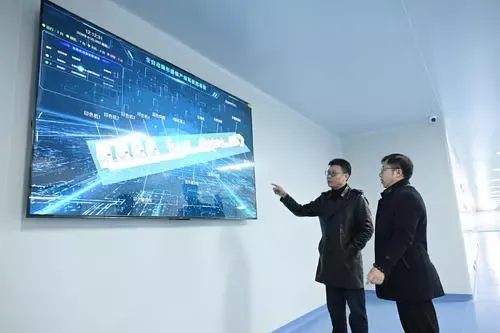
▲ On January 29th, inside the production workshop of Chongqing Aishangmei Glasses Co., Ltd. in the Fengjie Ecological Industrial Park, China’s first fully automated digital production line for contact lenses uses digital twin technology for precise monitoring of the entire production process. Photo by reporter Luo Bin / Visual Chongqing
Source: New Chongqing – Chongqing Daily
Original Title: “Chongqing-Made” Goes Global | Chongqing-Made Color Contact Lenses Soar from the Three Gorges Hinterland to the World
Disclaimer: Unless otherwise stated for original content, articles and images are sourced from the internet and major mainstream media. Copyright belongs to the original authors. Please contact us for removal if infringement is suspected.