

Contact us
- Chongqing Industrial Design Promotion Center
- No. 1, Shangqingsi Road, Yuzhong District, Chongqing, People's Republic of China
- +86-23-60332626
- [email protected]
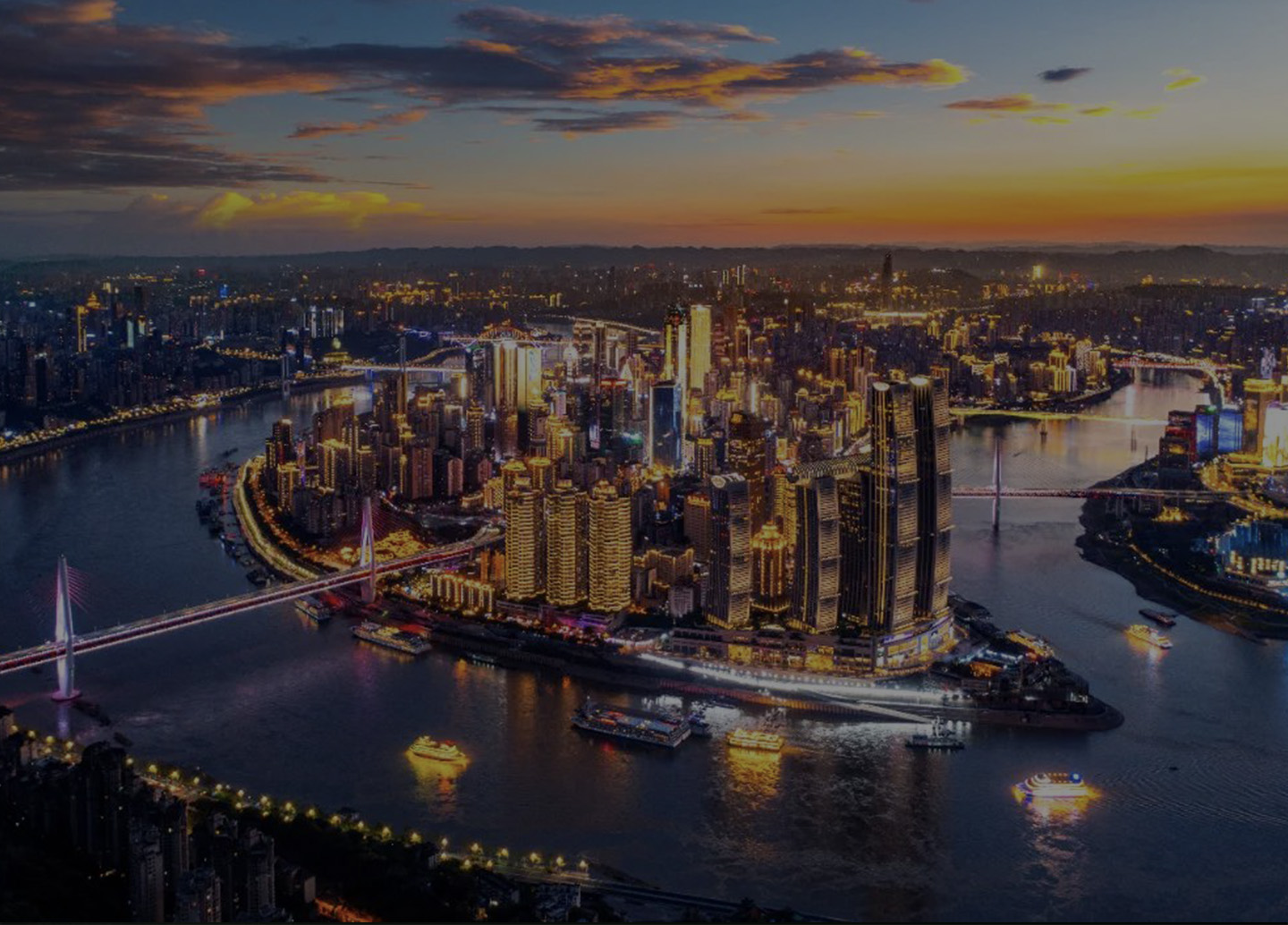
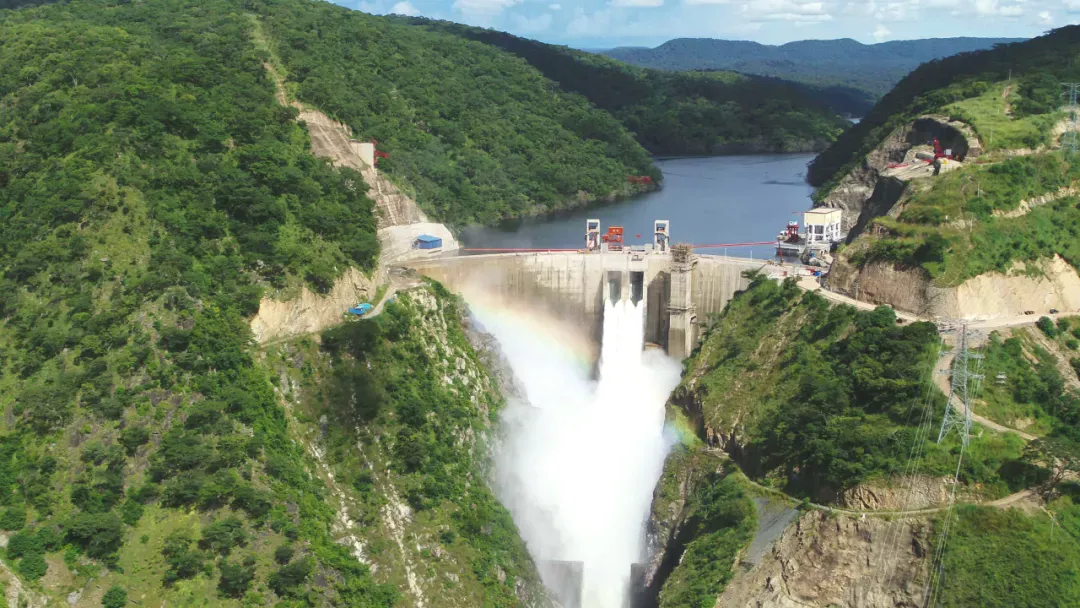
Editor’s Note: Record highs and nine consecutive increases! Over the past year, the total value of China’s goods trade imports and exports grew by 3.8%, reaching 45.47 trillion yuan, a record high, maintaining its position as the world’s largest trader in goods. Among this, Chongqing emerged as a standout performer, with its total annual import and export value exceeding 800 billion yuan, a year-on-year increase of 12%. “Chongqing-Made” products have transformed from laptop computers being the sole standout to a situation where “multiple highlights are blossoming.”
Chongqing Daily is launching the “‘Chongqing-Made’ Goes Global” series of reports, telling the stories of “Chongqing-Made” products traveling across oceans, decoding the advanced code of Chongqing manufacturing’s journey from “going out” to “going steady” and “going far,” and showcasing the robust strength of “Made in China.”
Equipment manufacturing is one of Chongqing‘s advantageous industries. Many local enterprises sell their products overseas, including smart manufacturing equipment, power equipment, construction machinery, and transportation equipment.
Nepal, located on the southern slope of the Himalayas, has more than 600 rivers, and hydropower is the “absolute core” of its electricity supply. Much of the hydropower equipment used in the country comes from Chongqing Water Turbine Works Co., Ltd. (hereinafter referred to as “Chongqing Hydro”).
Chongqing Hydro’s products entered the Nepali market in 1998 and quickly supplied more than 20 local hydropower plants. Last May, the company won a bid for an electromechanical EPC project at a Nepali hydropower station worth nearly RMB 60 million. Currently, the value of its equipment in operation in Nepal is approximately RMB 700 million, with a market share firmly in first place.
Chongqing Hydro is a pioneer among Chongqing‘s equipment manufacturers in “going global”: since the 1970s, it has supplied over 7,000 units to more than 60 countries and participated in building some 200 hydropower stations.
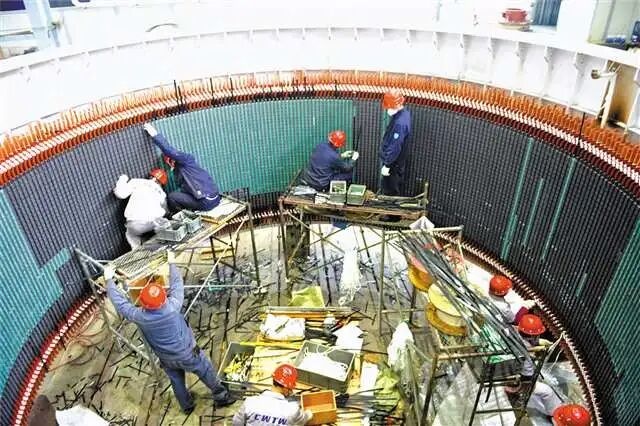
▲ Chongqing Hydro’s large equipment production site. (Photo provided by the company.)
In the 1970s, China began promoting the export of complete sets of equipment, and Chongqing Hydro followed national overseas aid projects to “go out.”
“Although we went out early, we didn‘t have much experience in exploring overseas markets,” said Peng Zhong, Party Secretary and Chairman of Chongqing Hydro. At the time, the company largely approached overseas business with a “get the job done” mindset.
At that time, the domestic power industry was in its golden age, and Chongqing Hydro was regarded as one of the “eight leading giants” in the domestic hydropower sector. Its strength and reputation ranked among the best in the country, and it had no shortage of orders. So, the company wasn‘t focused on overseas expansion: overseas orders were welcome, but their absence didn‘t matter.
What was planted by chance bears fruit when least expected. Because of its excellent product quality, Chongqing Hydro quickly gained recognition in overseas markets.
For example, the “Bodikosi Project,” Nepal’s first private hydropower station, was equipped with main units from Chongqing Hydro. The client was so satisfied that they deepened their cooperation with the company. The relationship evolved from a single transaction into a 30-year partnership covering spare parts supply, technology upgrades, maintenance, and repairs.
That project also triggered a “ripple effect,” as more and more Nepali hydropower stations extended invitations to Chongqing Hydro.
Gradually, Chongqing Hydro‘s reputation grew in overseas markets, and clients from several countries began approaching the company.
Two of these engagements left a lasting impression on Mou Lianjuan, Deputy General Manager of Chongqing Hydro.
One occurred in 2007, when an Italian client, after seeing Chongqing Hydro’s equipment in use in Africa, recognized its quality and tracked down the company through an intermediary. “They visited for quite a while, and at first, we didn‘t pay them much attention,” Mou said.
But the client gave Chongqing Hydro’s products high praise. Eventually, the two sides signed an order worth over RMB 90 million—the first deal between Chongqing Hydro and an Italian company.
Another time was in 2009, when Mou received a fax at her office—all in English—from Vietnam. Soon after, the client sent a team to Chongqing Hydro for research and cooperation talks. In 2010, the two sides signed an order worth USD 16 million.
In 2010, signs of overcapacity emerged in the domestic hydropower industry. By 2012, the growth rate of China‘s new installed hydropower capacity had dropped from 15% to single digits.
Facing the approaching industry “winter,” Chongqing Hydro realized it needed to adjust its strategy and promptly turned its attention overseas. By then, the company had already built a solid reputation abroad, but overseas revenue accounted for less than 5% of its total, leaving huge market potential.
In 2011, Chongqing Hydro set up a foreign trade department to explore overseas markets.
Previously, when taking overseas orders, Chongqing Hydro’s products were often part of larger projects led by state-owned enterprises—effectively “borrowing the big ship to sail.” Now, as it ventured out independently, the company had to connect with each client and negotiate each order individually.
More importantly, it was no longer just about “selling products” without worrying about other aspects. Now it needed to provide “technology + services,” which meant transforming from “product exports” to “engineering general contracting.”
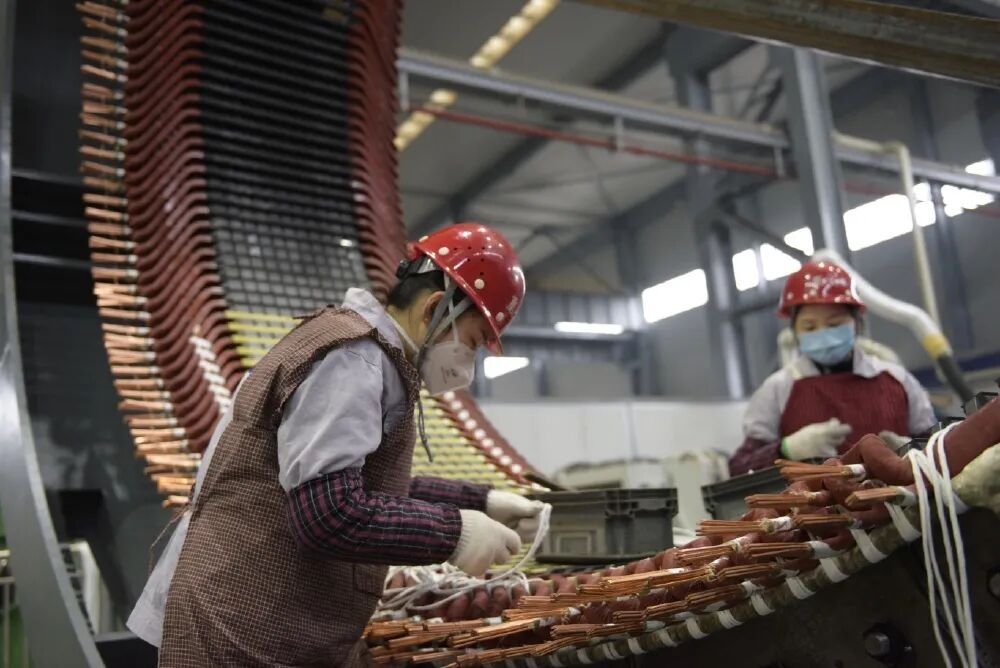
▲ Chongqing Hydro’s large equipment production site. (Photo provided by the company.)
Facing this transformation, Chongqing Hydro moved methodically, step by step.
From 2010 to 2014, the company undertook some small electromechanical EPC projects in Nepal, Pakistan, and other countries to accumulate experience. For example, in a small power station project in Vietnam, Chongqing Hydro completed the entire process independently—from equipment design to on-site commissioning—for the first time.
In 2015, Chongqing Hydro won a bid for a large EPC project at a foreign hydropower station worth over RMB 200 million. This marked a breakthrough in the company‘s business model transformation.
Today, Chongqing Hydro has successfully evolved from an “equipment supplier” to a “full lifecycle service provider,” offering end-to-end services from design, manufacturing, installation, and commissioning to O&M and intelligent upgrades.
For example, in the Kazakh market, Chongqing Hydro not only supplies equipment but also provides value-added services like O&M personnel training and remote monitoring systems. It is precisely this service capability that gives Chongqing Hydro a significantly higher customer retention rate in overseas markets than the industry average.
Chongqing Hydro’s “going global” journey has become increasingly smooth:
In 2017, it developed the largest enclosed mixed-flow pump unit in China at the time for a major water conservancy project in India, achieving internationally advanced energy and stability indicators.
In 2018, it signed an overseas order worth USD 88 million, setting a new record for the company.
That same year, it won a bid for another hydropower station project in Nepal, marking its 10th electromechanical EPC project in the market and further consolidating its share of the core market.
By 2019, Chongqing Hydro‘s overseas business covered more than 30 countries, and overseas revenue accounted for over 35% of its total.
In the company’s view, two main factors contributed to its current success: early entry into overseas markets and a steadfast “user-centric” mindset.
“Each country and region has different standards and needs. In many cases, we have to consider local realities and carry out localized innovation,” Mou said.
For Chongqing Hydro, localization is not just about “hiring local employees” but about “localizing the mindset”—respecting local culture, laws, and market practices.
For example, on a hydropower station project in Nepal, Chongqing Hydro dispatched three technical experts to work alongside a 12-member local team. Together, they successfully completed core tasks such as stator joint splicing and rotor field lamination. Through a “master-apprentice” model, they also trained local professionals in hydropower installation techniques—earning high praise from their partners.
Chongqing Hydro also provides precisely adapted solutions for different regional hydrological conditions and O&M capabilities.
For instance, it has optimized cooling and corrosion protection designs for Southeast Asia‘s tropical climate; adjusted lubrication systems and start-up logic for Kazakhstan’s high-latitude, low-temperature conditions; and developed vertical-axis Francis turbine units specifically for Nepal‘s small flow and variable head conditions.
Peng Zhong noted that thanks to its “user-centric” approach, Chongqing Hydro has achieved outstanding results in core markets like Nepal and Kazakhstan: customer repurchase rates exceed 50%, and many projects have been designated “model projects” by local governments.
Last year, Chongqing Hydro won bids for multiple projects in the Democratic Republic of the Congo, Vietnam, and Kazakhstan. Among its current backlog of over RMB 1 billion in orders, 70% come from overseas. Production is scheduled through 2027.
■ “Chongqing-Made” large equipment has been exported to more than 80 countries and regions and is undergoing a transformation from “product exports” to “coordinated exports across the full industrial chain.”
■ Chongqing Pump Industry Co., Ltd. and Chongqing Water Turbine Works Co., Ltd. are leading examples among Chongqing enterprises going global.
■ Chongqing Pump Industry‘s products have entered more than 30 countries and regions, including Europe, the Americas, Africa, and the Middle East.
■ Chongqing Water Turbine Works Co., Ltd. has supplied more than 7,000 hydro-turbine units to over 60 countries.
Source: New Chongqing – Chongqing Daily
Disclaimer: Unless otherwise stated, text and images are sourced from the internet and major media outlets. Copyright belongs to the original authors. Contact us for removal if infringement is suspected.