
Contact us
- Chongqing Industrial Design Promotion Center
- No. 1, Shangqingsi Road, Yuzhong District, Chongqing, People's Republic of China
- +86-23-60332626
- [email protected]

Editor’s Note: Record highs and nine consecutive increases! Over the past year, the total value of China’s goods trade imports and exports grew by 3.8%, reaching 45.47 trillion yuan, a record high, maintaining its position as the world’s largest trader in goods. Among this, Chongqing emerged as a standout performer, with its total annual import and export value exceeding 800 billion yuan, a year-on-year increase of 12%. “Chongqing-Made” products have transformed from laptop computers being the sole standout to a situation where “multiple highlights are blossoming.”
Chongqing Daily is launching the “‘Chongqing-Made’ Goes Global” series of reports, telling the stories of “Chongqing-Made” products traveling across oceans, decoding the advanced code of Chongqing manufacturing’s journey from “going out” to “going steady” and “going far,” and showcasing the robust strength of “Made in China.”
General machinery equipment is a traditional advantageous product of Chongqing manufacturing. In 2024, Chongqing’s annual production capacity for general machinery exceeded 15 million units, accounting for 55% of the national total. A complete and efficient cluster has formed, from core component casting to final assembly, encompassing over 8,000 related enterprises, making Chongqing a globally important production base for general machinery.
Currently, Chongqing is home to several leading enterprises in the general machinery field. For example, Zongshen Power is the world’s largest general machinery enterprise, and Senci Mechanical & Electrical is the number one national brand for small generators. In terms of product types, “Chongqing-Made” general machinery includes generators, water pumps, energy storage machinery, high-pressure cleaners, separation equipment, and other products, sold to over 100 countries and regions worldwide.
Data from Chongqing Customs shows that in 2025, Chongqing’s general machinery exports exceeded 3.5 billion yuan, a year-on-year increase of 23.8%.
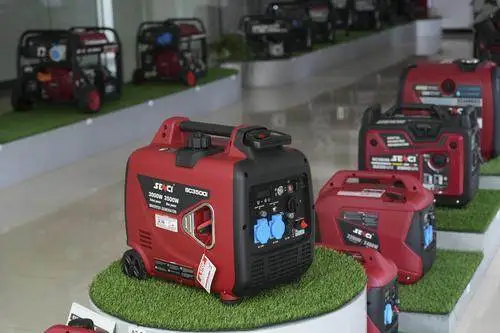
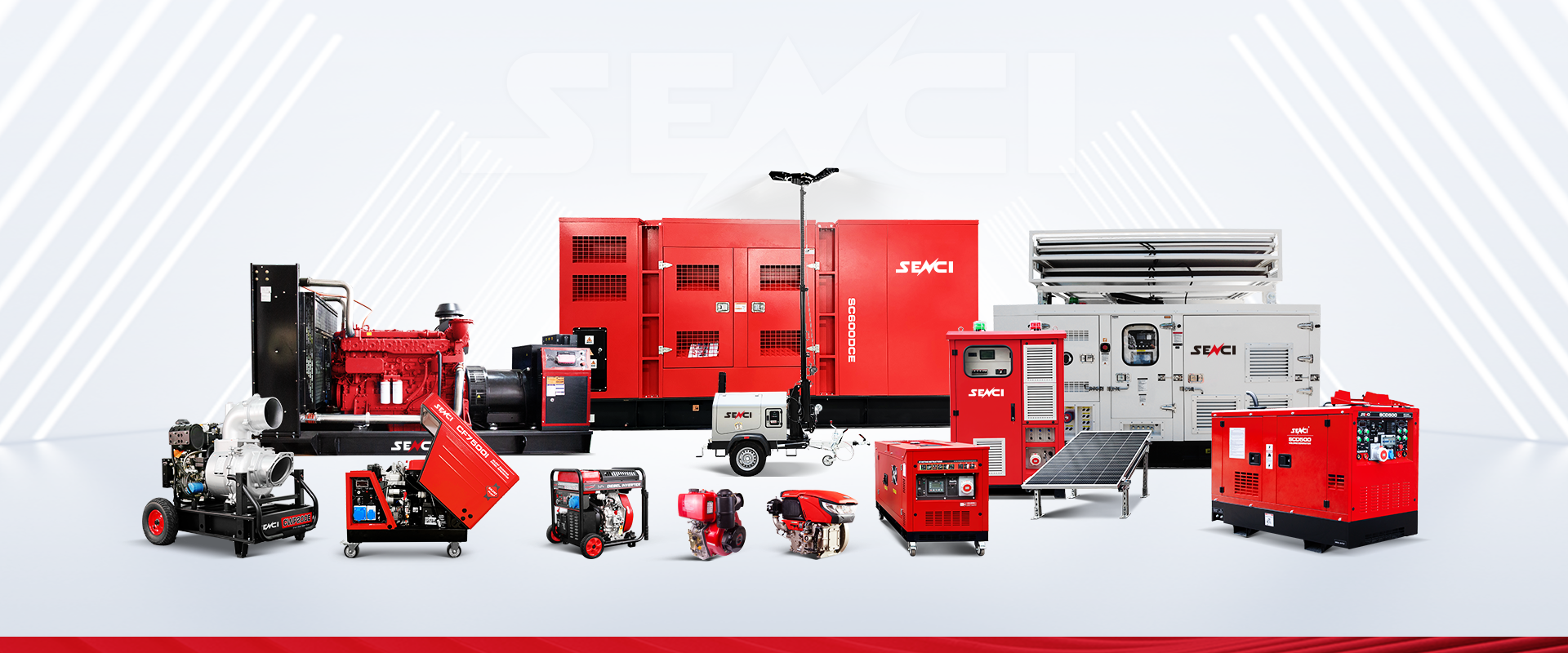
▲ Products on display at Senci Mechanical & Electrical Co.,Ltd located in Beibei District. Photo by reporter Xie Zhiqiang / Visual Chongqing
Small generators are not widely used domestically, but they are essential items for many families in the United States. The U.S. is the world’s largest market for small generators, with numerous local brands and fierce competition. Yet, in large American supermarkets, many products come from Chongqing’s Senci Mechanical & Electrical Co.,Ltd.
How did a Chongqing brand, thousands of miles away, manage to enter the U.S. market and “take a share of the tiger’s mouth”? The story begins in the 1990s.
Senci Mechanical & Electrical, located in Beibei District, was founded in 1990, initially producing components for small generators. In 1998, the company formed a small generator R&D team and went to Europe to learn generator production technology. By 2000, the team returned with their knowledge, and Senci began its transition towards end-user generator products.
During that period, Senci mainly worked as an OEM for brand owners. Thanks to its technological accumulation and innovation, the company gradually gained fame in the industry, counting many foreign industry giants among its clients, with annual orders reaching hundreds of millions of dollars.
While outsiders were impressed by this, internally, Senci was filled with a sense of crisis—OEM work, while seemingly attractive, offered no bargaining power. Not only would brand owners occasionally “haggle” with Senci, but more importantly, market fluctuations causing order shortfalls could plunge the company into an existential crisis.
Faced with this, Senci decided to build its own brand. Only by doing so could it establish its own marketing channels and truly go global.
In 2011, Senci established its U.S. subsidiary, Senci USA, embarking on the path of building its own brand.
This move shocked the industry. It was seen as a decision akin to “knowing there are tigers in the mountain, yet venturing there anyway.” After all, the vast majority of global leaders in small generators were American companies, many of them Fortune 500 companies at the time. Senci had chosen the “hell mode” right from the start.
However, from Senci’s perspective, this was both the worst market and the best market. A Senci representative explained that the U.S., with its vast, sparsely populated areas, has many people living outside bustling city centers, and the power grid infrastructure in many residential areas is not ideal. Therefore, small generators are essential for the American middle class, presenting a massive market opportunity.
Another crucial point Senci valued was the U.S. market’s strong emphasis on brands. Local consumers exhibit high brand loyalty when purchasing products and prioritize product quality over being attracted by low prices. This factor is vital for brand development.
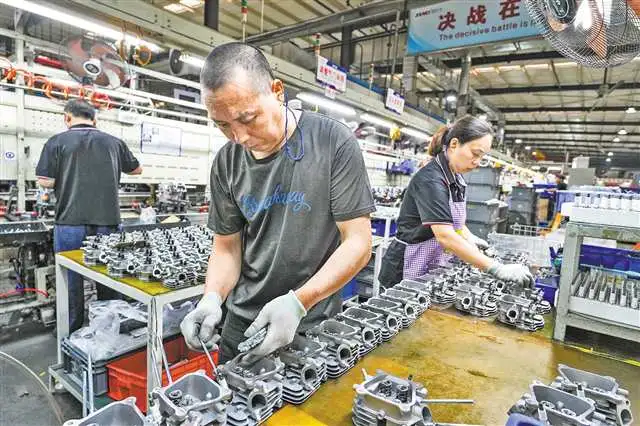
▲Workers processing products in the production workshop of Senci Mechanical & Electrical Co.,Ltd located in Beibei District. Photo by reporter Xie Zhiqiang / Visual Chongqing
Building a own brand is far from easy.
The first challenge Senci faced was obstruction from former brand partners—these companies did not want to create a formidable new competitor. At a trade fair in 2011, an international brand owner explicitly stated that if Senci gave up on its brand ambitions and stuck to OEM work, they would be willing to sign a 10-year cooperation order; otherwise, their partnership would cease immediately. The brand also threatened to rally others to boycott Senci jointly.
Faced with such “carrot and stick” tactics, Senci hesitated but ultimately chose to persevere. In 2012, Senci officially launched its own branded generator products, taking a crucial step forward.
Retaliation followed swiftly.
Some partner companies reduced orders for Senci, while others canceled cooperation outright. A major U.S. client, which previously placed annual orders worth around $50 million with Senci, canceled cooperation immediately after Senci launched its own brand. Orders shrank rapidly, and revenue plummeted—a heavy blow for Senci.
Besieged on all sides, Senci did not retreat; instead, it demonstrated the determination to “cut off its own arm.” “Even if it meant initial losses, we had to establish our own brand,” the Senci representative stated.
To gain a foothold in the U.S. market, Senci assembled a fully localized team. On one hand, they focused on R&D and production of products that met local market demands; on the other hand, they actively developed sales channels.
Supermarkets and hypermarkets were a key part of this strategy. The U.S. retail sector is highly developed, with strict quality requirements and high entry barriers. It took Senci over four years of effort to get into its first supermarket chain.
“Even though our products were placed in an inconspicuous corner back then, it was a huge encouragement for us,” the Senci representative recalled.
After that, Senci progressed steadily, step by step. Relying on excellent product quality, they gradually expanded their sales channels in the U.S., gaining entry into more and more supermarkets, with their products being placed in increasingly better positions. More and more American consumers came to recognize the brand.
Today, Senci’s small machinery products have not only secured a firm foothold in the U.S. market but have also become one of the mainstream local brands, holding approximately 10% market share.
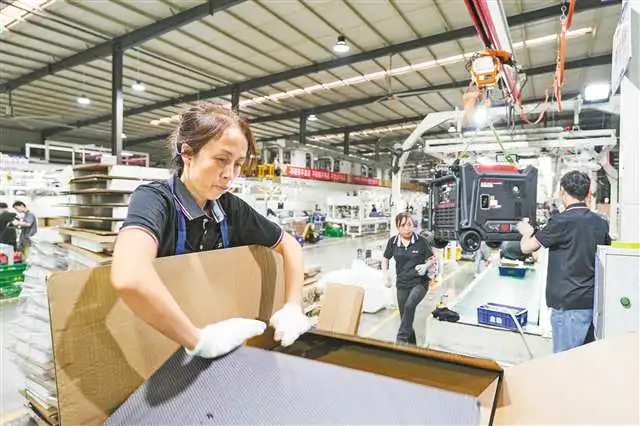
▲Workers packaging products in the Senci production workshop. Photo by reporter Xie Zhiqiang / Visual Chongqing
While deeply cultivating the U.S. market, Senci also began expanding into other regions, such as Dubai in the Middle East and Nigeria in Africa.
“The experience we gained in the U.S. doesn’t necessarily apply to other countries,” the Senci representative explained. Each country has different national conditions and consumer demands, so every expansion requires starting from scratch.
For example, machinery products in some developed country markets may not be used frequently, serving more as emergency backups. In contrast, consumers in other countries have higher demands for durability. To address this, Senci’s approach is “adapting to local conditions.” They maintain an R&D team of over 200 people, continuously innovating technology to develop different products tailored to various regional needs.
For markets where products are primarily used for emergencies, Senci focuses more on “storage durability”—ensuring the product will start up and generate power immediately even after months of disuse. Additionally, consumers in these countries often have requirements for noise control, so the casings are made thicker for better sound insulation.
For some less developed regions, the products Senci introduces emphasize “durability”—built to withstand daily use without easily breaking. In these areas, consumers have lower expectations regarding appearance and noise, prioritizing cost-effectiveness. Senci then reduces spending on aspects like exterior design, concentrating on the core power generation function to lower costs and selling prices.
Through a combination of these factors, Senci successfully built brand recognition in regions beyond the U.S.
Currently, Senci operates multiple overseas production bases and has established several branches and offices in countries including the U.S., Russia, Indonesia, Japan, and Vietnam, selling products to over 100 countries and regions worldwide. In the first three quarters of 2025, Senci achieved operating revenue of 2.288 billion yuan, a year-on-year increase of 17.77%.
Source: New Chongqing – Chongqing Daily
Original Title: “Chongqing-Made” Goes Global | Chongqing Small Generators “Take a Share of the Tiger’s Mouth”
Disclaimer: Unless otherwise stated for original content, articles and images are sourced from the internet and major mainstream media. Copyright belongs to the original authors. Please contact us for removal if infringement is suspected.