
Contact us
- Chongqing Industrial Design Promotion Center
- No. 1, Shangqingsi Road, Yuzhong District, Chongqing, People's Republic of China
- +86-23-60332626
- [email protected]

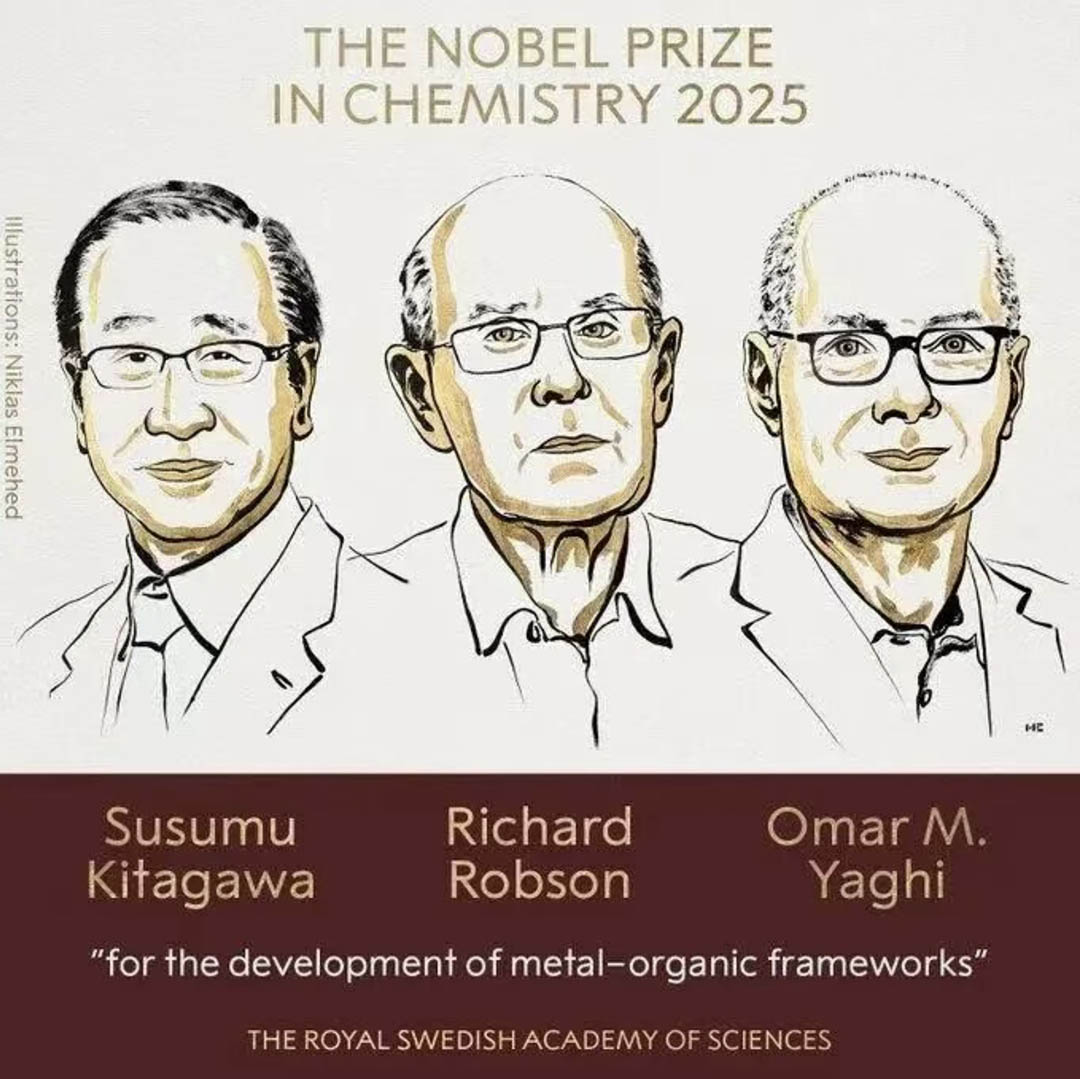
On October 8, 2025, the Royal Swedish Academy of Sciences announced the awarding of the Nobel Prize in Chemistry to Japanese scientist Susumu Kitagawa, Australian scientist Richard Robson, and American scientist Omar M. Yaghi, in recognition of their groundbreaking contributions to the development of Metal-Organic Frameworks (MOFs).
Notably, Professor Yaghi serves as the scientific advisor of the Ligong Qingke (Chongqing) Advanced Materials Research Institute Co., Ltd. (CAMI), which is advancing the industrialization of MOF materials under his guidance.
Heiner Link, Chairman of the Nobel Committee for Chemistry, stated, “Metal-organic frameworks hold immense potential for creating customized new materials with entirely novel functions.”
Over the past 20 years, MOF research has been one of the most active and fruitful directions in chemistry and materials science.
Professor Yaghi, who grew up in the arid regions of Jordan, was deeply affected by water scarcity from a young age. He envisioned designing a material that could efficiently extract moisture from dry or low-humidity air. Eventually, he successfully synthesized stable two-dimensional network structures and coined the term “metal-organic frameworks.” His concept of “secondary building units” enabled modular design of MOFs, allowing scientists to assemble porous frameworks with various functions as if using building blocks.
These novel molecular structures contain numerous cavities through which molecules can freely move. In layman’s terms, it is like “constructing buildings” at the molecular level. Their internal surface area is astonishingly large; for instance, one gram of MOF-5 has a total internal surface area equivalent to a football field, far exceeding that of traditional zeolites. This means MOFs can adsorb more gases, offering broad application prospects in energy, environment, chemical engineering, and biomedicine.
Over the years, Professor Yaghi has led the team to constructing tens of thousands of MOF structures, create more than a dozen variants to store methane, capture carbon dioxide, and even use MOF in the desert to create the miracle of “water extraction in the air”: the material absorbs water vapor from the air at night and releases liquid water after being heated by the sun during the day, providing a new way to extract water in arid areas.
Professor Yaghi’s connection with Chongqing began three years ago. In March 2022, Ligong Qingke (Beijing) Technology Co., Ltd., initiated by Beijing Institute of Technology, established its R&D headquarters in Fuling, Chongqing, and founded the CAMI. The institute appointed Professor Wang Bo of Beijing Institute of Technology and his former Ph.D. advisor, Professor Yaghi, as scientific advisors.
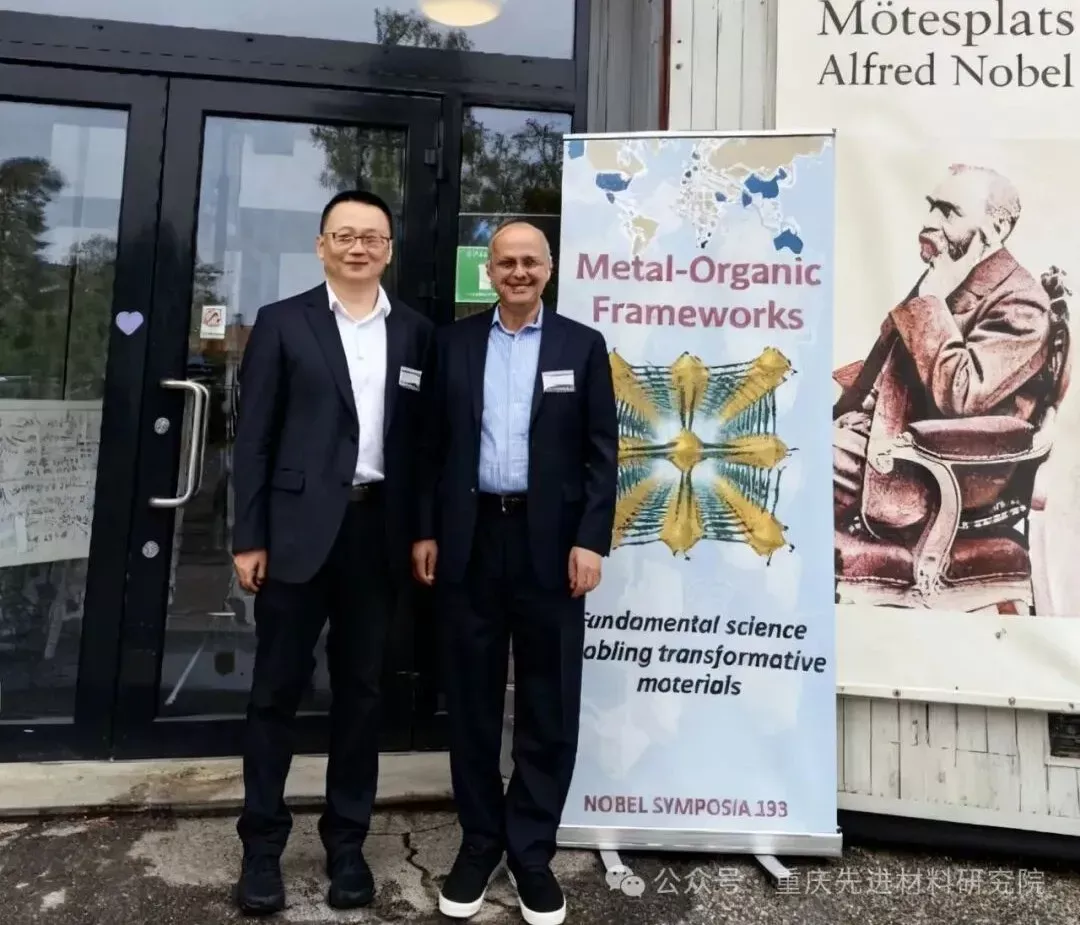
Professor Wang Bo (left) of Beijing Institute of Technology and Nobel Laureate Professor Omar Yaghi (right) in Sweden. Photo courtesy of the interviewee
After establishing its presence in Fuling, the CAMI has developed rapidly, and its R&D team has rapidly expanded to nearly 100 people, and soon established an industry-university-research cooperation R&D application platform covering the whole industry chain covering basic material research, industrial-grade synthesis and production, and engineering application with local enterprises in Fuling, and has made innovative breakthroughs in a number of cutting-edge technologies such as polymer materials and metal-organic skeleton materials. For example, CAMI and Wankai New Materials jointly launched a MOF-based catalyst project, successfully developed a new green catalytic system that can replace traditional antimony trioxide, and has now entered the small trial stage, and the preliminary results show high catalytic efficiency, lower reaction temperature, lighter color and better transparency of polyester products. The MOF catalyst is virtually free of heavy metals, significantly reducing environmental and health risks, reducing the burden of wastewater treatment, and has good reusability.
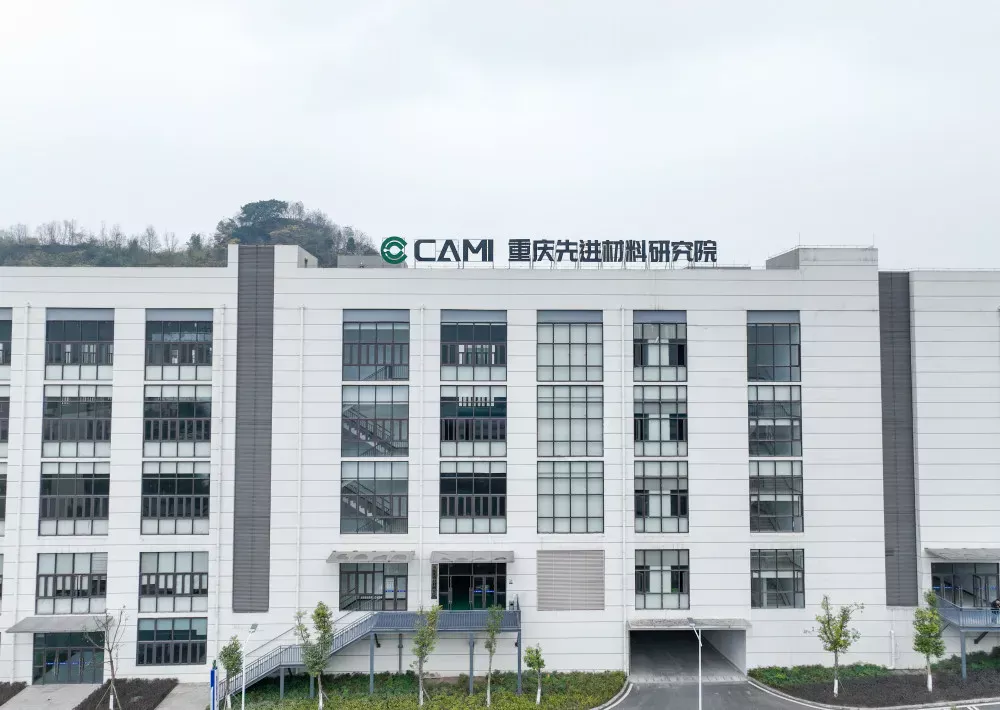
CAMI, located in Fuling Chongqing. Photo courtesy of the interviewee
Today, the CAMI has become China’s first pilot platform for the batch preparation of MOF materials. It is also the world’s leading manufacturer of MOF materials with an annual production capacity of hundreds of tons, and one of the world’s first companies to commercialize MOF materials.
Ding Baisuo, Director of the CAMI, explained that under Professor Yaghi’s guidance, the team is focusing on three main directions to advance MOF material industrialization:
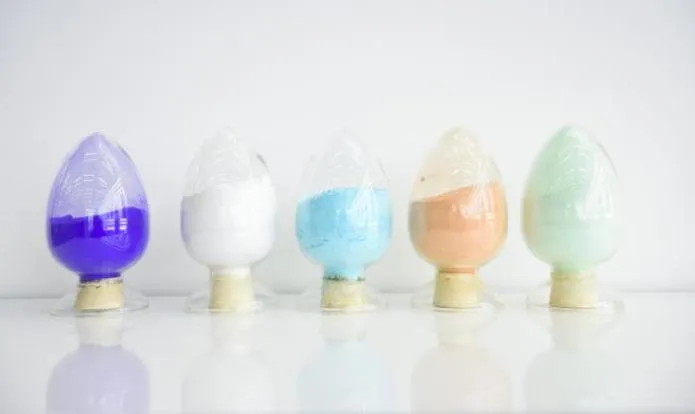
MOF sample developed by the CAMI. Photo courtesy of the interviewee
First, functional material innovation. The team has successfully broken through key technical bottlenecks in gas adsorption, separation, and protection by precisely regulating metal nodes and organic ligands in MOFs. Its self-developed MOF-based AMC filtration material has achieved high-efficiency purification and internationally leading performance in handling gaseous pollutants in semiconductor processes at 28nm and below.
Second, structural regulation and processability. Addressing industrialization bottlenecks of traditional MOF materials, such as being “difficult to form, highly brittle, and complex to process,” CAMI has developed new gel and composite structures, endowing the materials with higher stability, flexibility, and scalability suitable for complex scenarios like membrane separation, fabric protection, and filtration purification.
Third, green preparation and large-scale processes. CAMI has successfully established a ton-scale MOF preparation platform, achieving stability and repeatability verification, thereby laying the foundation for subsequent industrial transformation.
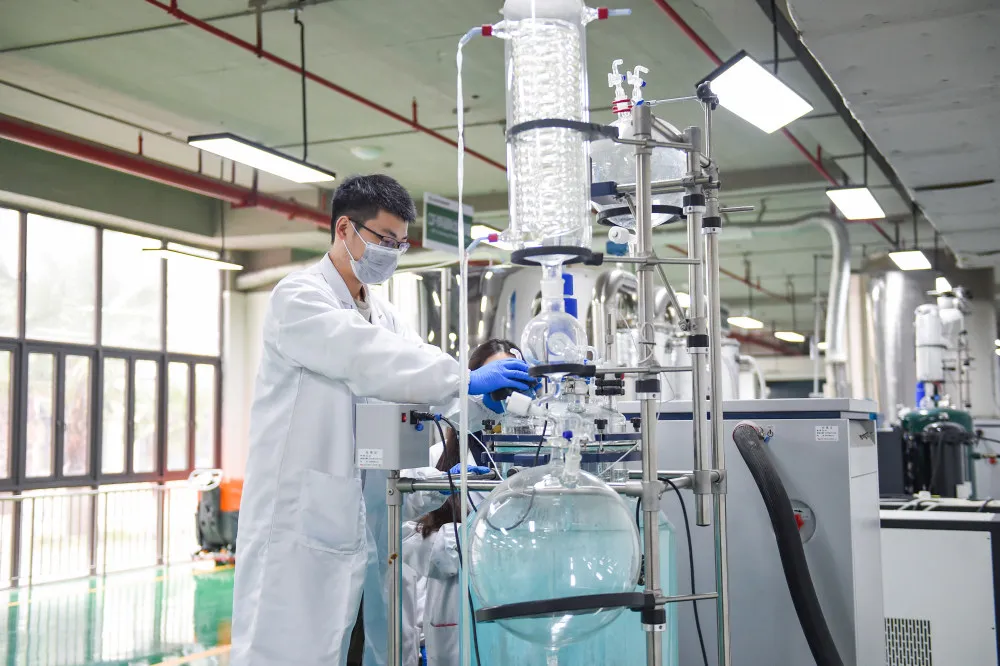
Staff conducting experiments. Photo courtesy of the interviewee
“The Nobel Prize highlights MOF materials’ transition from the laboratory to global attention and underscores the importance of molecular-level structural design in future energy, environment, and health sectors,” said Ding Baisuo. The team will continue to deepen efforts in establishing an AI-assisted platform for MOF structure screening and performance prediction, advancing applications in humidity control, membrane materials, helium extraction from natural gas, and drug loading and separation. They will also promote joint R&D with universities and research institutes, strengthen international cooperation, and build end-to-end solutions from material preparation to terminal applications, turning “molecular building blocks” into industrialized “green materials.”
Established in March 2022, CAMI was jointly founded by the Chongqing Fuling High-tech Zone and Beijing Institute of Technology’s spin-off company, Ligong Qingke (Beijing) Technology Co., Ltd. It is a national high-tech enterprise focused on “technological innovation + industrial cultivation,” serving as China’s first pilot platform for the batch preparation of MOF materials, the world’s leading MOF material manufacturer with an annual output of hundreds of tons, and one of the world’s first companies to commercialize MOF materials. Centered on the three major industrial directions of “biomedicine, safety protection, and green & low-carbon,” the company has achieved technological breakthroughs and industrial applications in 10 key fields, including water treatment ceramic membrane materials and components, hydrogen fuel cell catalytic materials, AMC gaseous molecular pollutant filtration materials, blood purification materials, and next-generation helium purification membrane materials.
Source: New Chongqing-Chongqing Daily, Chongqing Advanced Materials Research Institute
Disclaimer: Except for original content and special statements, the articles and pictures published on this website are from the Internet and mainstream media, and the copyright belongs to the original author. If you believe that the content infringes your rights, please contact us to remove it.