
Contact us
- Chongqing Industrial Design Promotion Center
- No. 1, Shangqingsi Road, Yuzhong District, Chongqing, People's Republic of China
- +86-23-60332626
- [email protected]


The decisive role of industrial design in a product‘s environmental performance is often locked in at the moment the design blueprints are finalized. While traditional integrated design offers cost advantages on the manufacturing side, it shifts the burden of repair, upgrade, and recycling onto users and the environment. Koke (Fujian) Industrial Design Co., Ltd. attempts to reallocate these costs through modular design, embedding “repairable, replaceable, upgradeable” principles at the very front end of product development, exploring a green design path that does not rely on new materials or new processes.
The green logic of modular design is not complicated. When a product is broken down into independent functional units connected through standardized interfaces, localized damage does not require scrapping the entire machine, and technological upgrades do not require replacing all hardware. Product lifespan is extended, reducing both the resource consumption needed to manufacture new products and the amount of waste generated. This is not a breakthrough in materials science, but a shift in design thinking—from “single-use” to “circular use.” Koke verified this approach across three product lines.
Traditional hydrogen storage tanks use an integrated structure where the tank body, valves, sensors, and pressure regulators are manufactured as a single unit. If any component ages or fails, the entire tank must be scrapped. This design offers concentrated processes and cost control on the manufacturing end, but places the product‘s lifespan at the mercy of its most vulnerable part.
Koke separated each function into independent modules connected through standardized mechanical and electrical interfaces. Users can replace aging modules individually based on their condition, without discarding the entire storage unit. Estimates show that this design extends product lifespan by 2 to 3 times, saving approximately 80 tons of carbon emissions annually.
Smart car wash machines often operate outdoors in harsh conditions, resulting in high failure rates. Traditional repairs require technicians to disassemble the entire unit on-site—a time-consuming, costly process. The operational losses from equipment downtime often exceed the cost of the repair itself. This “whole-unit repair” model amplifies both time and labor costs.
Koke redesigned the entire machine using a quick-release structure, making the pump, motor, control board, and water system into independent modules connected by quick-release interfaces. Repairs simply involve pulling out the faulty module and plugging in a new one. Repair time was reduced from 8 hours to 1 hour, significantly increasing effective equipment uptime and drastically reducing the machine‘s scrappage rate. The modular design fundamentally rewrote the total cost of ownership in the car wash station operational context.

Smart car wash machine designed by Koke for Youxi, an eco-friendly car wash brand under Fuzhou Youxi Intelligent IoT Technology Co., Ltd. (Source: Youxi Franchise)
EV charging stations face the challenge of rapid technological iteration. Stations built three years ago often cannot support new charging protocols and communication standards. The traditional solution is to scrap the entire unit, generating large amounts of e-waste. Parts with longer lifespans—such as the casing and structural base—are forced to be discarded in sync with the control module, which has the shortest iteration cycle.
Koke designed the charging control module, communication module, and power module as pluggable independent units. When technology upgrades occur, users simply replace the corresponding module, keeping the rest of the unit in service. Mold development costs were reduced by 40%, and material waste by 25%. The product is no longer eliminated entirely due to a single module‘s generational obsolescence.
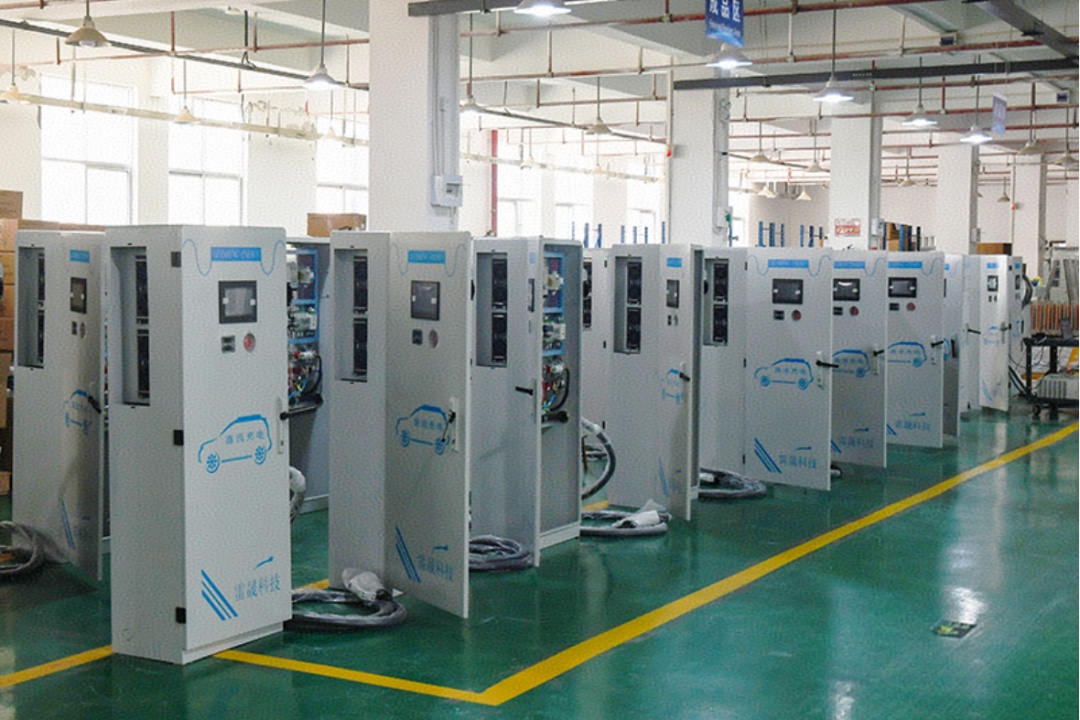
Charging station designed by Koke for Fujian Leisheng Energy Co., Ltd. (Source: Minhou County Media Convergence Center)
The value of modular green design extends beyond “easy repair.” Koke has embedded green principles across four stages—design, production, application, and recycling—forming a complete green design closed loop:
● Design: Prioritize recyclable materials, avoid inseparable adhesives, and reserve space for end-of-life disassembly.
● Production: Reduce the number of molds through module sharing; different products share common modules, reducing resource consumption from mold development.
● Application: Extend product lifespan and reduce the frequency of full-unit replacements, keeping products in users‘ hands longer.
● Recycling: Simplify disassembly processes; modular structures enable rapid material sorting into recycling channels, improving recovery efficiency.
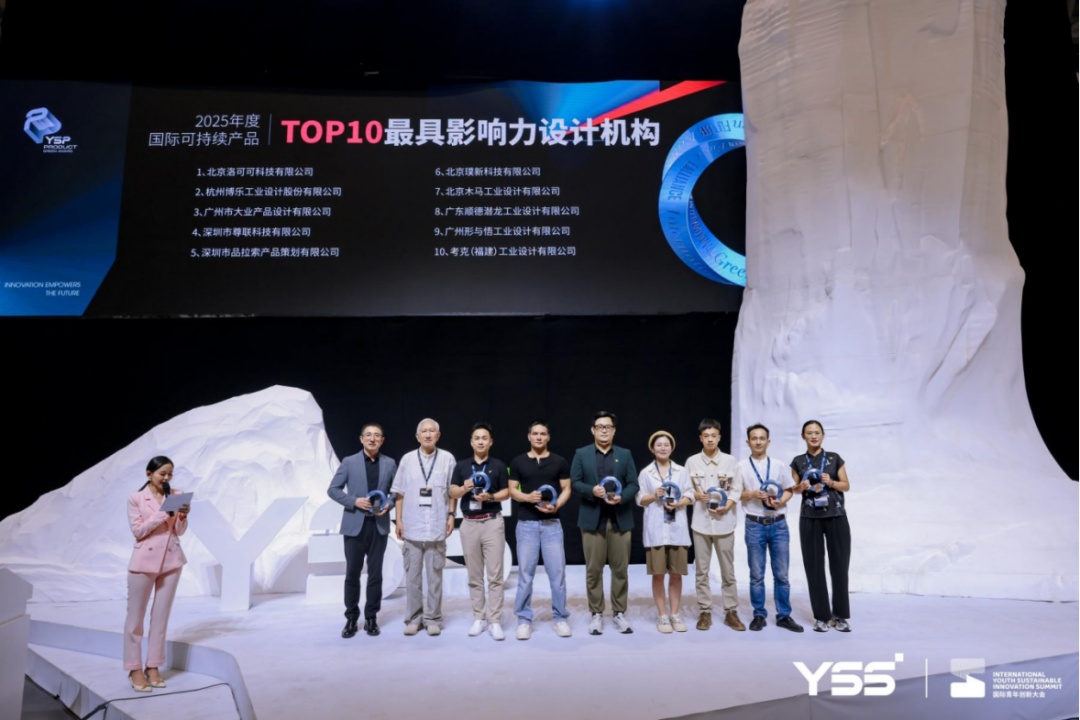
In October 2025, Koke received two awards for this methodology: “2025 International Sustainable Products TOP 10 Most Influential Design Institution” and the “International Product Green Award · Supreme Design Award.”
Koke’s practice points to a proposition worth exploring: green design does not necessarily rely on new materials or new processes. Sometimes, rethinking how a product is broken down and reassembled can yield quantifiable environmental benefits. This is a form of “architectural innovation”—changing the connections and composition logic between product components without altering materials, processes, or core parts, thereby redefining the product‘s lifecycle.
Modular design essentially lowers the barrier to green transformation for SMEs. It does not require expensive material R&D investments; instead, it reconfigures existing technical resources at the design stage, making “sustainability” an inherent attribute of design itself, rather than an added cost item.
At the same time, the environmental benefits of modularity must be calculated within specific product contexts. Different products show different results in lifespan extension, material savings, and repair efficiency gains—and their corresponding emissions reductions vary accordingly. Establishing targeted quantitative assessment methods is key to truly accounting for the “green balance sheet.”

Looking further, the value of modular thinking can extend upstream to supply chain collaboration. Once modules are standardized, cross-enterprise, cross-product interoperability becomes possible. This means that larger-scale duplication of molds and production can be avoided, and resource consumption reductions are no longer confined to a single enterprise or a single product, but enter the dimension of industrial synergy.
Source: Fuzhou Evening News
Written by: Ning Junbo
Edited by: Yang Yu
Reviewed by: Huang Tao