

Contact us
- Chongqing Industrial Design Promotion Center
- No. 1, Shangqingsi Road, Yuzhong District, Chongqing, People's Republic of China
- +86-23-60332626
- [email protected]

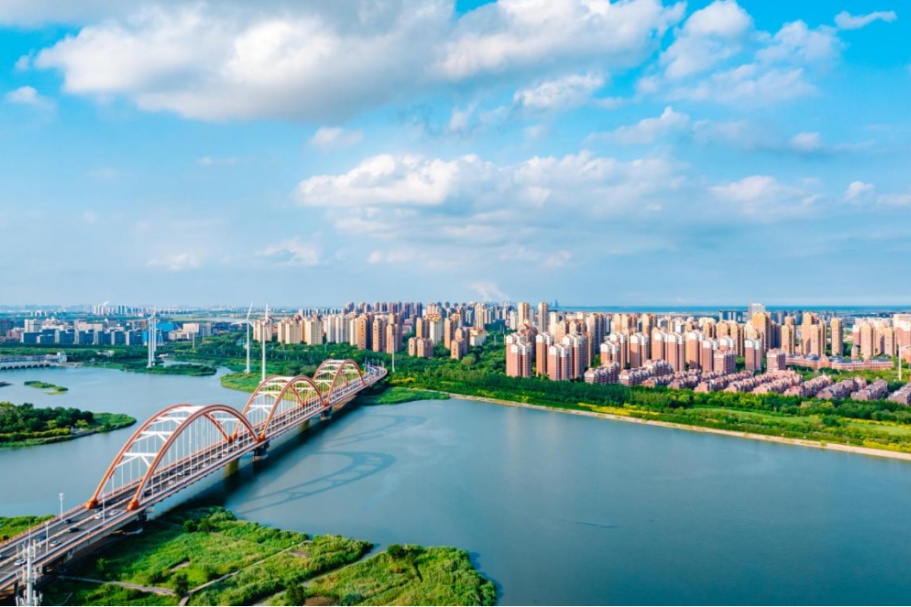
The Sino-Singapore Tianjin Eco-City is the world‘s first eco-city developed through intergovernmental collaboration. On September 28, 2008, the project officially broke ground in Tianjin’s Binhai New Area, covering a total area of approximately 30 square kilometers, about 40 kilometers from downtown Tianjin. One-third of the site was abandoned salt pans, one-third was polluted ponds and contaminated water surfaces, and one-third was saline-alkali wasteland. Before construction began, the China-Singapore joint team formulated 22 control indicators covering water environment, air quality, green building, waste recycling, and other areas—each with quantitative standards to serve as the basis for subsequent planning, design, construction, and operation. The two sides decided to start from scratch on land assessed as “uninhabitable” and systematically rebuild a viable urban ecosystem.
Throughout the city‘s construction, several key phases employed approaches commonly found in industrial design: modularization, interface standardization, parameter adaptation, closed-loop logic, and system integration.
The soil salinity in the site reached up to 30 parts per thousand. The conventional engineering approach would have been to excavate and remove the saline soil and import replacement soil from elsewhere—a “replacement” logic relying on a one-time material swap to solve the problem. But for 30 square kilometers, the cost of soil replacement would have run into the billions, accompanied by massive transportation-related carbon emissions. Moreover, without subsequent drainage measures, the replaced soil could become salinized again.
The engineering team chose a different path. They laid a network of drainage pipes beneath the entire site. Irrigation water percolated through the soil, dissolving salts, which were then collected and discharged through the pipes. After years of repeated leaching, soil salinity dropped below 3 parts per thousand. Alongside the salt-washing process, the team also selected and planted salt-tolerant vegetation, expanding from an initial dozen native species to over 200.
The design logic of this approach was not “replacement” but “process design.” Once the drainage network was in place, it did not require continuous external energy or material inputs—only regular irrigation to maintain its effectiveness. When a problem cannot be directly eliminated, design a process that allows it to resolve itself over time. By 2025, the Eco-City‘s built-up area had reached 50% green coverage, with cumulative greening exceeding 12 million square meters.
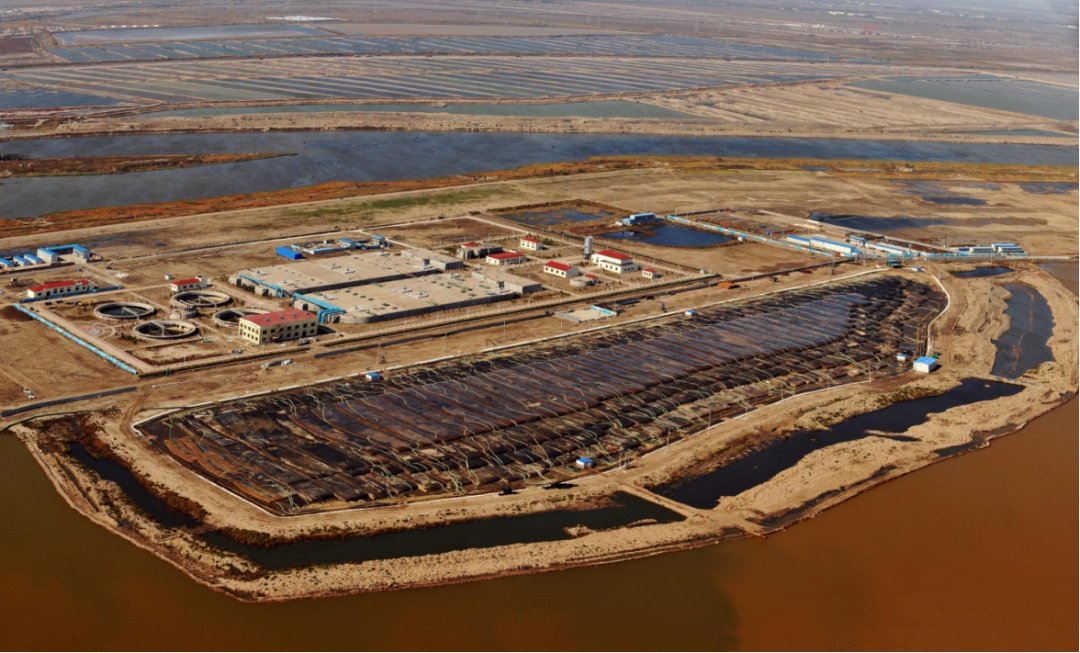
The polluted ponds of the Eco-City before treatment (predecessor to Jinghu Lake), which had accumulated over 40 years of industrial wastewater and domestic sewage (Source: China Environment Network)
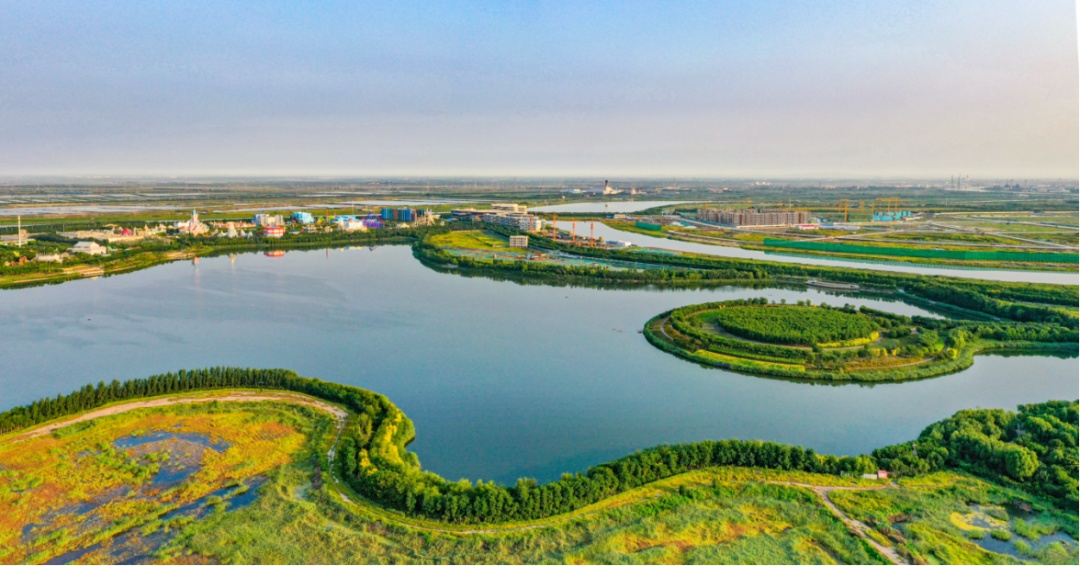
Jinghu Lake after treatment, with water quality improved to Class IV and recognized as Tianjin‘s “Most Beautiful River and Lake” (Source: China Environment Network)
The Phase II public housing passive house project is a typical case of building energy efficiency in the Eco-City. Passive house technology originated in Germany, with core principles including high-efficiency insulation, high airtightness, and ventilation systems with heat recovery. However, Tianjin’s winter temperatures can drop below minus 15°C, and summers are hot—significantly different from the temperate maritime climate of central Europe.
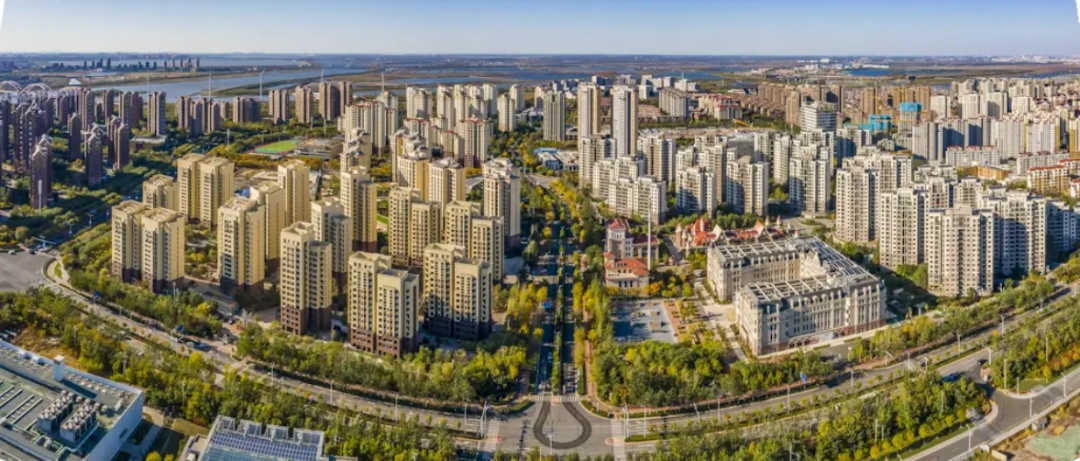
The Phase II public housing passive house project (Source: Sino-Singapore Tianjin Eco-City Library and Archives)
The design team‘s approach was to retain the principles and reset the parameters. They increased the exterior wall insulation thickness from 80mm in standard residential buildings to 240mm, used triple-glazed windows with electric aluminum alloy exterior shading, and subjected the building’s airtightness to specialized testing and treatment. These parameter adjustments were based not on subjective judgment but on optimization values derived from energy consumption simulations using Tianjin‘s meteorological data from the past 30 years.
In 2019, the project received dual certification from the German Passive House Institute and the China Association of Building Energy Efficiency for ultra-low energy buildings, becoming the world’s first high-rise passive residential building to receive PHI certification. According to estimates, building energy consumption was 90% lower than the national standards at the time, saving residents approximately two-thirds of their heating costs annually. This illustrates a key principle of industrial design: the transferability of a technical solution lies not in copying parameters but in the ability to recalibrate them for new contexts once the underlying principles are understood.
FAW Toyota‘s new energy plant went even further in its energy system design. Rooftop solar panels on factory buildings and parking lots, combined with green electricity procurement, made it Tianjin’s first 100% green-power automotive assembly plant. By June 2025, the Eco-City had achieved 44,000 kW of distributed new energy grid-connected capacity, with 200 distributed photovoltaic users and cumulative power generation exceeding 100 million kWh, equivalent to reducing carbon dioxide emissions by 103,800 tons.
Freshwater scarcity was an inherent limitation. The Eco-City addresses this through a reclaimed water plant that provides advanced treatment of domestic sewage and industrial wastewater. Located within the Eco-City, the plant—constructed by Tianjin Motimo Membrane Technology—has a daily treatment capacity of 60,000 tons, with effluent quality reaching Class IV surface water standards. After advanced treatment, a portion of the reclaimed water supplies the Ganlu Creek Park for landscape irrigation, while the remainder is used for regional greening. Permeable paving and sunken green spaces allow rainwater to naturally infiltrate and replenish groundwater. The non-conventional water (reclaimed water plus rainwater) utilization rate exceeds 50%.
Closed-loop design is not uncommon in industrial products, such as an automobile engine‘s coolant circulation or a laptop’s cooling airflow. Its core characteristic is redefining the system‘s output “waste” as input for the next stage, thereby reducing external resource consumption and waste emissions. The Eco-City applies this to the urban water system, transforming sewage from an object of end-of-pipe treatment into a source of resource recovery.
According to the Sino-Singapore Tianjin Eco-City National Green Development Demonstration Zone Implementation Plan (2024–2035) approved by the National Development and Reform Commission in 2024, the Eco-City plans to increase its non-conventional water resource utilization rate to over 70% by 2035.
The Eco-City‘s pneumatic waste collection system employs a design logic rarely seen in urban infrastructure. Residents deposit sorted waste into intelligent intake points. The waste is then conveyed through underground enclosed pipes under negative pressure to a central collection station, where it is compressed before being transported to a disposal site—never touching the ground and emitting no odors.
From a design perspective, the key to this system lies not in the pipes or fans themselves but in its restructuring of the traditional “decentralized collection plus vehicle transport” model into a “centralized pipeline transport plus stationary collection” model. Each intake point, each pipe segment, and each collection station is designed as a standardized, independently replaceable module, connected through unified interfaces (pipe diameter, air pressure, communication protocols). This modular, interface-standardized approach enhances maintainability and scalability.
The Eco-City cooperation zone is equipped with 12 pneumatic collection systems, designed to cover 30 square kilometers, serve nearly 300,000 people, and process up to 270 tons per day. The four systems in the southern zone have been operational since 2014, covering 5.6 square kilometers and serving a population of 100,000. Compared with traditional collection and transport methods, the system reduces waste transport traffic by 90% annually and saves 80% in labor costs. The construction and operating company has independently developed 16 patents and 6 software copyrights, achieving localization of core equipment. The technology was later included among 10 innovative technologies for solid waste management published by the Tianjin Municipal Ecology and Environment Bureau and promoted citywide.
The value of the Sino-Singapore Tianjin Eco-City lies in tailoring proven technologies to local conditions within a unified planning framework, enabling them to support each other and function as an integrated system. Starting from a saline-alkali wasteland, it has built a livable home for over 100,000 residents over more than a decade. This design approach—verified as “viable, replicable, and scalable”—can also be applied to polluted and abandoned lands, providing a replicable urban model for China‘s pursuit of its “dual carbon” goals.
For Chongqing as a City of Design, the Eco-City offers an insight not about importing specific technologies, but about a kind of “meta-design” capability: first establish a quantifiable indicator system to frame objectives, then use modularization and interface standardization to organize technical solutions from different disciplines into a mutually supportive system. Chongqing’s ongoing efforts to optimize mountain transportation, regenerate old industrial districts, and restore the ecology of its two rivers and four banks essentially require this kind of cross-system integration capability. A City of Design should not be merely a collection of designed products but a crucible of design methodologies. The Eco-City demonstrates how systemic design can be implemented at the urban scale, and perhaps that is the question Chongqing needs to answer after receiving its “City of Design” designation.
Contributed by: Ning Junbo
Edited by: Yang Yu
Reviewed by: Huang Tao