

Contact us
- Chongqing Industrial Design Promotion Center
- No. 1, Shangqingsi Road, Yuzhong District, Chongqing, People's Republic of China
- +86-23-60332626
- [email protected]
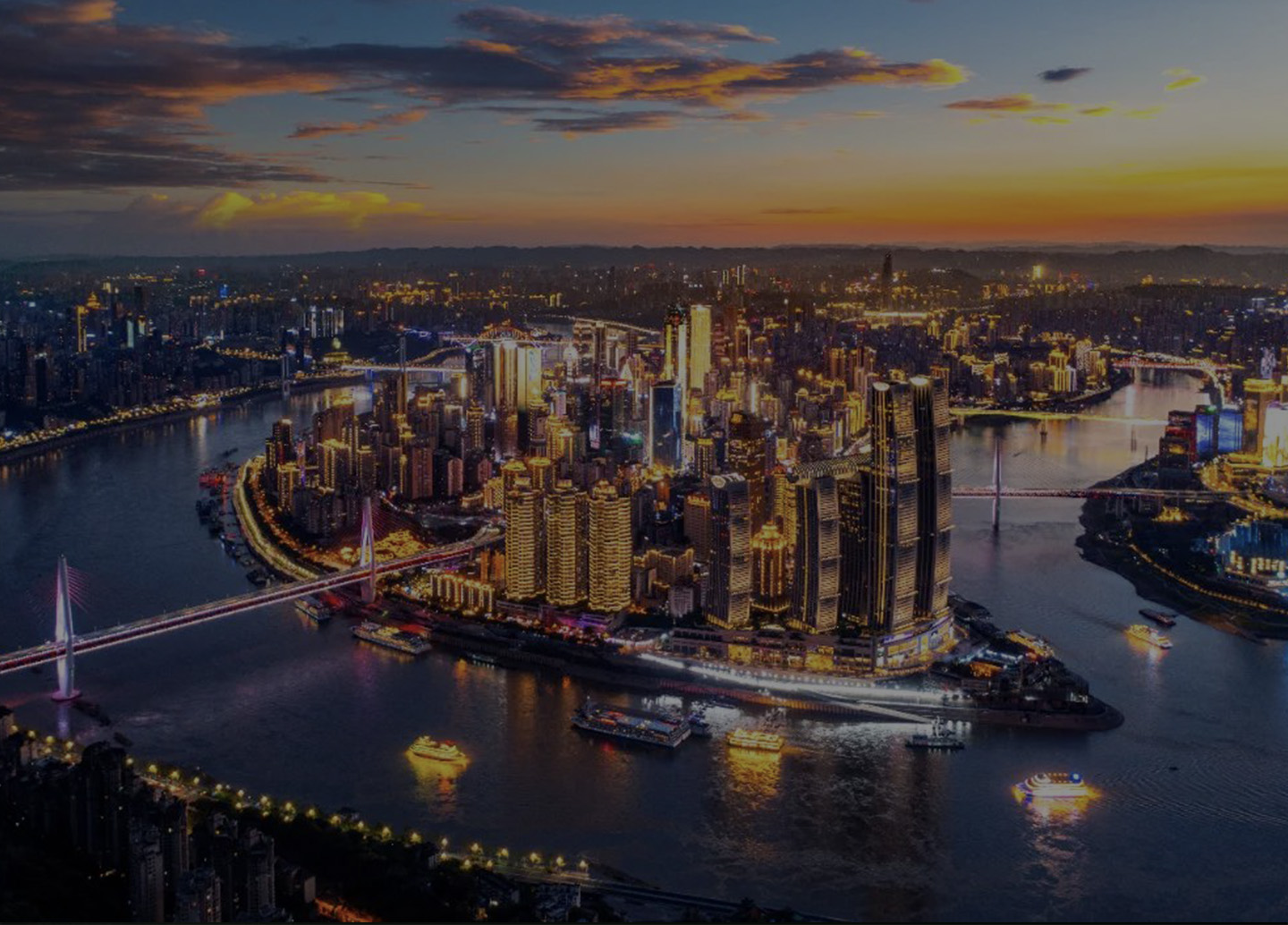
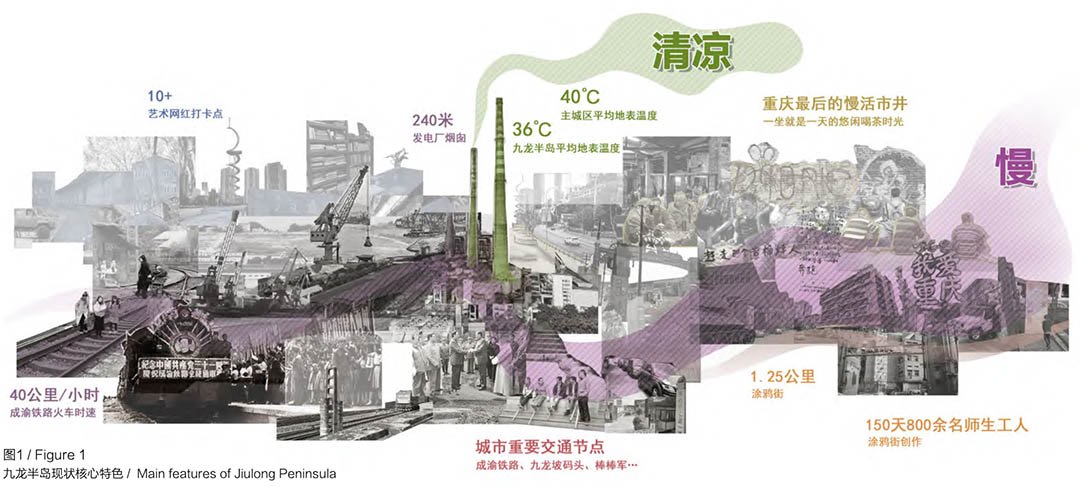
Excerpted from Cool Slow Peninsula: Research on Urban Renewal of Chongqing’s Jiulong Peninsula
Jiulong Peninsula is one of the key engines driving Chongqing’s transportation, economy, culture, and ecology. Over the past four decades, Chongqing—often dubbed the “Furnace City”—has undergone rapid urban expansion. Peninsulas like Yuzhong and Lijia have each found their own paths to renewal. Amid this transformation, can Jiulong Peninsula forge a different way forward?
In recent years, the number of hot and humid days in Chongqing has increased, and the heat island effect is significant. With the cold island effect and ecological base, the Jiulong Peninsula has become a rare “cool oasis” in the main urban area. The peninsula also preserves many elements of Chongqing’s traditional slow-paced lifestyle, such as the Transport Teahouse and the Sichuan Fine Arts Institute’s graffiti wall. In contrast to the highly urbanized Yuzhong Peninsula, Jiulong has managed to retain the nostalgic rhythms of “slow living” from old Chongqing. However, it now faces demolition risks, making it urgently necessary to balance conservation and development through high-quality urban renewal.
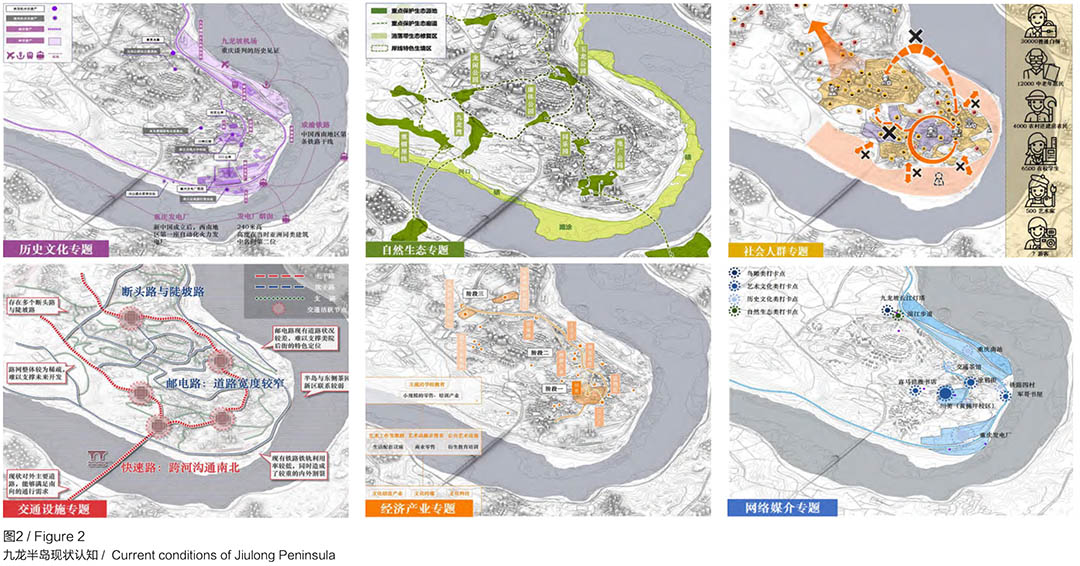
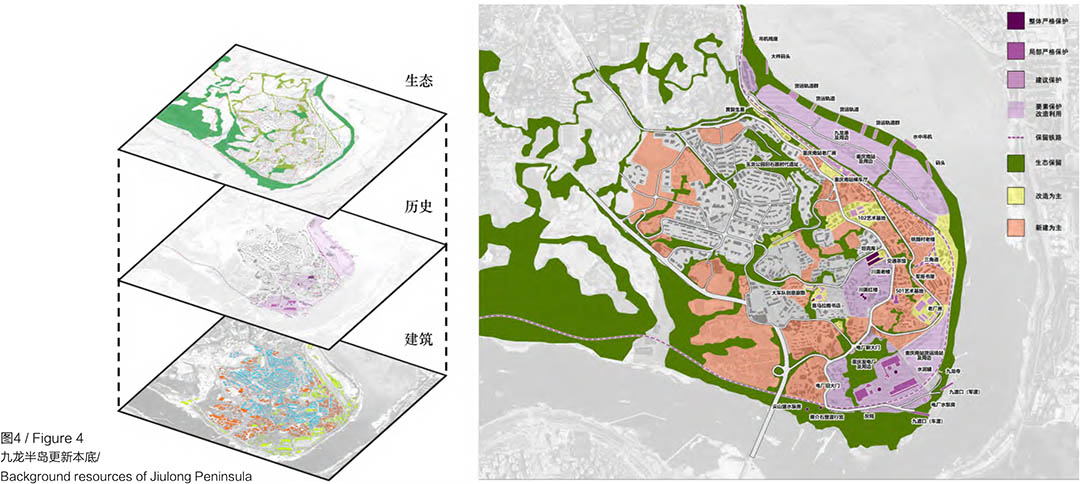
Jiulong Peninsula is located in Jiulongpo District, Chongqing, surrounded by the Yangtze River on the north, east and south sides, with an area of about 6.8 square kilometers, and the topography shows a three-layer terrace structure, forming a natural ecological barrier and landscape hierarchy. Based on the scientific analysis, Jiulong Peninsula has an obvious cold island effect compared to other central urban areas, with relatively low temperatures and good ecological network connectivity, which not only provides corridors for biological migration, but also has an important value for the ecological protection of the Yangtze River basin. In terms of transportation, Jiulong Peninsula stands in sharp contrast to Chongqing’s rapidly expanding network of expressways, having retained a pedestrian-friendly system centered on slow mobility. Its distinctive mountain greenway network serves as a spatial expression of the “slow living” philosophy. Cultural and heritage resources are another key strength of the peninsula. Industrial relics such as the Chongqing Power Plant, Jiulongpo Dock, and Chengdu-Chongqing Railway, along with everyday scenes like the Sichuan Fine Arts Institute graffiti wall and the Transport Teahouse, collectively shape a cultural identity rooted in “slow urban living.” These features provide strong entry points for future cultural industries and thematic design interventions.
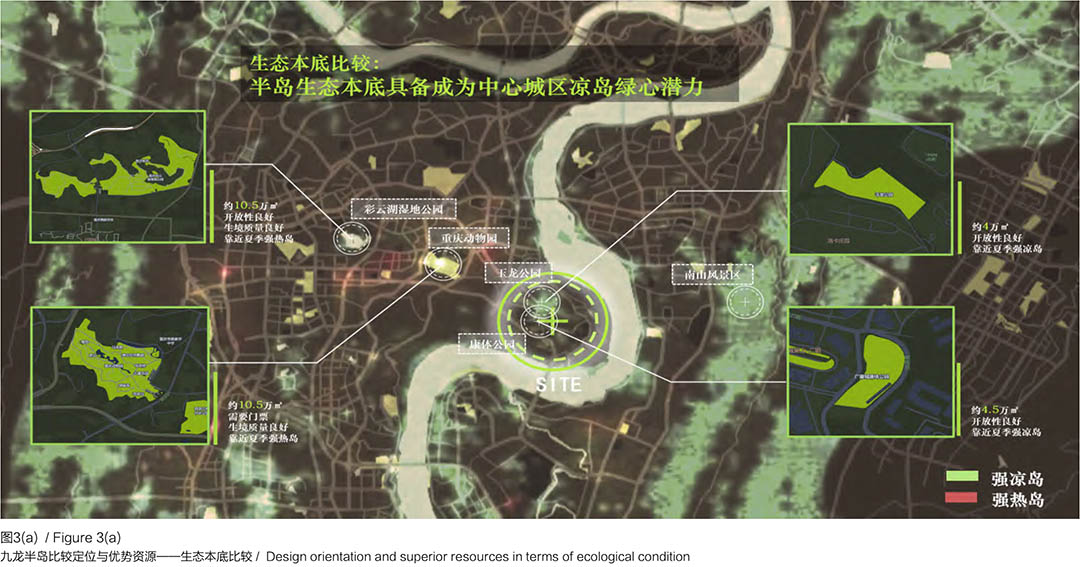
With its expansive and open green space, Jiulong Peninsula has the potential to become the “green heart” of Chongqing’s central urban area. Its once-thriving industrial past has left behind a rich legacy of industrial heritage, offering opportunities for regional-level revitalization. Additionally, institutions like the Sichuan Fine Arts Institute (Chuanmei) could connect the peninsula to national and even global cultural resources, creating the potential to host world-class events such as the Venice Biennale or Documenta in Kassel. Jiulong Peninsula thus holds promise across three tiers of development: as an urban-level “dual-island green heart,” a regional-level “industrial heritage revitalization zone,” and a world-class “art and culture exhibition destination.” Based on these three strategic roles, a spatial framework was developed and five core strategies proposed: “cool ecology,” “low-carbon transportation,” “slow experience,” “slow creation,” and “slow life.”
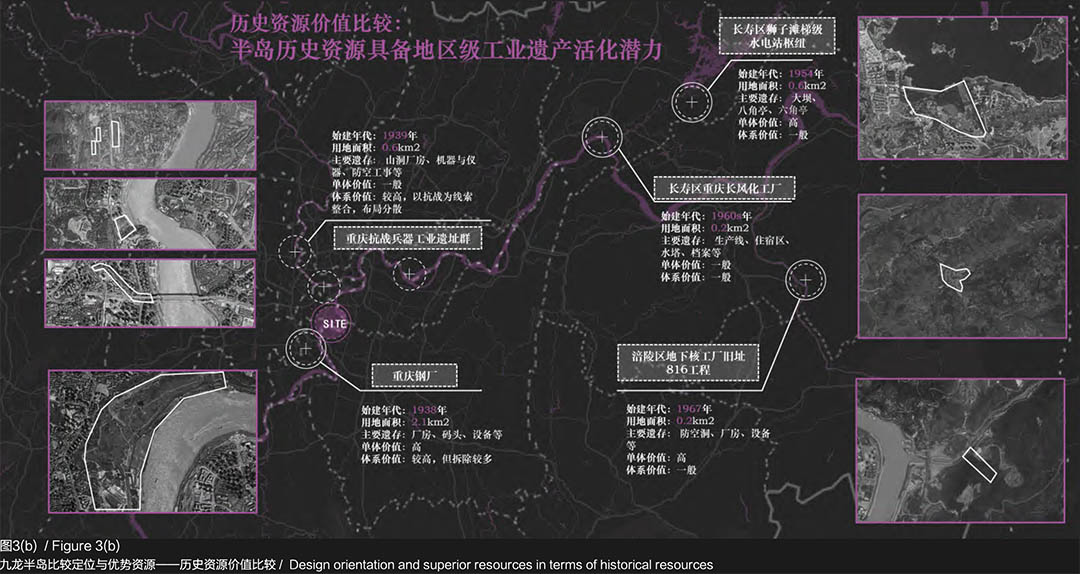
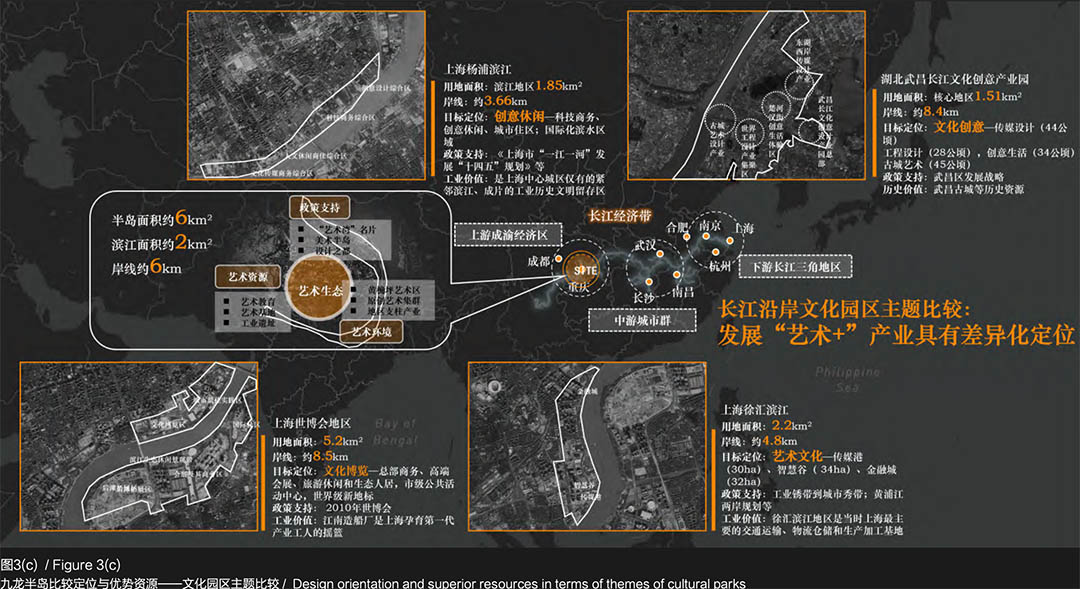
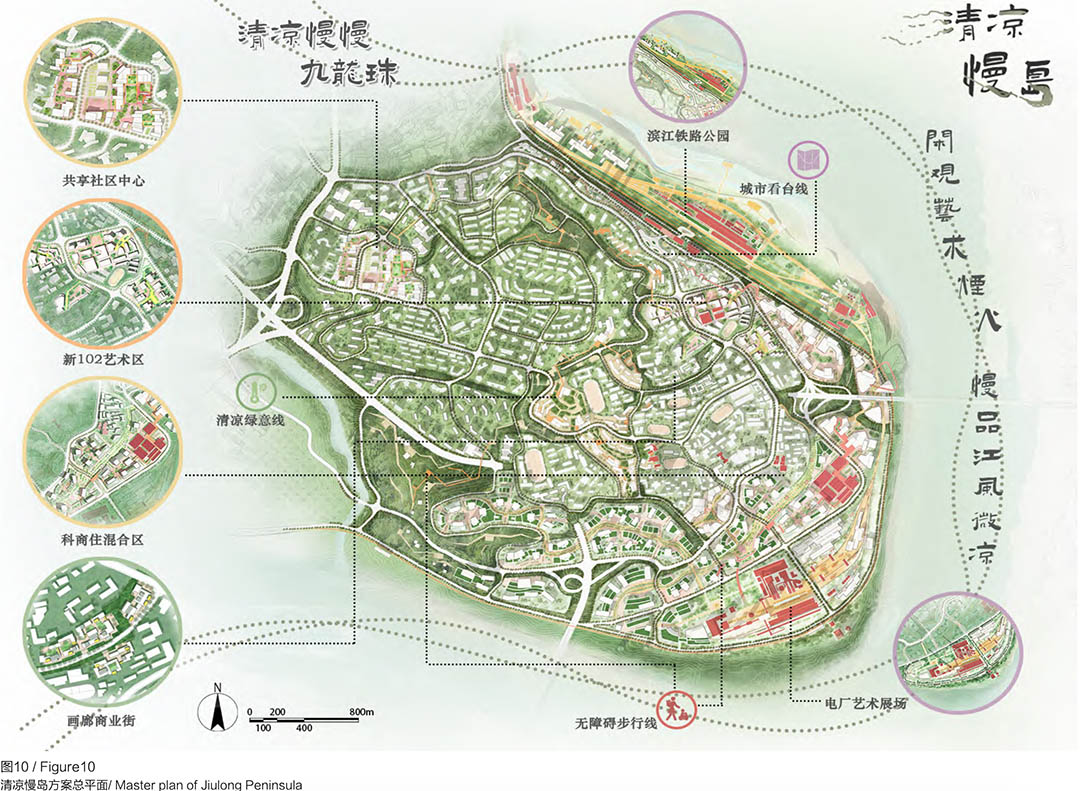
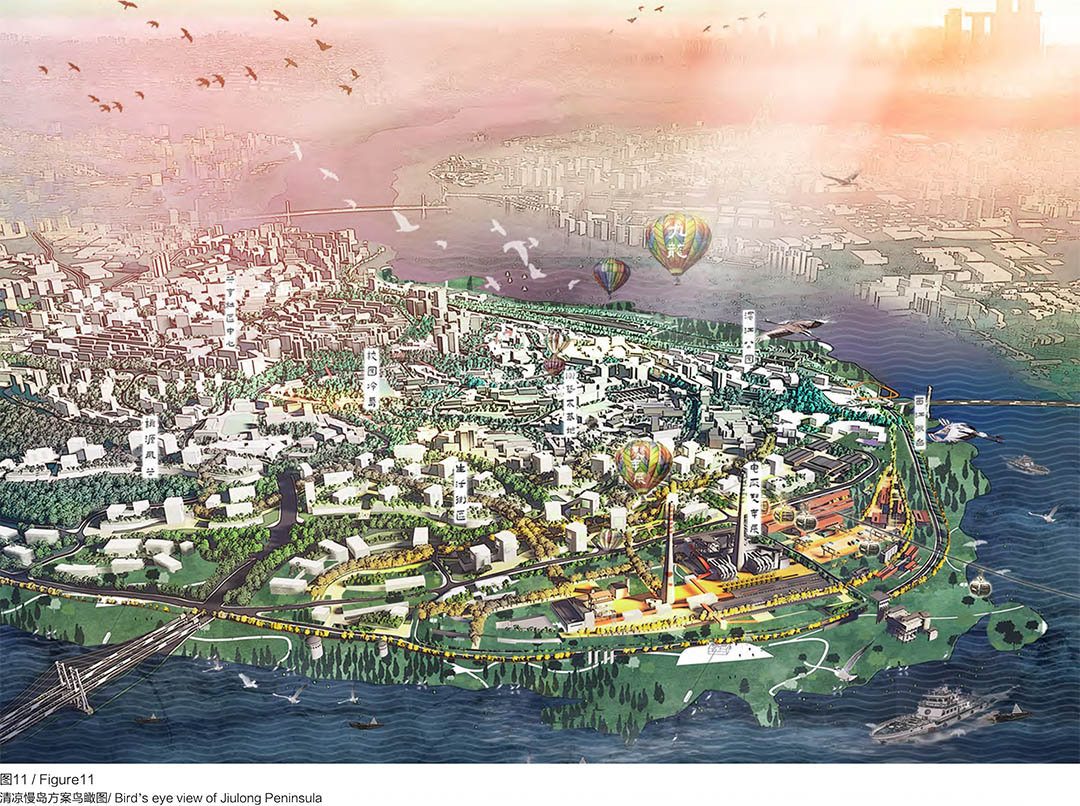
Building on the overall strategy, five thematic design directions were developed, forming a three-tiered terraced structure: a “slow-living residential area” on the upper level, “Art Plus” on the mid-level, and a “heritage exhibition zone” on the lower level—together creating an interwoven spatial hierarchy across the peninsula.
Within these five themes, nine representative spatial nodes were selected for in-depth design refinement. As illustrated, a “cool ecological space system” is woven using a network of green corridors.
The “cool ecology” strategy directly responds to the peninsula’s ecological challenges, while “slow living” forms a key narrative of the proposal. Together, these two themes constitute the core pillars of the overall design framework.
This strategy begins with the concept of climate-responsive ecology, introducing valley winds through spatial grafting and group-based planning controls, while enhancing airflow with elevated building forms. At the same time, architectural “breathing” is achieved through shading devices such as dynamic rooftop facades and bunker-like shelters. We propose four climate-cooling public space models and corresponding lifestyle scenarios, each offering a unique response to the urban heat environment:
As a critical urban service, transportation must align with the city’s low-carbon development goals while simultaneously supporting the comfort and accessibility needed for a slow-living lifestyle. This strategy focuses on two main aspects: optimizing motorized traffic patterns and enhancing barrier-free mobility across the peninsula. Key measures include increasing arterial road density, improving the connectivity of the road network, and establishing a differentiated three-tier public transit system—comprising buses, subways, and light rail trains—to significantly boost transport capacity and service quality.
On the west side of the site, a railway-themed hotel is designed to allow guests to experience the train running through the hotel itself. The west factory is repurposed as the office for the carbon trading center, with its chimney opened to the public as a dual-carbon exhibition hall. The third factory serves as an industrial museum, where the chimney has been transformed into a sightseeing elevator. Additionally, an elevator converted from the former “coal passage” links the two factories, integrating them into a connected transportation system.
In the redevelopment of the South Railway Station’s freight yard, the gantry crane has been transformed into an open-air venue for the biennial exhibition, complemented by elongated buildings that echo the remnants of the historic platform. This area has been integrated into a comprehensive experience zone that combines visitor services, riverside shopping, and historical displays, reinforcing the theme of “railroad heritage plus commercial and cultural tourism.”
Following the existing Chengdu-Chongqing Railway system, abandoned tracks are being converted into a small train sightseeing route or park trails, while disused factories and stations are repurposed into commercial facilities. Functional zones include visitor centers, riverside outlet shopping, immersive peninsula history areas, art experience venues, and blue-green ecological corridors — all creating a cool ecological space for visitors to enjoy a leisurely experience.
The mountain-embedded promenade design draws on traditional stilt house elements, combining with the existing streamlined viewing platforms to transform the previously oversized and uninviting public spaces into a series of layered, dynamic viewing areas with shifting perspectives.
At the same time, a system of urban terraces is created facing the river and backing onto the hills, nestled on slopes and oriented toward the river:
River-facing Viewing Platforms: Inspired by elements of the Triangle Road, cantilevered walkways connect the tourist train station, park, and commercial district, providing convenient access while preserving and highlighting the regional memory of the Triangle Road.
Hillside Terraces: These structures follow the terrain’s natural contours, enriching the landscape layers and establishing convenient links between the subway station and the tourist mini-train station.
Sloped Green Steps: Buildings are embedded into the hillside to create leisure platforms that transform elevation differences into resting and social spaces, adding richness and variety to the public realm.
Enhance the function of the 102 Art Base by providing residential spaces tailored for artists and cultural-creative park workers. This strategy integrates art with ecological landscapes and commercial services to support the surrounding large residential neighborhoods, schools, and public facilities. Centered around the historic 102 factory building, the public art experience corridor connects four major art units: the new 102 base, art community, art commerce, and landscaped gardens. Each unit forms distinct clusters within this framework, fostering diverse modes of artistic collaboration and living.
Create mixed-use neighborhoods that integrate living and working spaces, fostering a collaborative environment where creators can co-create and thrive together. Design a shared community center that seamlessly blends indoor and outdoor public spaces into an integrated system. The site design responds to the natural topography, with higher elevations in the south and lower in the north, shaping outdoor public areas such as terraced community parks and commercial streets. Buildings are interconnected both externally and internally via pedestrian pathways, while ground-floor podiums house shared public service facilities and community commerce, collectively forming vibrant public spaces.
Article source: Chongqing New Design Internal Publication, Issue 13
This article is excerpted from:
Yuxin Yao, Chuyu Zhou, Hongxian Liu, et al. Cool Slow Peninsula: Research on Urban Renewal of Chongqing Jiulong Peninsula [J]. Urban Design, 2022(6):64-75. DOI:10.16513/j.urbandesign.2022.06.002.
This project won the Silver Award in the Urban Design category of the 8th China Habitat Environment Design Annual Awards.