
Contact us
- Chongqing Industrial Design Promotion Center
- No. 1, Shangqingsi Road, Yuzhong District, Chongqing, People's Republic of China
- +86-23-60332626
- [email protected]

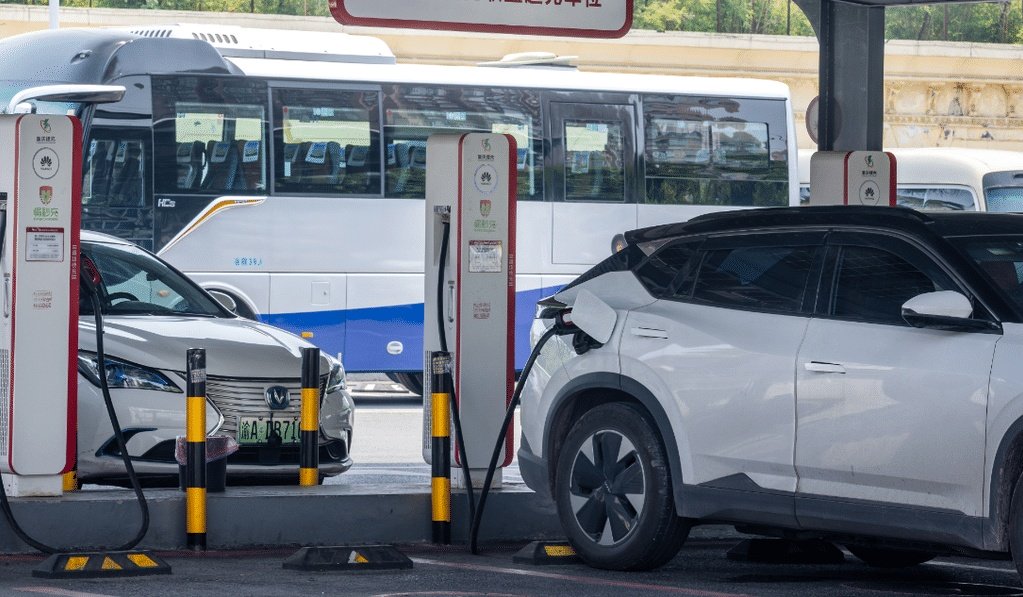
Recently, the Chongqing Municipal Economic and Information Commission announced an impressive set of figures: the city has built a total of 6,318 public charging stations and 50,100 charging piles, including 2,165 super-charging stations, ranking first nationwide in scale. Charging infrastructure has transitioned from the “availability” stage to the “quality” stage, establishing Chongqing as a national leader in super-charging infrastructure development.
With many cities across the country ramping up efforts to build super-charging infrastructure, why has Chongqing been able to stand out and take the lead?
Super-charging is a high-power charging technology that supplies electric energy to electric vehicles through a single gun, with a charging power of 480 kW or more and a charging current of 600 A or more. A super-charging station is a charging station equipped with super-charging devices, along with related electrical and intelligent equipment, and supporting facilities, capable of providing public charging services for multiple electric vehicles simultaneously.
Chongqing’s push to build super-charging infrastructure is not a fleeting endeavor, but a “two-way effort” that aligns industrial upgrading with improvements to people’s livelihoods.
In recent years, policy documents such as the “Notice of the General Office of the National Development and Reform Commission and Other Departments on Promoting the Scientific Planning and Construction of High-Power Charging Facilities” and the “Action Plan for Doubling the Service Capacity of Electric Vehicle Charging Facilities (2025–2027)” have been successively issued. Chongqing’s effort to build a “city of convenient super-charging” is precisely a swift response to and implementation of national policies.
From an industrial perspective, this represents the coordinated advancement of “Chongqing speed” and “Chongqing supporting capabilities.”
Intelligent connected new energy vehicles are one of Chongqing’s leading industries, and a crucial lever for developing new quality productive forces tailored to local conditions. By the end of 2025, the city’s new energy vehicle fleet reached 952,000 vehicles, with 272,800 new energy vehicles added in 2025 alone, achieving a market penetration rate of 53.51%.
This rapid growth in vehicle numbers has created an urgent demand for charging facilities—Chongqing has proactively planned ahead, viewing the super-charging network as a key foundation to support the continued leadership of its new energy vehicle industry.
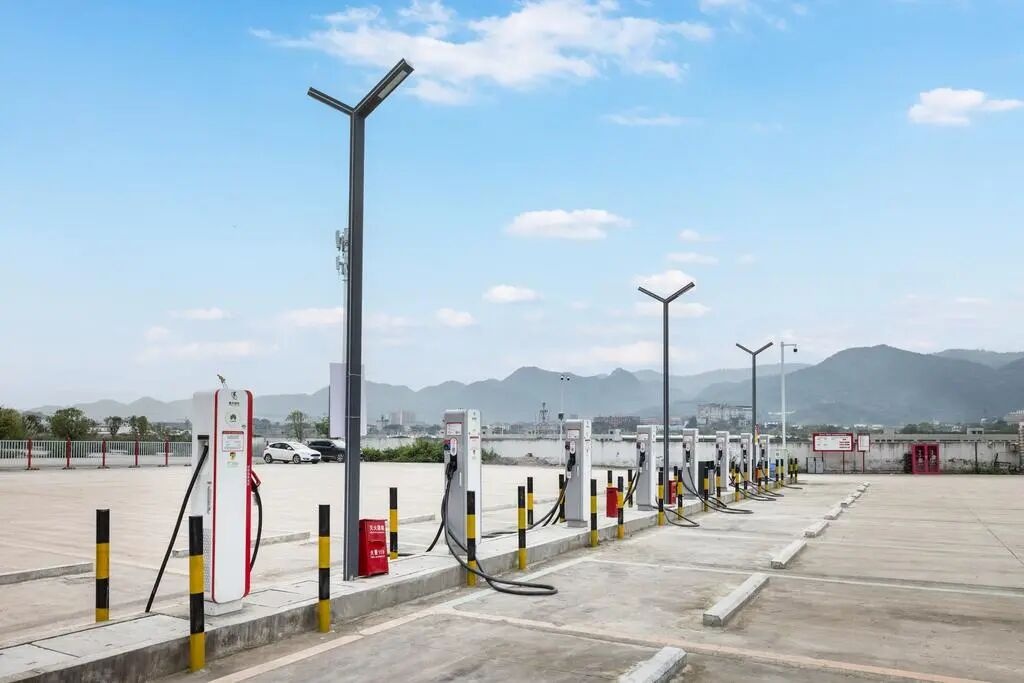
Charging station. (Photo courtesy of the interviewee’s organization)
From a livelihood perspective, this is a “heartwarming project” that addresses public concerns.
As new energy vehicles enter more and more households, “charging difficulty” and “slow charging” have gradually become pain points for residents. Chongqing has keenly grasped this public concern, making the construction of a “city of convenient super-charging” a key part of improving urban functions and enhancing urban quality, making charging as convenient as refueling. This not only alleviates the worries of vehicle owners but also makes green travel an enjoyable experience.
From an urban development perspective, this represents a form of “new infrastructure” that enhances the city’s overall capacity.
Super-charging stations are not just charging facilities; they also serve as important nodes in smart cities. They stimulate effective investment, driving the coordinated development of upstream equipment manufacturing, midstream construction and operation, and downstream data services within the industrial chain.
Data from the Municipal Economic and Information Commission shows that the construction of super-charging infrastructure has driven approximately RMB 5 billion in social investment, including RMB 4.3 billion in direct investment and RMB 700 million in indirect investment.
It is this multi-dimensional consideration—responding to national initiatives, serving industrial development, addressing public expectations, and shaping the city’s future—that makes Chongqing’s construction of a “city of convenient super-charging” not only imperative but also a natural progression.
How is the “city of convenient super-charging” being built? From top-level design to implementation, Chongqing has deployed a set of interlocking measures, allowing the construction of the “city of convenient super-charging” to advance with remarkable speed.
High-level coordination, refining top-level design.The city has taken the lead in establishing a municipal super-charging task force. It has successively issued the “Chongqing Super-Charging Infrastructure Construction Technical Guidelines (2024 Edition, 2025 Edition),” clarifying technical specifications for site selection, layout, and equipment parameters, unifying construction standards, and formulating supporting evaluation and incentive measures to fully mobilize the enthusiasm of market participants.
Scientific layout, revitalizing existing resources. The city encourages the use of urban marginal land, parking lots, and areas adjacent to gas stations to build super-charging stations, achieving a balance between “revitalizing existing assets and optimizing new additions.” A vacant plot in Panxihe Park serves as a typical example. Covering an area of 3,000 square meters, the site was revitalized in June last year based on surrounding needs to create a “super-charging + park” parking lot with 16 charging spaces (including two 480 kW super-charging piles). Citizens can charge their vehicles while enjoying leisure activities, achieving a full charge in just half an hour—a win-win for resource utilization and public service.
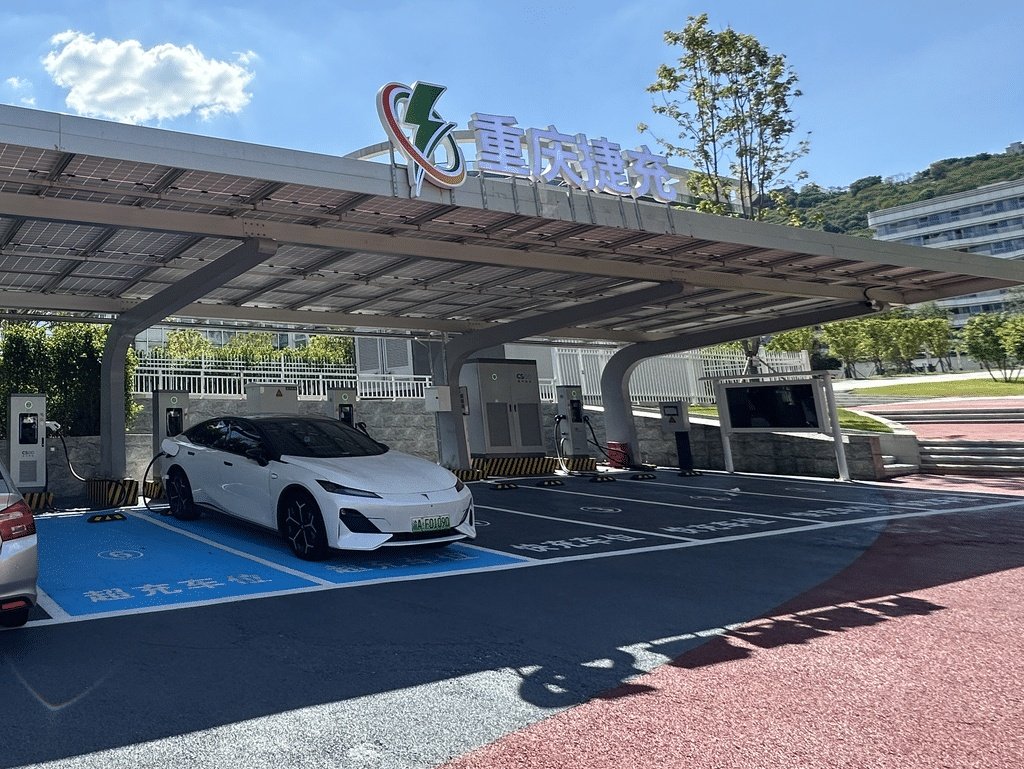
Charging station. (Photo courtesy of the interviewee’s organization)
Optimized guarantees, strengthening policy support.To meet the demands of super-charging construction, the city continuously optimizes supporting electricity pricing and market trading mechanisms. For areas with high potential for load management, such as residential communities, schools, and hospitals, the city is researching and developing peak-valley time-of-use electricity pricing mechanisms that differ from residential load patterns. This aims to unlock the flexible adjustment potential of charging facilities and reduce operating costs.
Reinforced foundation, strengthening grid support. State Grid Chongqing Electric Power has established a super-charging construction task force, assigning personnel to join the municipal task force. It has opened a green channel for super-charging projects, implementing a “connect first, upgrade later” policy, shortening the average response time for power supply solutions from 7 working days to 3 working days. From 2024 to 2025, a total of RMB 336 million was invested in supporting projects for super-charging station expansion, completing over 1,700 such projects to ensure the early completion, operation, and effectiveness of super-charging stations.
Digital empowerment, enhancing management efficiency. The city has deeply integrated super-charging construction with the broader Digital Chongqing initiative, establishing a unified digital convenient charging management platform centered on super-charging. This platform enables full access to super-charging infrastructure, forming a digital management loop encompassing “vehicles, chargers, stations, and grid.” The platform can display real-time construction progress, distribution, and operational data of super-charging stations in each district and county, providing strong support for precise government coordination and scientific decision-making.
This series of interlocking measures has propelled the number of super-charging stations in Chongqing to 2,165, ranking first nationwide in scale.
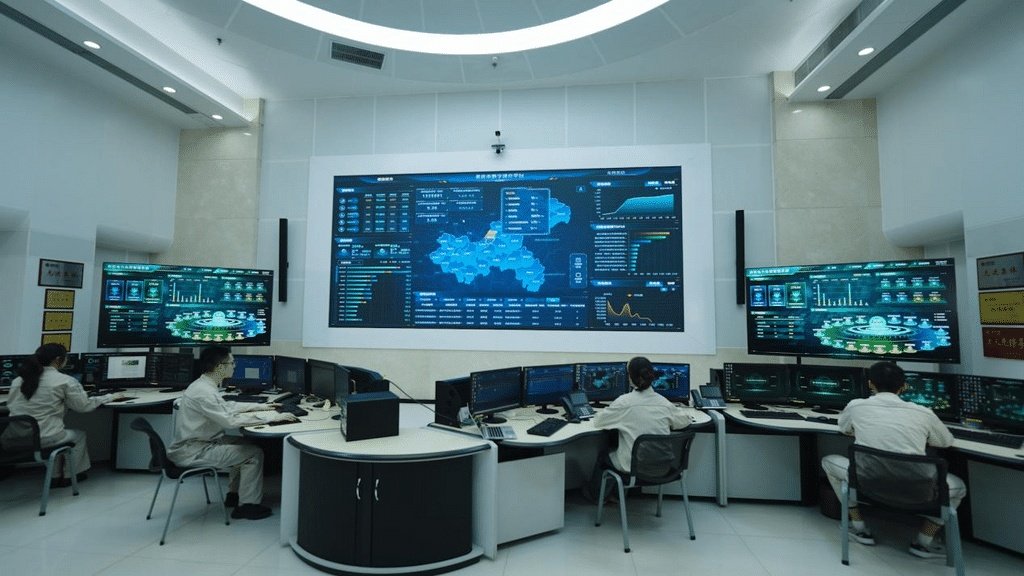
Staff monitor the operational status of super-charging piles on the Chongqing Digital Convenient Charging Platform. (Photo courtesy of the interviewee’s organization)
Ultimately, the construction of a “city of convenient super-charging” must translate into tangible benefits for the public.
“Before, finding a charging station felt like looking for a needle in a haystack. Now, with a tap on my phone app, I can see available super-charging piles at a glance—fast and convenient,” said Mr. Chen, a resident, describing his experience using the “Yu Yi Chong” APP’s electronic map to find nearby super-charging stations and their availability.
Today, the total number of public charging stations in Chongqing has reached 6,318, more than three times the 1,970 conventional gas stations.
What has changed is not only the number of charging stations but also charging efficiency. From January to March this year, the average daily charging volume per gun at newly built super-charging stations was 2.44 times that of existing fast-charging stations, with an average charging power 22.88% higher, an average charging time 11 minutes shorter, and daily turnover 23% higher. This means the same charging pile can serve more vehicles each day, significantly reducing waiting times for vehicle owners.
Additionally, focusing on three key scenarios—trunk logistics, port collection and distribution, and short-distance shuttle services—Chongqing has built 10 megawatt-level super-charging stations for heavy-duty trucks and deployed over 100 electric super-charging heavy trucks, reducing annual operating costs per vehicle by RMB 100,000. The green transformation of road freight is accelerating in this major industrial city.
According to statistics, in 2025, public charging volume in the city exceeded 1.4 billion kWh, a year-on-year increase of 98%, with super-charging stations, accounting for 27.3% of total scale, contributing nearly 700 million kWh of charging volume.
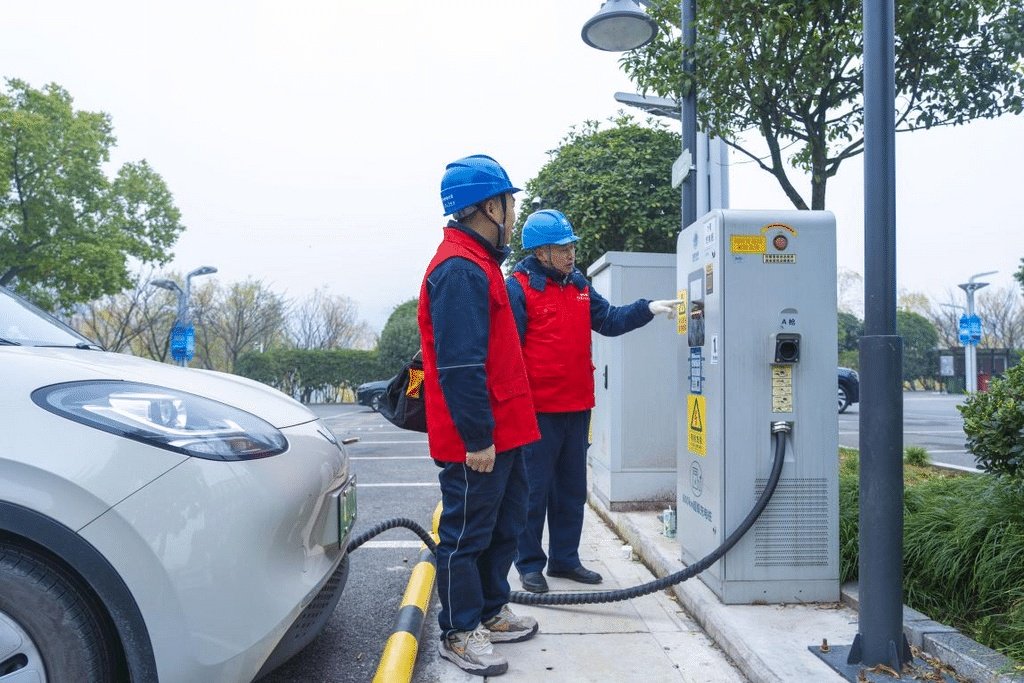
Power utility staff inspect a super-charging station. (Photo courtesy of the interviewee’s organization)
From “urban convenience” to “urban-rural sharing,” super-charging construction has not only covered the central urban area but has also extended to towns and rural villages.Today, all 1,031 towns and subdistricts in the city have comprehensive coverage of super-fast and fast charging. Whether new energy vehicle owners living in towns or tourists driving to rural areas, everyone can enjoy convenient charging services.
It is worth noting that Chongqing was also selected as one of the first nine national pilot cities for the large-scale application of vehicle-to-grid (V2G) interaction. It has received approval for two national-level pilot projects and took the lead in introducing a V2G grid feed-in tariff mechanism nationwide. To date, the pilot has built 286 bidirectional charging and discharging stations and 568 V2G charging piles, with cumulative discharge exceeding 1 million kWh.
This means that in the future, new energy vehicles will serve not only as transportation but also as mobile “power banks,” capable of feeding electricity back into the grid during peak demand periods. This helps balance grid load while creating additional income for vehicle owners.
“Overall, the construction of public charging infrastructure in our city has transitioned from the ‘availability’ stage to the ‘quality’ stage. Currently, our public charging infrastructure is characterized by numerous stations, fast charging, high safety, cost efficiency, quality service, and a high level of intelligence, effectively meeting the charging needs of vehicle owners,” said a relevant official from the Municipal Economic and Information Commission.
From “availability” to “quality,” the leapfrog development of Chongqing’s charging infrastructure reflects the city’s persistent pursuit of high-quality development and its warm commitment to a high quality of life.
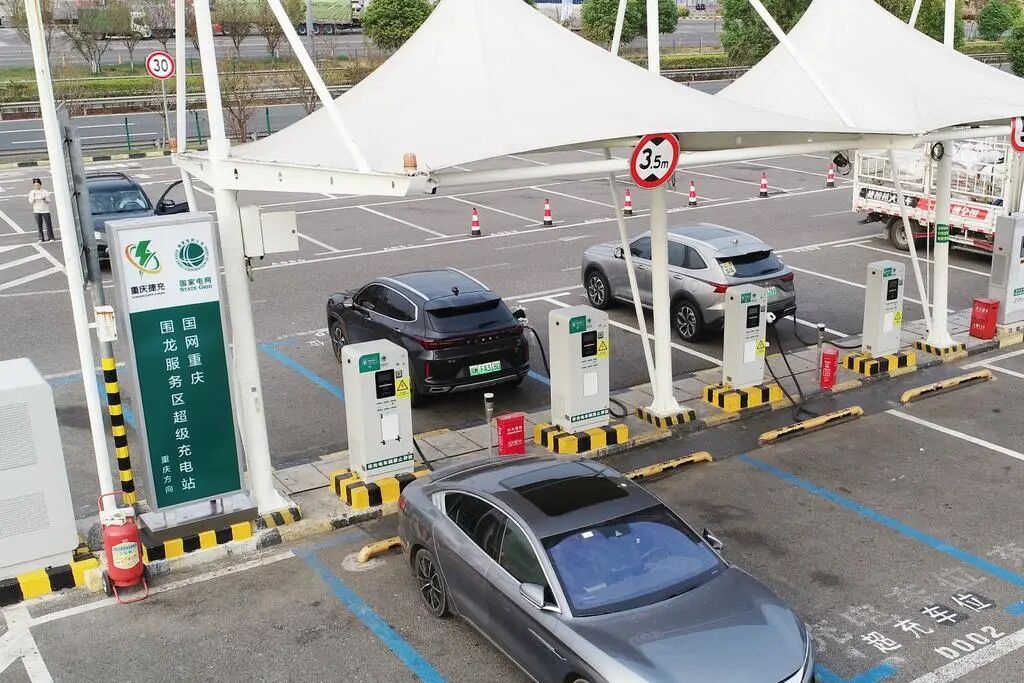
Super-charging station. (Photo courtesy of the interviewee’s organization)
The year 2026 marks the start of the 15th Five-Year Plan period and a crucial year for Chongqing to consolidate and enhance its achievements in convenient super-charging construction, driving the charging network from “scale construction” toward “high-quality development.”
Chongqing’s goals are becoming increasingly clear: by 2026, the cumulative number of super-charging stations will exceed 2,300, effectively meeting the charging needs of over 1.2 million new energy vehicles; by 2028, the number of super-charging stations will surpass 2,500, meeting the charging needs of more than 1.8 million electric vehicles. New types of facilities, such as heavy-duty truck super-charging stations and V2G charging piles, will also accelerate their deployment.
“Chongqing Convenient Charging”—from concept to reality—is steadily taking shape.
When super-charging stations become as ubiquitous as convenience stores throughout the mountain city, and when “a cup of coffee, a full charge” becomes a daily reality, the story of Chongqing as a “super-charging city” will have only just begun.
Source: Chongqing Release
Disclaimer: Unless otherwise stated for original content, articles and images are sourced from the internet and major mainstream media. Copyright belongs to the original authors. Please contact us for removal if infringement is suspected.