
Contact us
- Chongqing Industrial Design Promotion Center
- No. 1, Shangqingsi Road, Yuzhong District, Chongqing, People's Republic of China
- +86-23-60332626
- [email protected]
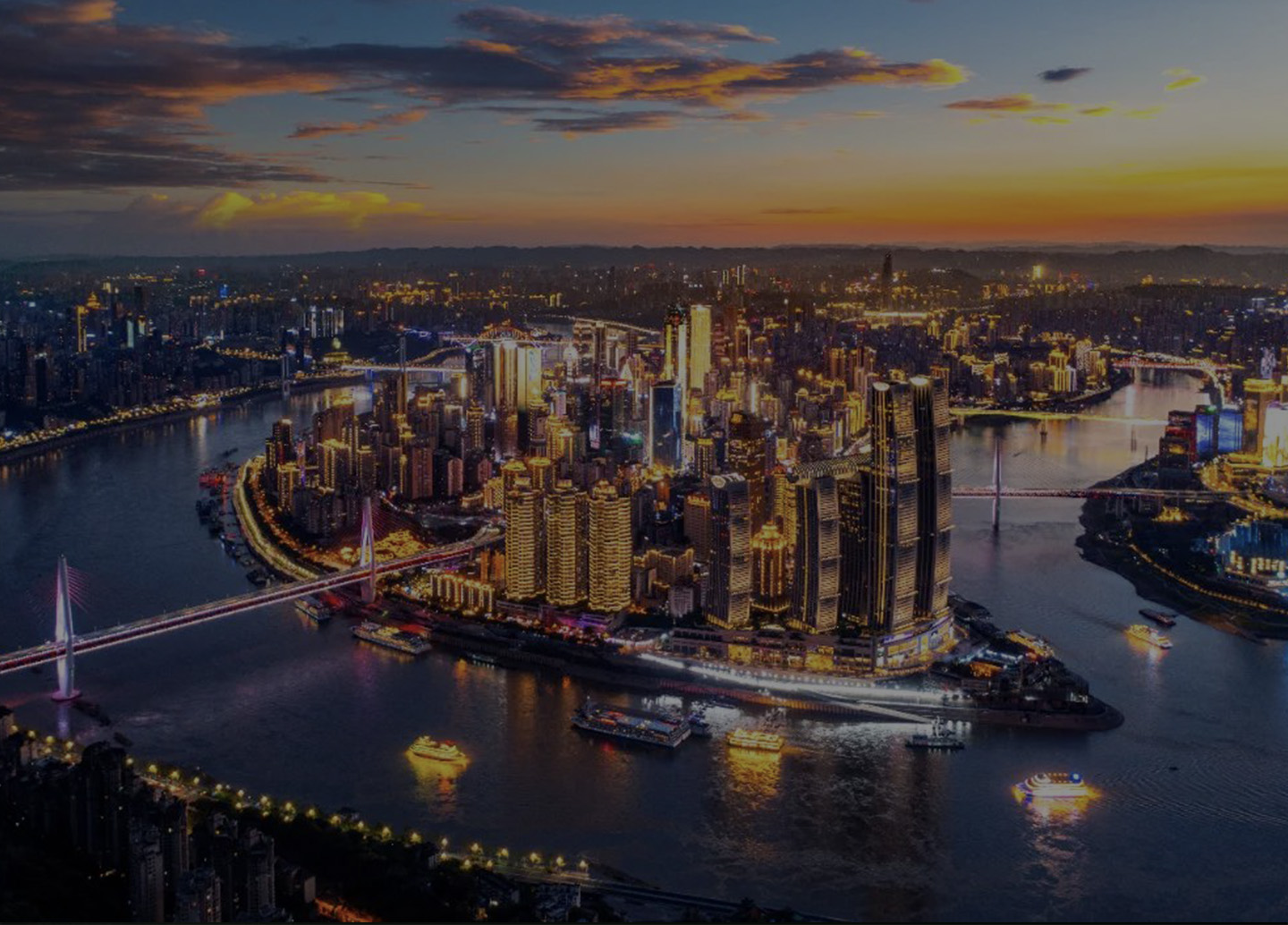
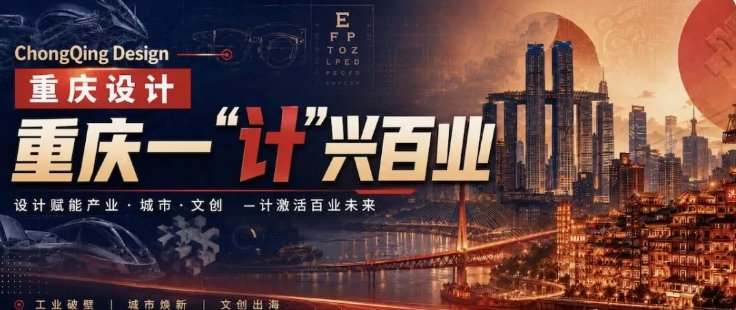
Chongqing is the only global “City of Design” in western China. In recent years, the city has strategically positioned design across multiple sectors—manufacturing, urban renewal, and cultural creativity—and has now gathered over 1,500 design enterprises and nearly 60,000 professionals. It has cultivated 11 national-level and 272 municipal-level industrial design centers, ranking among the top in western China. Industrial design alone has driven over 700 billion yuan in product sales.
3.685 seconds.
This was the margin of victory when Zhangxue Motorcycle‘s 820RR-RS crossed the finish line at the World Superbike Championship (WSBK) Portugal round on March 28–29, Beijing time.
3.685 seconds!
What does that mean? It represents a gap of approximately 307 meters between the 820RR-RS and the second-place bike at speeds approaching 300 km/h on the track.
This top-tier racing machine comes from Chongqing Design.
Leveraging Chongqing’s complete motorcycle industrial design and manufacturing supply chain, Zhangxue Motorcycle assembled a full-stack, locally based design and R&D team. The entire vehicle—from concept sketches and engineering validation to on-track testing and iteration—was completed entirely in Chongqing.
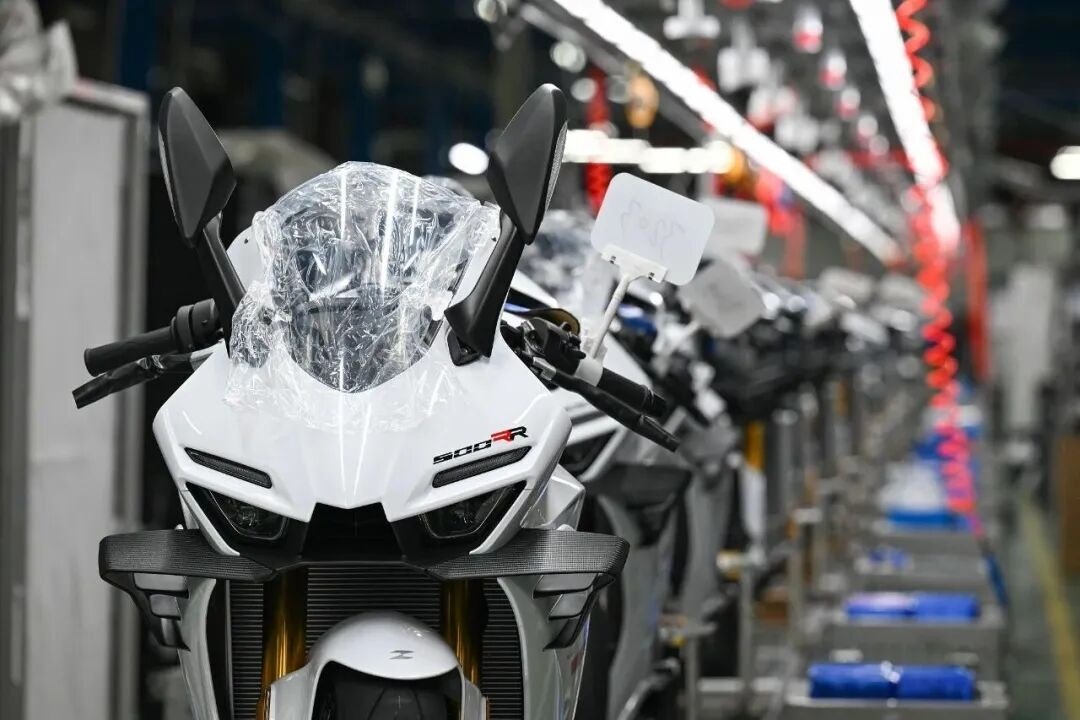
And this is just one example of how Chongqing design empowers high-end equipment manufacturing.
Design is the “code” for industrial upgrading, the “soul” of urban advancement, and the core driver of high-quality development in the service sector. Since being recognized as China‘s fifth and western China’s first global “City of Design” in October 2023, Chongqing has used design as a new engine to drive its urban development to a higher international level.
Over the past two years, Chongqing has steadily advanced toward becoming a global design innovation hub, vividly demonstrating the profound meaning of “design transforms cities” through innovative practice.
Once upon a time, Fengjie‘s eyewear industry was trapped in low-end OEM. The industry relied on external blueprints and purely contract manufacturing—assembly only, no design, positioning it at the very bottom of the value chain. This crude production model not only squeezed per-unit profits but also left product designs outdated and lacking core competitiveness. Despite significant production capacity, the industry remained locked out of mid-to-high-end markets.
“We used to passively take orders and manufacture to others’ specifications. Without our own design capabilities, we had no pricing power, no market voice,” said the head of Chongqing Musheke Optical Technology Co., Ltd. (hereinafter “Musheke Optical”).
The key to breaking out of this trap: design innovation.
Starting in 2023, Musheke Optical completely abandoned its OEM dependency, establishing its own dedicated R&D and design team. Focusing on aesthetics, ergonomics, and functional optimization, the company embarked on a transformative leap from “passive OEM” to “active originality.”
Catering to the wearing scenarios and aesthetic preferences of different demographics, the company refined every product detail: for teenagers, they optimized lightweight frame structures and nose pad pressure distribution to reduce discomfort from prolonged wear; for business professionals, they launched minimalist, textured styles that balance versatility with a premium feel; for outdoor enthusiasts, they developed scratch-resistant, foldable, portable functional models that precisely match niche market needs.
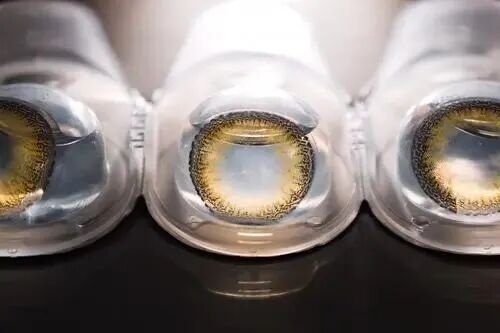
▲ On April 16, at the Ecological Industrial Park in Caotang Town, Fengjie County, a worker handles contact lenses produced by a local enterprise. Photo by reporter Li Yuheng.
After two years of dedicated effort, Musheke Optical has built a closed-loop “design-R&D-production-sales” chain, amassing over 400 original design solutions across nine product categories, with annual production exceeding 1 million units. With high-quality, high-adaptability, high-appeal original products, the company has escaped low-price competition and moved into the mid-to-high-end market, driving Fengjie‘s eyewear industry from “low-end processing” toward “high-end intelligent manufacturing.”
Beyond eyewear, industrial design has become the core engine for the transformation and upgrading of Chongqing’s traditional manufacturing industries in recent years. From Seres AITO’s intelligent cockpit iterations to Lengsuanling toothpaste’s “Guochao” designs, industrial design is no longer just a “supporting tool” for beautifying appearances. It has become the core driving force behind cultivating new quality productive forces in traditional industries and achieving improved quality and efficiency.
The numbers speak for themselves: industrial design in Chongqing has driven over 700 billion yuan in sales for enterprises. More and more traditional industries are moving away from extensive, low-cost growth models, using creativity to empower products and design to enhance value, securing new heights in niche markets and achieving comprehensive transformation.
Built upon mountains and thriving along rivers, Chongqing‘s unique landscape has created an unparalleled urban fabric, providing natural inspiration and distinctive character for local architectural design.
In May this year, the French Design Award—often called the “Oscar of European design”—announced its winners, with the Tongliang G Era Humanities and Arts Center taking home the Gold Award, once again putting Chongqing’s local architectural design on the international stage.
As a new urban cultural landmark for Tongliang, the project from its inception rejected the cookie-cutter templates of “a thousand cities, one look.” The design team deeply integrated Tongliang‘s local cultural heritage with its mountain and water ecological resources. Moving away from the heavy, rigid style of traditional public buildings, they used flowing lines to echo the landscape‘s natural contours and transparent spaces to connect with the surrounding scenery, integrating artistic aesthetics, public function, and ecological philosophy.
Today, the arts center serves both as a Tongliang city landmark and a public space serving the community, deeply embodying the philosophy of “design serving the city, aesthetics empowering life.”
The ingenuity of Chongqing’s architectural design is evident not only in the creation of new landmarks but also in the adaptive reuse of old spaces, allowing urban memories to be preserved and reborn over time.
Chongqing Power Plant, located on the banks of the Yangtze River in Jiulongpo District, with its towering chimneys and aging factory buildings, carries the city’s precious industrial memories, bearing witness to its industrial development history. As the city evolved, this industrial heritage site lay dormant and gradually faded from prominence.
To preserve the city‘s cultural heritage and revitalize underutilized spaces, Chongqing Design Group’s Municipal Design Institute embarked on a “protective renewal” design campaign, comprehensively renovating and upgrading the site into the Chongqing Art Park.
In the renovation process, the design team adhered to the principle of “repairing the old as before, adaptive reuse,” avoiding large-scale demolition and construction. They preserved the original factory appearance and industrial symbols like the chimney textures to the greatest extent possible.
To adapt the old buildings for modern urban life, the team repeatedly refined the plans, installing light art systems around the chimneys. At night, the old industrial structures and brilliant light art complement each other, blending past and present. The team also reconfigured the interior spaces, designing art exhibition halls, cultural and creative spaces, and leisure walkways, transforming the abandoned industrial site into a new urban cultural landmark integrating cultural exhibition, artistic experience, and public recreation.
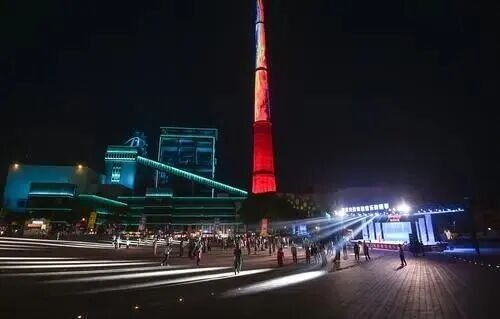
▲ At Chongqing Art Park in Jiulongpo District, citizens enjoy a music and light show. Photo by reporter Zheng Yu / Visual Chongqing
Today, Chongqing Art Park retains the authentic industrial character of its original appearance when viewed from afar, preserving the city‘s industrial memory. Up close, it reveals a refreshed modern scene, embodying a vision for a better life, achieving a “win-win” between industrial heritage preservation and urban renewal.
From innovative breakthroughs in super-high-rise landmarks to micro-renewals of old streets and industrial heritage, Chongqing remains grounded in its unique mountain-water character, meticulously crafting urban spaces and activating urban resources with creativity. It continues to polish the city’s brand of “mountain-water city, meticulous design,” allowing design to consistently empower high-quality urban development.
Design is rooted in cultural heritage; creativity brings cities to life.
If industrial design reshapes the core of manufacturing, and architectural design sculpts the mountain-water cityscape, then cultural and creative design is the gentle medium that delves into Chongqing‘s deep cultural heritage, conveying the city’s unique character. It brings rich regional culture out of the archives and exhibition halls, reaching broader audiences in younger, more lifestyle-oriented ways.
远看是木雕工艺品,近看是地球仪,拿在手中又是可以拆装的“鲁班锁”——2025年8月,由重庆市测绘科学技术研究院设计制作的“鲁班锁地球仪”,在温哥华举行的2025年第32届国际地图制图大会上,获得实物类地图荣誉提名奖。
“This cultural and creative design embodies the ingenuity of Chinese craftsmanship,” said a representative from the Chongqing Institute of Surveying and Mapping Science and Technology. The design team ingeniously integrated traditional mortise-and-tenon joinery and Luban Lock wisdom with modern map culture and geographic popularization concepts. Breaking away from the traditional single display function of maps, they endowed the product with multiple values—entertainment, education, and collectibility—showcasing both traditional craftsmanship and modern scientific spirit. It has become a representative work of Chongqing‘s cultural and creative design on the international stage.
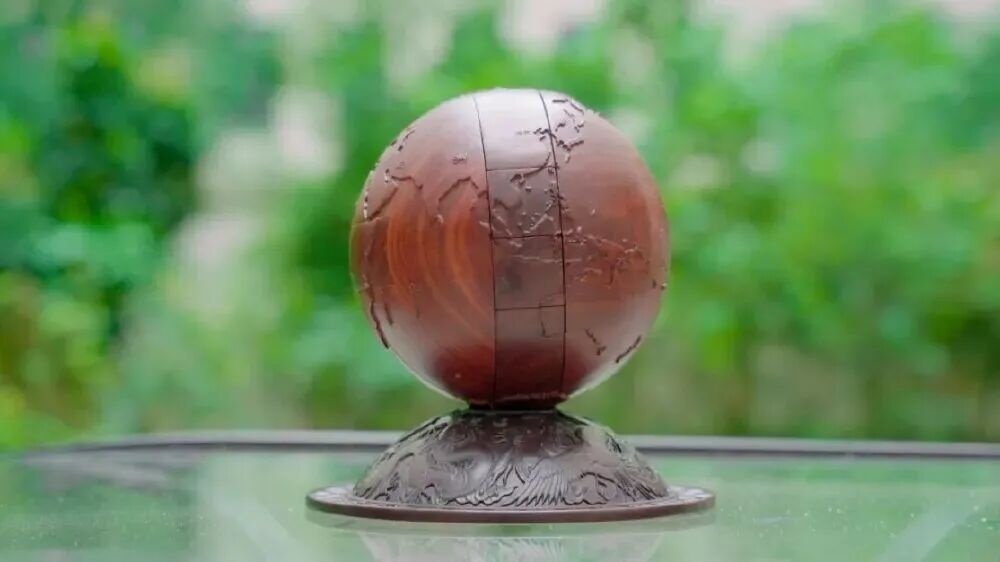
▲ The “Luban Lock Globe” map artwork. Photo courtesy of Chongqing Municipal Planning and Natural Resources Bureau
The success of this work is no accident. Behind it lies the continuous improvement of Chongqing‘s cultural and creative design industry ecosystem and the growing maturity of its cultivation and empowerment systems.
In recent years, Chongqing has focused on high-quality development of the cultural and creative industry, continuously building integrated platforms for international exchange, competitions and awards, commercialization, and talent development. It regularly hosts branding events such as “Chongqing Design 100” to identify high-quality original cases, incubate local design brands, and attract top creative talent. This connects the entire chain—from “creative concept to product R&D to market launch”—driving design from blueprints to the public and from inspiration to economic value.
Thanks to this robust industrial ecosystem, Chongqing‘s cultural and creative design is flourishing across multiple sectors. For example, the Three Gorges Museum has launched over 100 cultural and creative products across multiple series, including “Three Gorges Treasures” and “Cute Treasures,” bringing the millennia-old Three Gorges heritage to life. The Chongqing Natural Museum has introduced the “Little Green Dragon” dinosaur tea set, reinterpreting paleontological education through playful design. The ancient Ba-style bronze chunyu has been reimagined as trendy blind box figurines, turning intangible cultural heritage IP into popular collectibles.
Meanwhile, local Chongqing design deeply integrates the city‘s unique character and vibrant street life, incorporating urban symbols—stilted buildings, the Yangtze River cableway, mountain footpaths—into accessory designs, and blending Sichuan opera masks and Ba-Yu folk customs into home decor items. Time-honored food brands like Ciqikou Mahua have received packaging upgrades with a “Guochao” aesthetic. Every cultural and creative product carries the distinct identity of Chongqing.
From intangible heritage revitalization and cultural relic reinvention to local IP upgrades, Chongqing uses design as a bridge and culture as its soul, adapting traditional heritage to modern tastes and connecting local IP with mainstream markets. It continues to propel Bayu culture out of the mountain city, across China, and onto the international stage, making cultural and creative design a powerful force for cultural preservation, consumer vitality, and city branding.
Related News >>> >>>
From improving industrial manufacturing quality and efficiency, to upgrading urban spaces, to expanding cultural and creative consumption—these vivid cases trace the growth trajectory of ”Chongqing Design“ and illustrate the core value of this ”golden brand“ in the service sector.
As one of the first national model cities for industrial design and the only global ”City of Design“ in western China, Chongqing has gathered over 1,500 design enterprises and nearly 60,000 professionals, cultivating 11 national-level and 272 municipal-level industrial design centers, ranking among the top in western China.
A representative from the Municipal Commission of Economy and Information Technology stated that unlike traditional services, ”Chongqing Design“ is a high-end service industry that combines creative, technological, and industrial attributes. It connects primary, secondary, and tertiary industries, serving as a key link in promoting industrial upgrading, urban renewal, and consumption upgrading.
As Chongqing strives to build a modern industrial system and promote high-quality development in the service sector, the empowering value of ”Chongqing Design“ is becoming increasingly evident. On the industrial front, design breaks through homogeneity bottlenecks in traditional industries, adding creative value to manufacturing, driving the transformation of traditional industries, strengthening emerging sectors, and cultivating future industries, helping Chongqing‘s manufacturing sector grow from large to strong. On the urban front, design capitalizes on the city’s mountain-water characteristics, balancing heritage preservation with innovative development, giving the city both scenic beauty and cultural depth, and enhancing its core competitiveness. On the consumption front, design delves into local characteristics to meet market demands, creating diverse, high-quality consumer products and experiences that stimulate consumer demand and activate the city‘s economic vitality.
To keep “Chongqing Design” on an upward trajectory, robust top-level planning is essential.
The Municipal Commission of Economy and Information Technology indicated that “Chongqing Design” will focus on three directions for sustained effort: deepening the integration of “design + manufacturing” to empower the “33618” modern manufacturing clusters—including smart connected new energy vehicles, high-end equipment, and consumer goods—and enhance core industrial competitiveness; strengthening digital and intelligent design innovation by promoting the application of AI design, virtual simulation, cloud-based design, and other new technologies, cultivating new design business models; and expanding international exchange and cooperation by leveraging the “City of Design” brand to strengthen connections with domestic and international design resources, promoting “Chongqing design” to the world.
As more design talent gathers, the innovation ecosystem continues to improve, and commercialization accelerates, “Chongqing Design” will continue to deepen its impact in areas like industry empowerment, urban development, cultural heritage, and public services. With creativity at its core, craftsmanship as its foundation, and industry as its anchor, it will polish Chongqing‘s ”golden brand“ in the service sector.